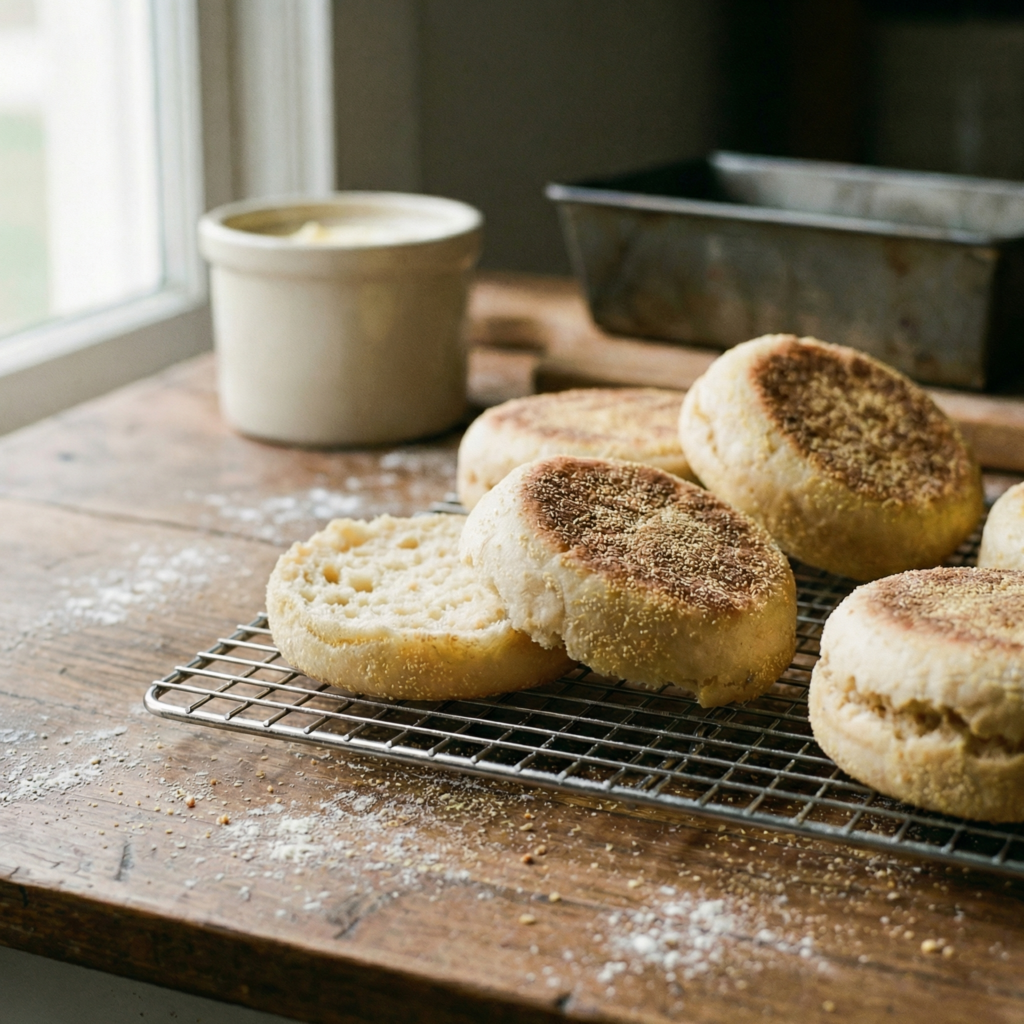
If you’ve only ever had English muffins from a package, making sourdough English muffins from scratch is about to change everything.
These are lightly crisp on the outside, tender and chewy on the inside, and filled with the signature nooks and crannies that soak up butter like a dream. Add the gentle tang of sourdough, and you’ve got a breakfast bread that feels both nostalgic and elevated.
The best part? English muffins are cooked on a griddle, not baked, making them surprisingly approachable—even if you’re new to sourdough. This step-by-step guide walks you through the entire process so you can enjoy bakery-quality muffins right from your own kitchen.
Why Sourdough English Muffins Are Worth Making
Sourdough English muffins stand out because:
- They have better flavor than yeast-only versions
- The crumb develops naturally, creating airy pockets
- They stay fresh longer
- They’re perfect for breakfast sandwiches, toast, or eggs Benedict
Unlike sourdough bread loaves, these don’t require shaping or oven steam, making them an excellent sourdough project for home bakers.
Step-by-Step Instructions
Mix the Dough
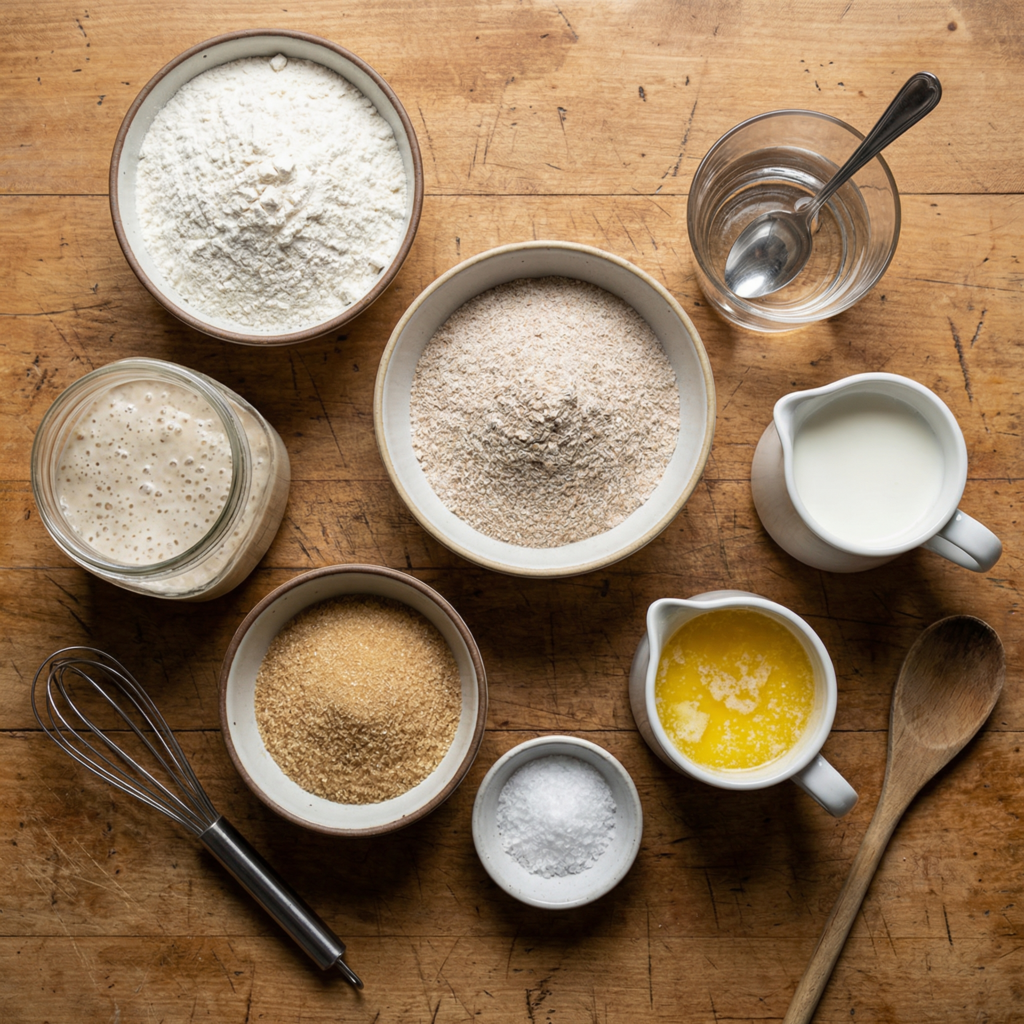
In a large bowl, whisk together the sourdough starter, milk, honey, and melted butter until smooth. Add the flour and salt, mixing until a sticky dough forms.
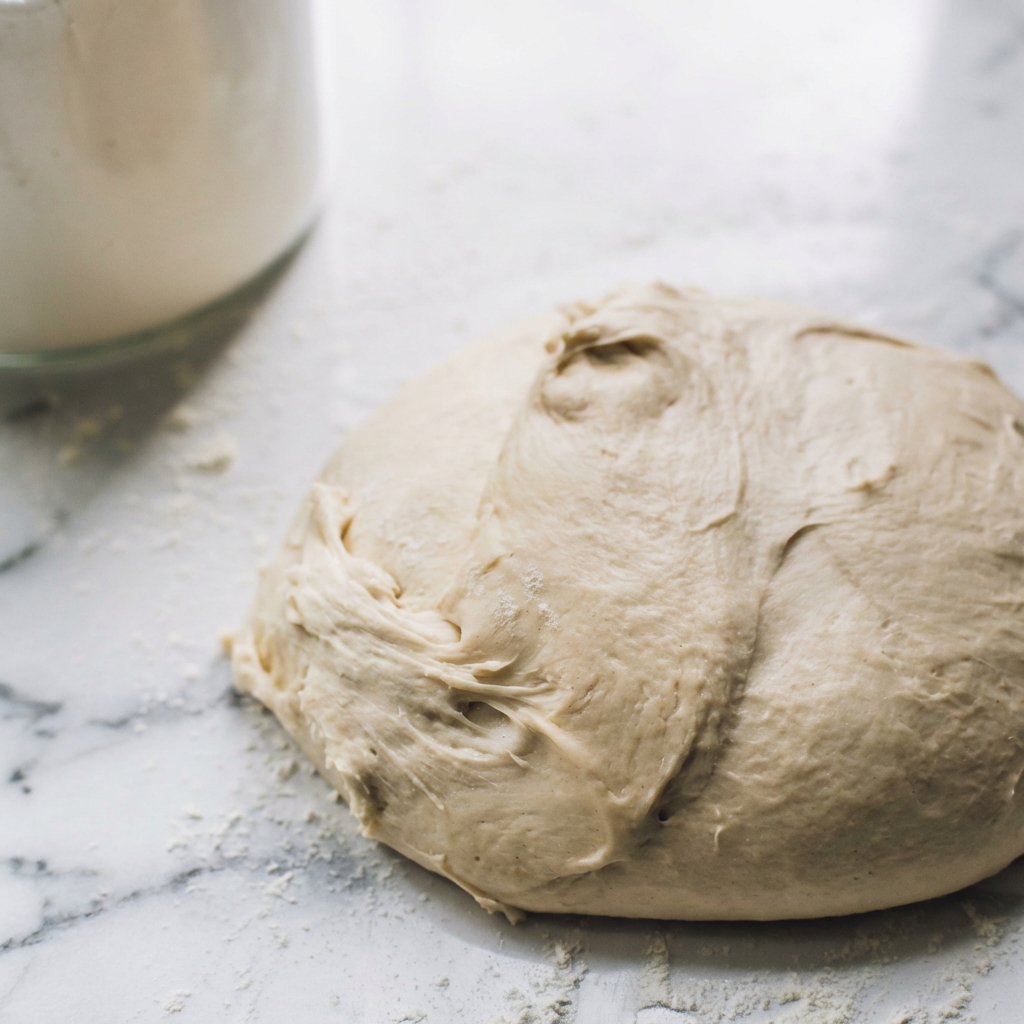
The dough will be softer than traditional bread dough—that’s exactly what you want.
Rest and Develop Gluten
Cover the bowl and let the dough rest for 30 minutes. This short rest allows the flour to hydrate fully and helps gluten develop naturally.
After resting, gently fold the dough over itself a few times. Cover again.
Bulk Fermentation
Let the dough ferment at room temperature for 4–6 hours, or until it looks puffy and has roughly doubled in size. The timing will depend on the temperature of your kitchen and the strength of your starter.
You’ll know it’s ready when the dough feels airy and slightly elastic.
Cold Proof for Flavor
Transfer the dough to the refrigerator and let it rest overnight, or up to 24 hours. This step deepens the sourdough flavor and makes the dough easier to handle.
Cold proofing is optional but highly recommended for the best texture and taste.
Roll and Cut
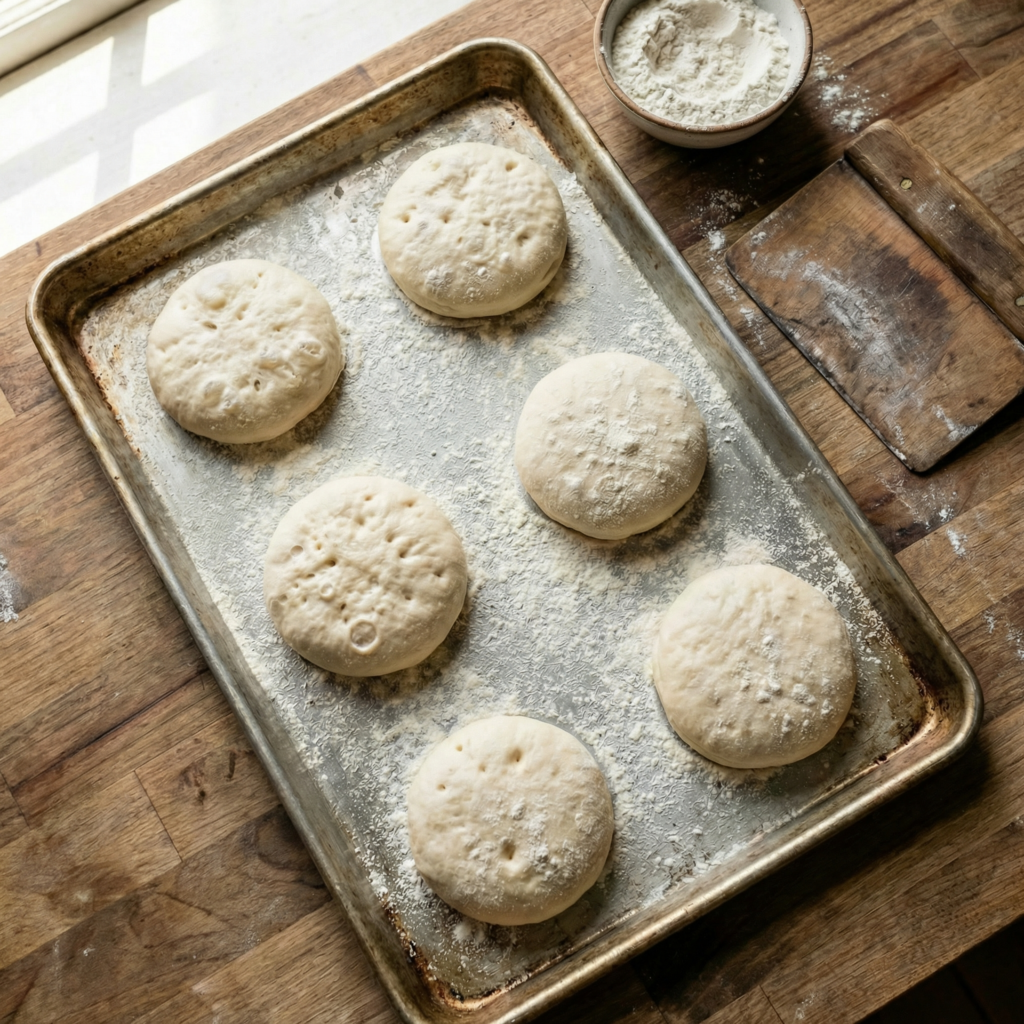
Turn the chilled dough out onto a floured surface. Gently roll it to about ½-inch thickness. Use a round cutter or glass to cut out muffins.
Place the rounds on a baking sheet dusted generously with cornmeal, then sprinkle more cornmeal on top.
Final Rise
Cover the muffins lightly and let them rise at room temperature for 60–90 minutes. They should look slightly puffed but not overly risen.
This final rest ensures light interiors and defined nooks.
Cook on the Griddle
Heat a skillet or griddle over low heat and lightly grease it. Place the muffins on the griddle, leaving space between them.
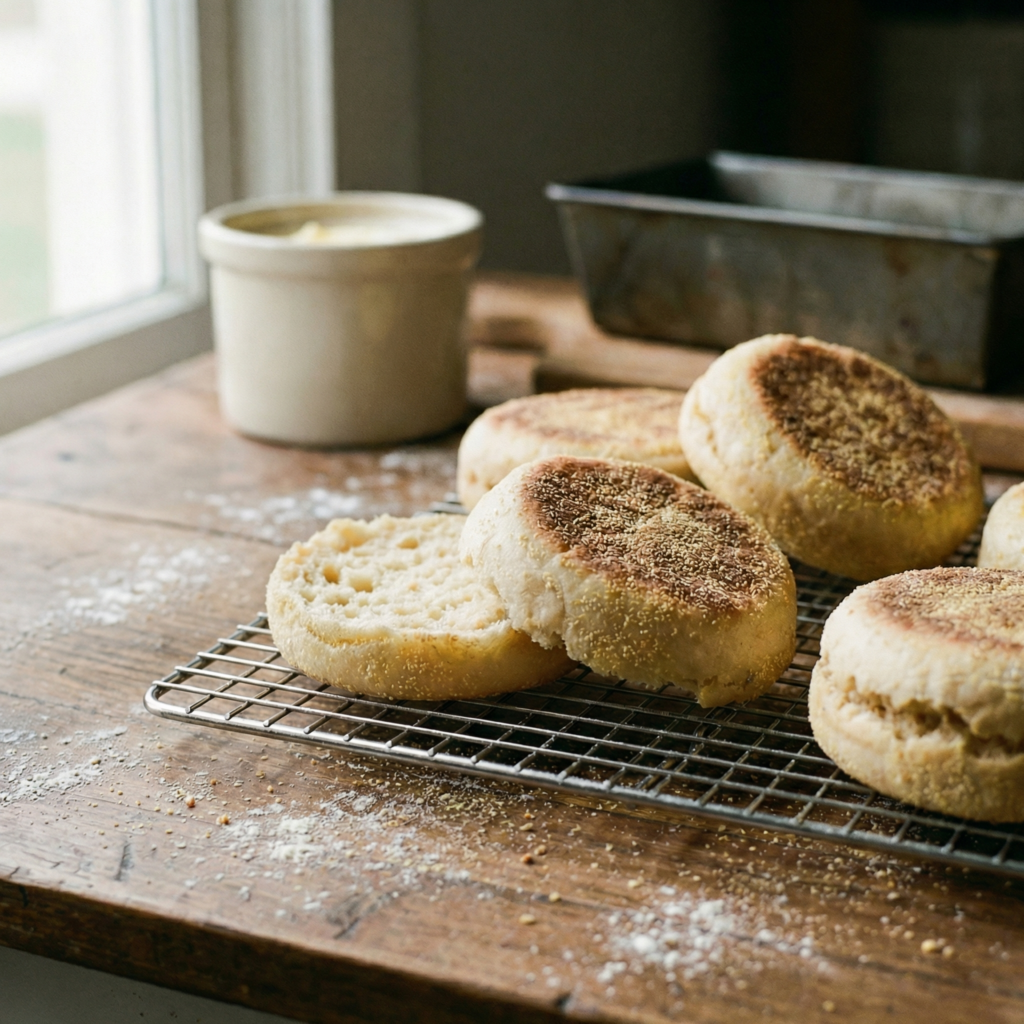
Cook for 6–8 minutes per side, flipping carefully, until golden brown and cooked through. Low and slow cooking is key to preventing burnt outsides and raw centers.
Cool and Split
Transfer the cooked muffins to a wire rack and allow them to cool completely. For the best nooks and crannies, split them open with a fork instead of slicing.
Tips for Perfect Sourdough English Muffins
- Use active starter for good rise
- Keep the heat low to cook evenly
- Don’t rush fermentation—flavor develops with time
- Fork-split for texture, not a knife
These details make all the difference.
How to Serve Them
Sourdough English muffins are incredibly versatile:
- Toasted with butter and jam
- Topped with avocado and eggs
- Used for breakfast sandwiches
- As a base for mini pizzas
They freeze beautifully, making them perfect for meal prep.
Final Thoughts
Making sourdough English muffins at home is deeply satisfying. They’re cozy, flavorful, and far better than store-bought versions. Once you master the process, you’ll find yourself baking batch after batch just to keep up.
If you love sourdough and crave something comforting yet impressive, this recipe belongs in your regular rotation.