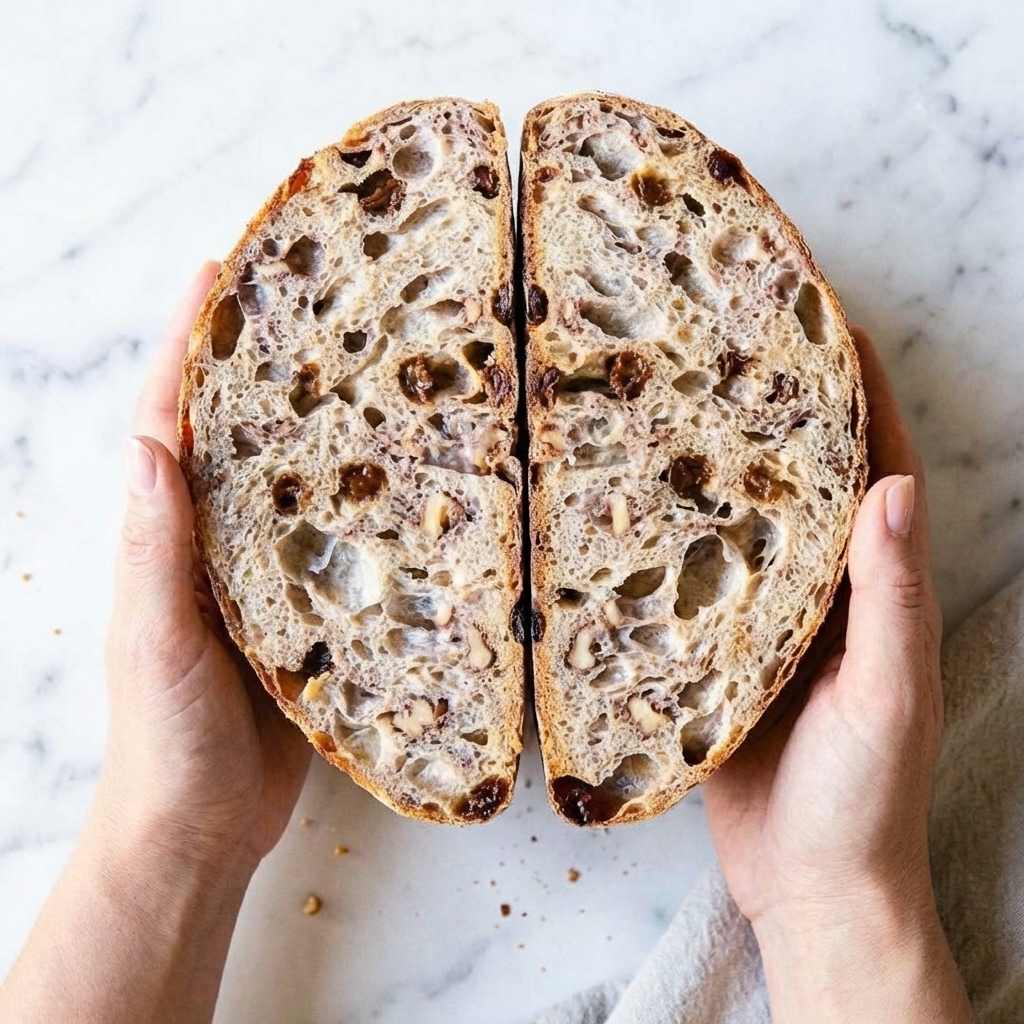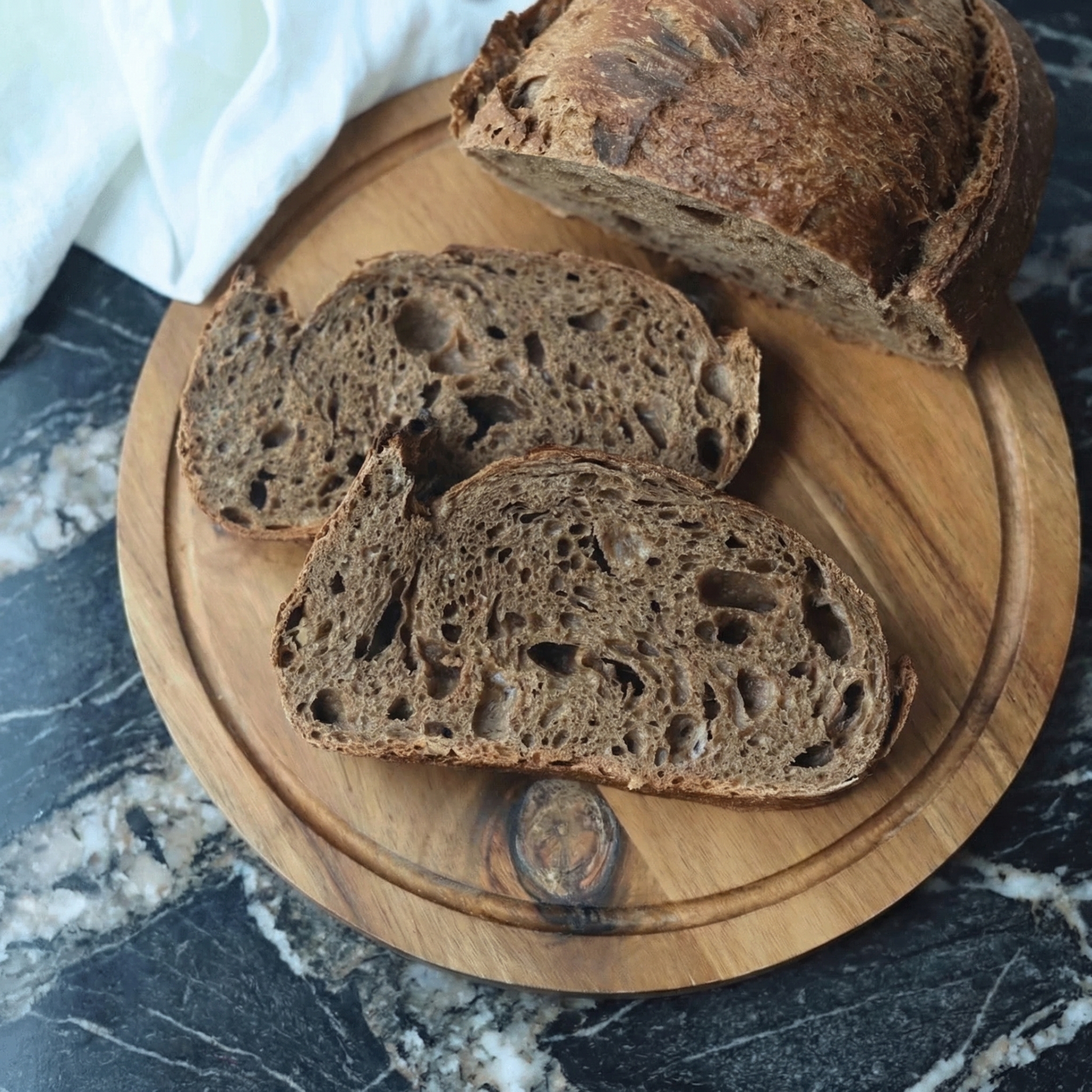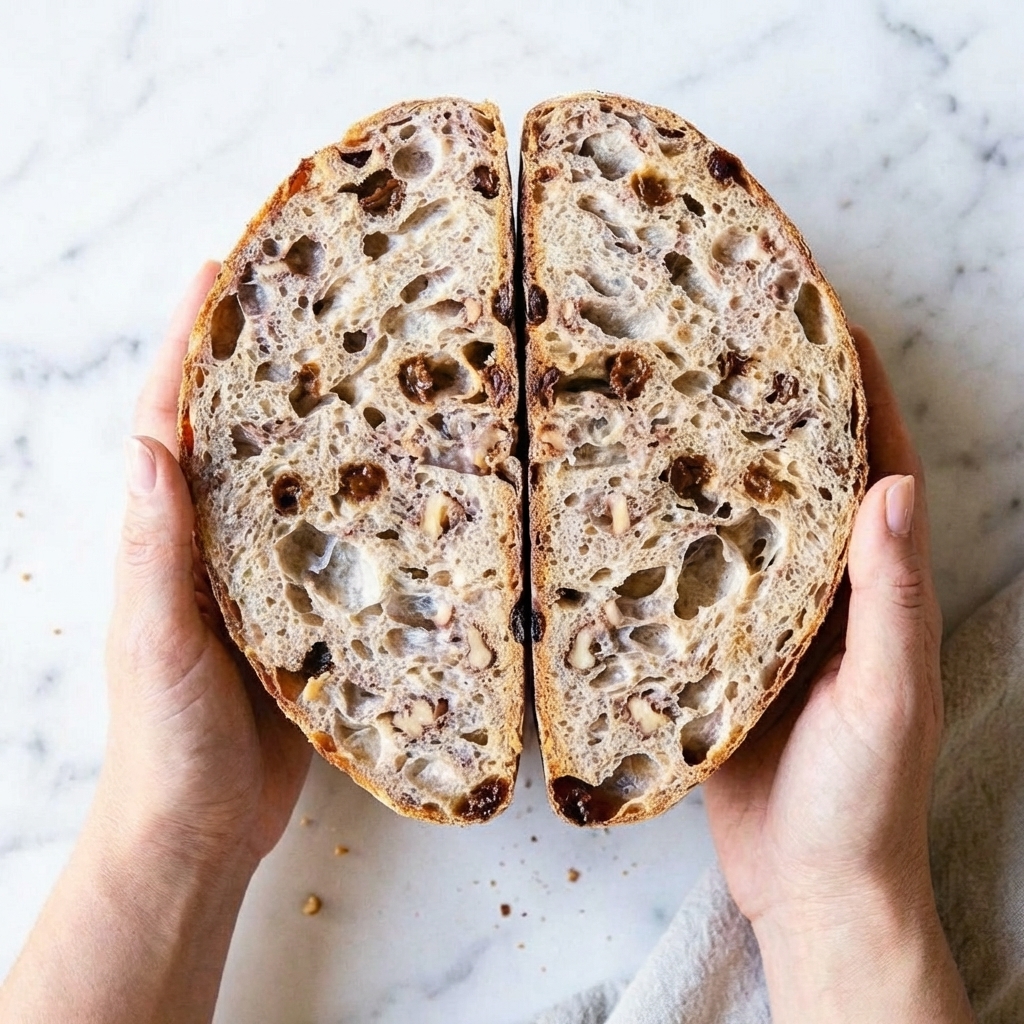
There’s something magical about slicing into a loaf of Cinnamon Raisin Sourdough Bread and seeing that beautiful spiral of cinnamon sugar running through the center.
The crust crackles, the crumb is soft and chewy, and each bite delivers sweet bursts of raisins balanced by the subtle tang of sourdough.
Toast it with butter, turn it into French toast, or enjoy it plain—this bread is a cozy kitchen project that’s absolutely worth the time.
Below is a detailed, step-by-step guide to help you bake your own bakery-style cinnamon raisin sourdough loaf at home.
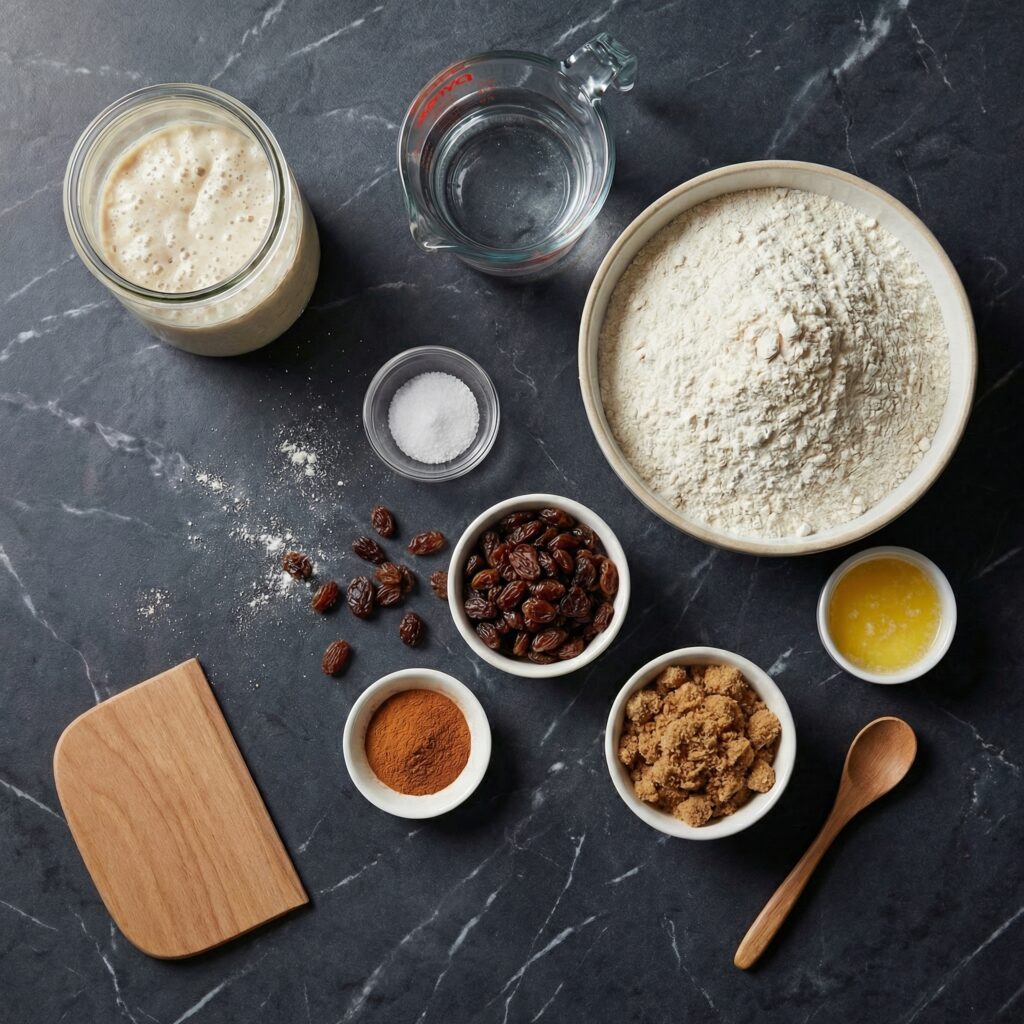
Feed Your Starter
Start 4–6 hours before mixing your dough by feeding your sourdough starter. It should be bubbly, active, and doubled in size before using.
A strong starter is key for good rise and structure.
To test readiness, drop a small spoonful into water—if it floats, it’s ready.
Mix the Dough
In a large bowl, combine the active starter and warm water. Stir until mostly dissolved.
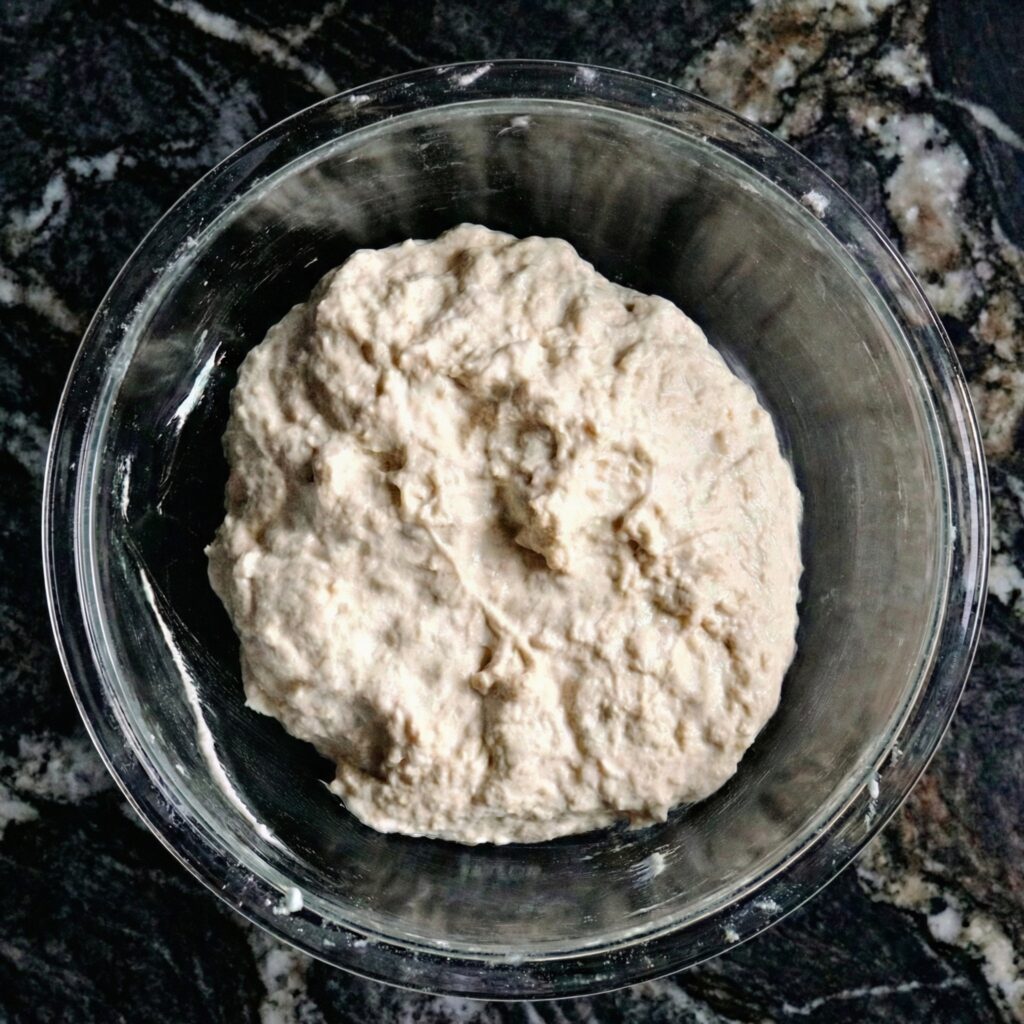
Add the bread flour and mix until no dry flour remains. The dough will look shaggy and rough—that’s perfect. Cover and let it rest for 30 minutes.
This rest period is called the autolyse, and it allows the flour to hydrate fully, improving texture and gluten development.
After 30 minutes, sprinkle the salt over the dough and gently knead it in by hand.
Pinch and fold the dough until the salt is evenly incorporated.
Add the Raisins
If your raisins are dry, soak them in warm water for 10 minutes, then drain and pat dry.
This keeps them soft and prevents them from pulling moisture from the dough.
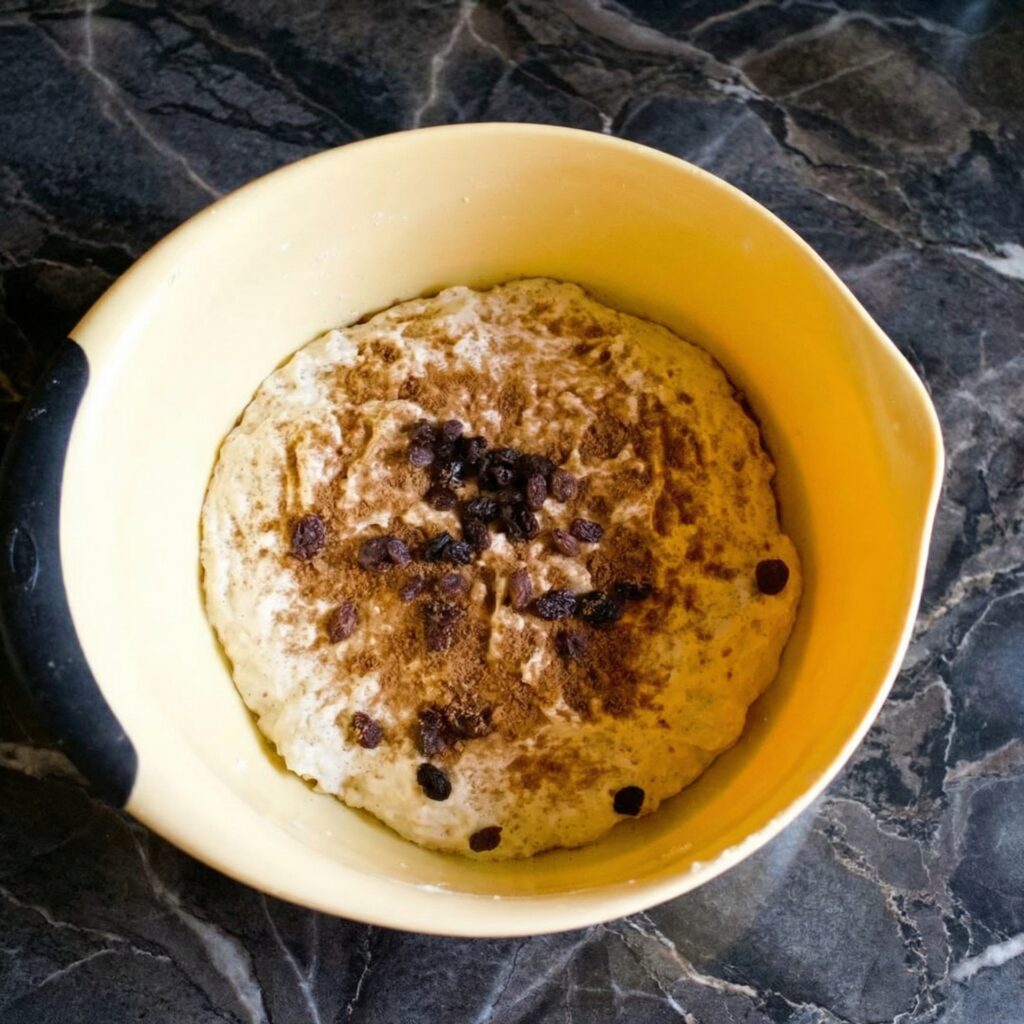
Flatten the dough slightly and scatter the raisins over the surface. Fold the dough over itself several times to distribute the raisins evenly.
Don’t worry if some pop out—they’ll work their way back in during folds.
Bulk Fermentation with Stretch and Folds
Cover the bowl and let the dough rest for 3–4 hours at room temperature.
During the first 2 hours, perform a series of stretch and folds every 30 minutes (about 4 sets total):
- Wet your hands.
- Grab one side of the dough.
- Stretch it upward gently.
- Fold it over to the opposite side.
- Rotate the bowl and repeat 3–4 times.
These folds strengthen the dough without kneading.
After the final fold, allow the dough to rise undisturbed until it has increased in size by about 50% and feels airy.
Prepare the Cinnamon Sugar
In a small bowl, mix together the sugar, cinnamon, and flour.
The flour helps the swirl adhere to the dough and reduces large air gaps after baking.
Set aside until shaping.
Pre-Shape the Dough
Turn the dough out onto a lightly floured surface.
Gently shape it into a loose round by folding the edges toward the center.
Let it rest uncovered for 20–30 minutes. This rest relaxes the gluten and makes final shaping easier.
Shape with the Cinnamon Swirl
Lightly flour your work surface again and gently flatten the dough into a rectangle, about 8 x 12 inches.
Be careful not to press out all the air.
Evenly sprinkle the cinnamon sugar mixture over the surface, leaving a small border around the edges.
Starting from the shorter side, roll the dough tightly into a log, similar to shaping cinnamon rolls.
Pinch the seam closed and tuck the ends underneath.
This tight roll creates that signature swirl when sliced.
Final Proof
Place the shaped dough seam-side up into a floured proofing basket or a bowl lined with a floured kitchen towel.
Cover and refrigerate overnight (8–12 hours).
This cold fermentation enhances flavor and improves scoring and oven spring.
Preheat and Score
The next day, preheat your oven to 475°F (245°C) with a Dutch oven inside for at least 30–45 minutes.
Carefully turn the dough out onto parchment paper.
Score the top with a sharp blade, making one long slash along the top.
This controls expansion and gives the loaf a beautiful rustic look.
Bake
Transfer the dough (on parchment) into the hot Dutch oven. Cover with the lid and bake for 20 minutes.
Remove the lid and reduce the oven temperature to 450°F (230°C).
Bake for another 20–25 minutes until the crust is deep golden brown.
The internal temperature should read about 205–210°F when done.
Cool Completely
Remove the loaf and place it on a wire rack.
Let it cool for at least 1 hour before slicing.
Cutting too early can result in a gummy texture because the crumb is still setting.
Tips for Success
- Prevent Gaps: Adding flour to the cinnamon sugar mixture helps bind it to the dough.
- Even Distribution: Soaked raisins prevent dryness and improve texture.
- Strong Swirl: Roll tightly during shaping to avoid separation inside the loaf.
- Extra Flavor: Add a splash of vanilla or orange zest to the dough for variation.
Serving Ideas
Toast thick slices and spread with salted butter for a simple breakfast.
Turn it into decadent French toast or use it for bread pudding.
It also makes an incredible grilled peanut butter sandwich.