Making croissants from scratch is often seen as the ultimate baking achievement—a beautiful, time-consuming alchemy of flour, water, and cold butter that yields ethereal, shattering layers. While it requires patience and attention to detail, the process is deeply rewarding and entirely achievable at home.
This guide breaks down the science and technique of lamination, walking you through each fold and turn to create dough with hundreds of paper-thin layers. The result is a croissant with a crisp, golden shell that gives way to a tender, airy interior with a rich, pure butter flavor. The smell alone as they bake is worth the effort.
The Science of Lamination: Creating Hundreds of Layers
The flaky architecture of a croissant is created through a process called lamination. It involves enveloping a block of cold butter within a yeasted dough, then repeatedly rolling and folding it. The key is temperature control: the butter must remain cold and pliable, not melted or incorporated. Each “fold” creates new layers: a single fold triples the layers.
Through a series of folds, you create hundreds of distinct layers of dough separated by thin sheets of butter. In the oven, the water in both the dough and the butter turns to steam. This steam pushes the layers apart, while the melting butter fries the dough from the inside, creating that iconic flaky, crisp texture. The yeast provides a secondary lift, making the interior airy and light rather than dense. Precise folding and consistent chilling are non-negotiable for successful lamination.
Instructions
Make the Dough (Day 1)
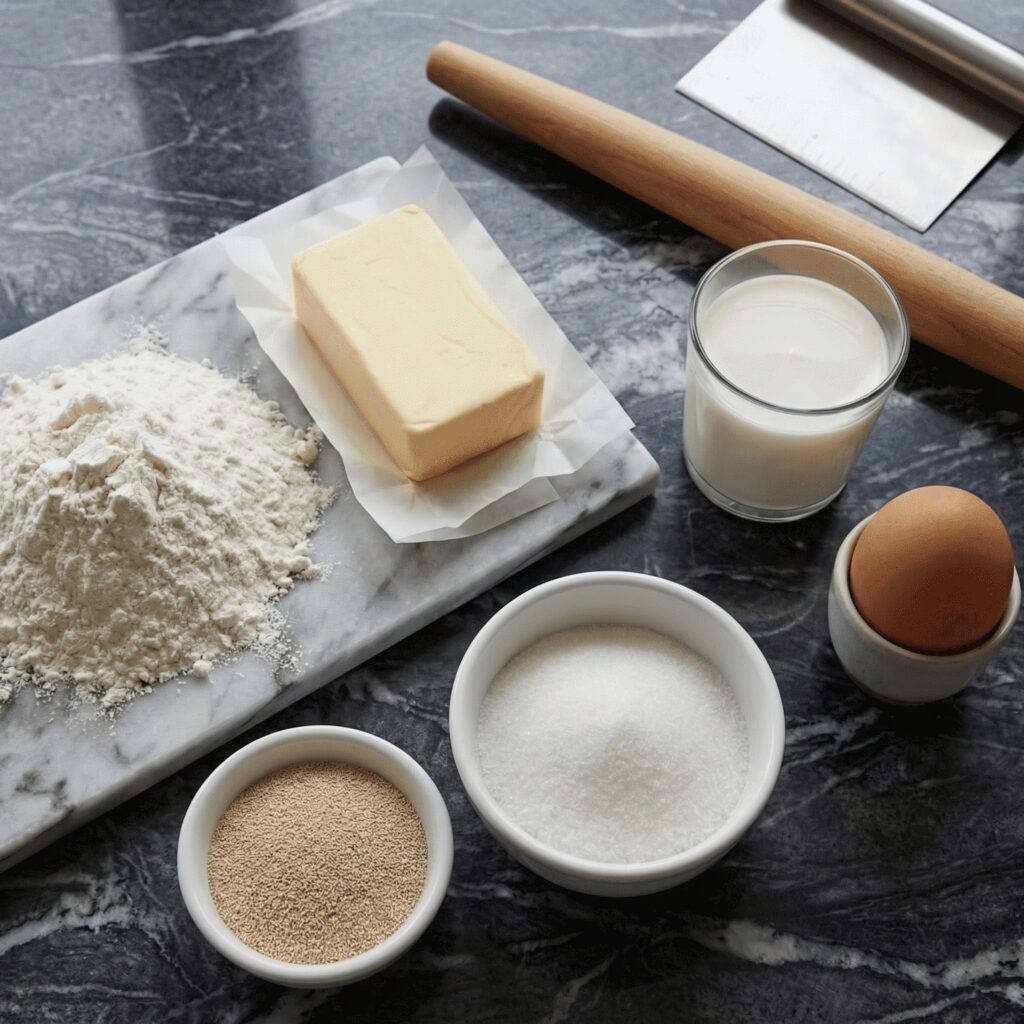
In a mixer with a dough hook, combine flour, sugar, yeast, and salt. Add cold milk and softened butter. Mix on low until a shaggy dough forms, then medium for 5-7 minutes until smooth and elastic. Shape into a rectangle, wrap, and refrigerate overnight.
Prepare the Butter Block
Place cold butter between two sheets of parchment. Pound with a rolling pin into a 7×7-inch square. Refrigerate until firm but pliable.
Laminate the Dough (Day 2)
On a floured surface, roll the chilled dough into a 10×10-inch square. Place the butter block in the center diagonally. Fold the dough corners over the butter to enclose it completely, sealing edges.
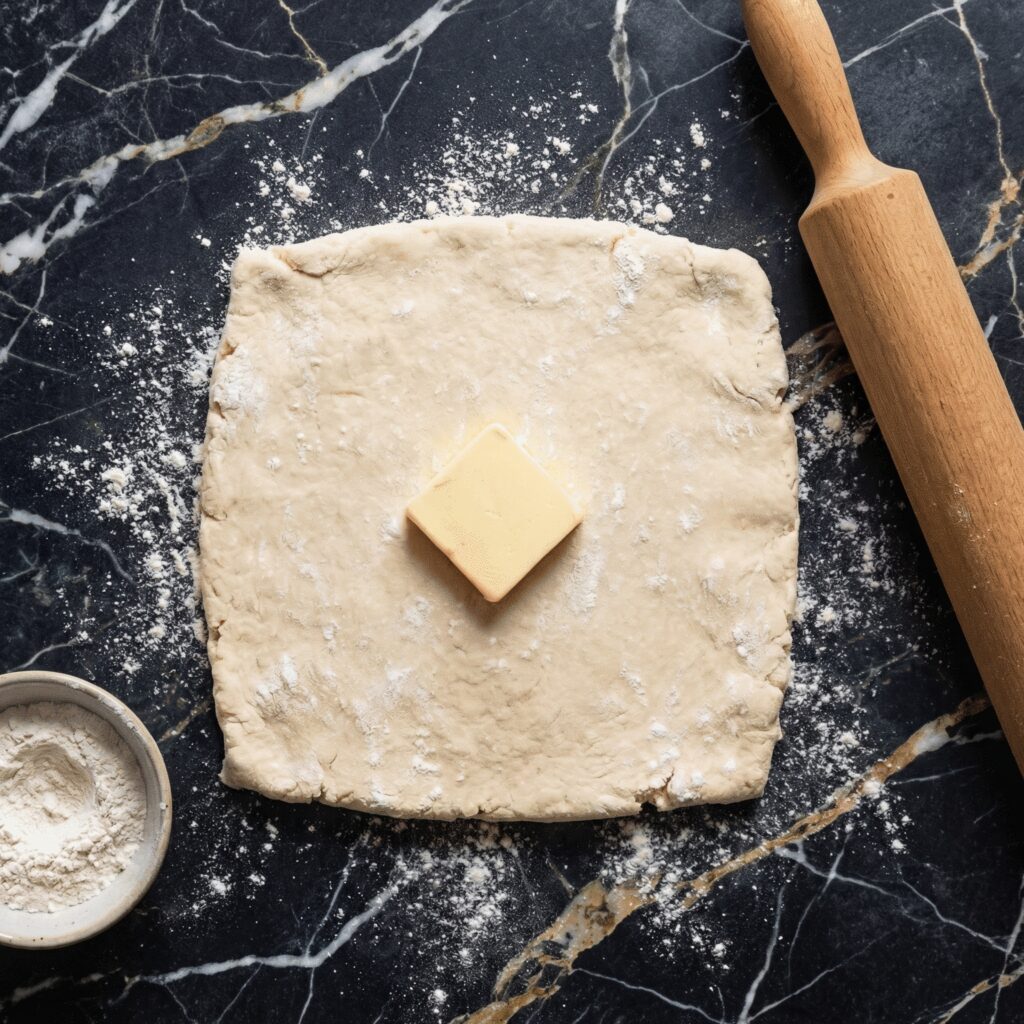
The First Roll & Fold (Turn 1)
Roll the packet into a 8×20-inch rectangle. Perform a “book fold”: fold the bottom third up and the top third down over it (like a letter). Wrap and chill for 45-60 minutes.
The Second & Third Turns
Repeat the rolling and book fold process two more times, chilling between each turn. After the third fold, wrap tightly and chill for at least 4 hours, or preferably overnight.
Shape the Croissants (Day 3)
Roll the chilled dough into a 8×22-inch rectangle. Cut into long triangles (base 4 inches, height 8 inches). Make a small notch in the center of each base. Gently stretch and roll from base to tip. Curve into a crescent.
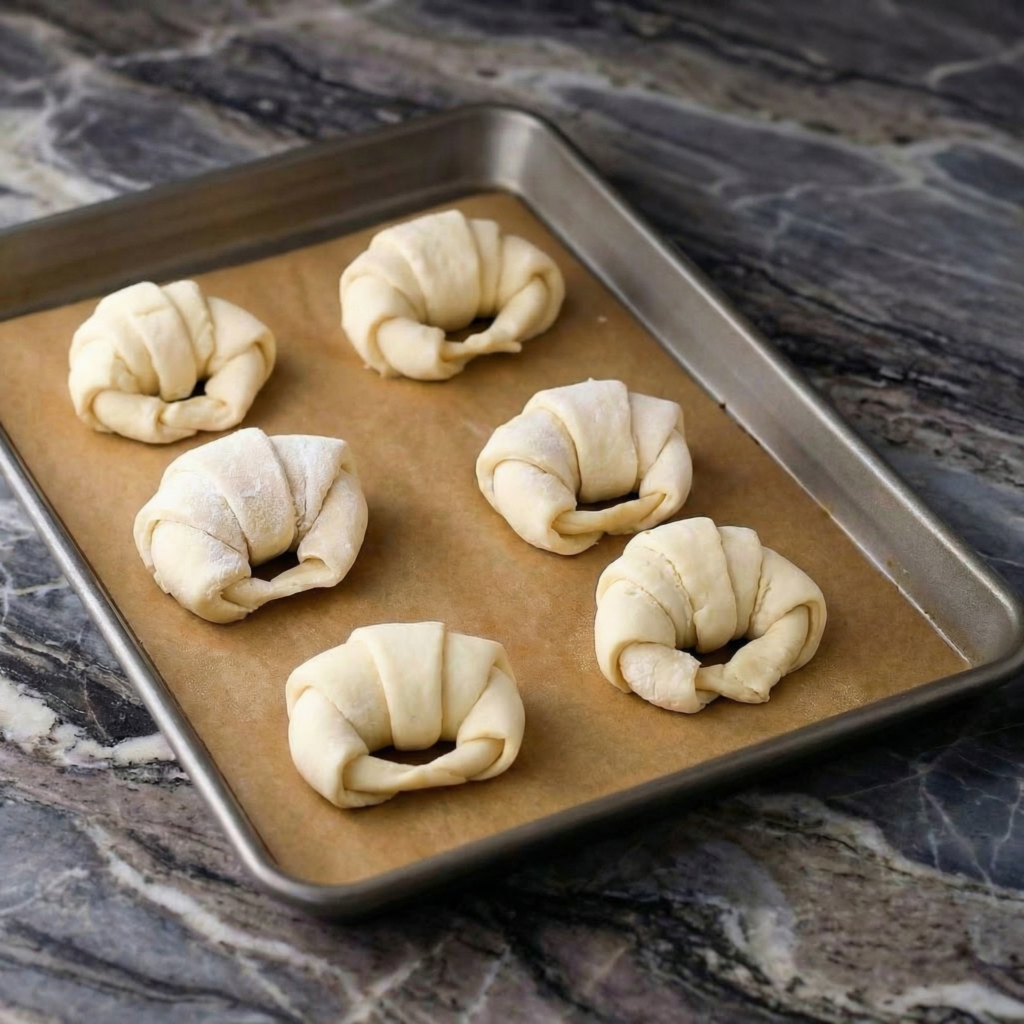
Proof
Place shaped croissants on parchment-lined sheets. Cover loosely and let proof at room temperature (75-78°F) for 2-3 hours until visibly puffy and jiggly.
Bake
Preheat oven to 400°F (200°C). Gently brush croissants with egg wash. Bake for 18-22 minutes until deeply golden brown. Cool on a wire rack.
Pro-Tips for Croissant Mastery

- Temperature is Everything: The dough and butter should be similarly cool and pliable (around 55-60°F). If butter is too hard, it will shatter; if too soft, it will ooze out. Chill as directed.
- Use Bread Flour: Its higher protein content creates strong gluten strands that can withstand rolling and support the layers.
- European Butter is Key: Its higher fat content creates better steam and flakiness.
- Measure with a Ruler: Precision in rolling dimensions ensures even layers.
- Patience During Proofing: Under-proofed croissants won’t be airy; over-proofed will collapse. They should feel like a marshmallow when gently pressed.
- The Oven Spring: Bake at a high initial temperature to create maximum steam and “oven spring” for the iconic honeycomb interior.
- Listen to Your Pastry: A perfectly baked croissant will sound hollow when tapped on the bottom.
- Embrace the Process: Croissants are a project. Enjoy the rhythm of folding and chilling.
These Homemade Croissants are not just food; they are a testament to the beauty of traditional baking technique.