There’s something truly special about a crescent roll made from scratch. Unlike their canned counterparts, these rolls are a project in patience and technique that yields extraordinary rewards: hundreds of delicate, shattering layers that give way to a soft, tender interior.
This recipe guides you through the process of creating a yeasted laminated dough—similar to croissant dough but simpler—where layers of butter are folded into the dough to create that iconic flakiness. The result is a roll that’s impressively light, richly flavored with butter, and worthy of being the star of your holiday brunch or dinner table.
The Science of Lamination and the Flaky Layer
The flakiness of a perfect crescent roll is achieved through a process called lamination. A slab of cold butter is enclosed in a yeasted dough envelope. Through a series of folds and turns, this creates alternating layers of dough and butter.
During baking, the water in the butter turns to steam, pushing the dough layers apart. Meanwhile, the butterfat fries the dough from within, creating crisp, separate layers. The yeast provides lift, making the rolls airy and light.
The key is keeping everything cold to prevent the butter from melting into the dough, which would result in a bready texture rather than a flaky one. This careful balance of temperature, timing, and technique transforms simple ingredients into a pastry with complex, delightful texture.
Instructions
The Mixed & Kneaded Dough
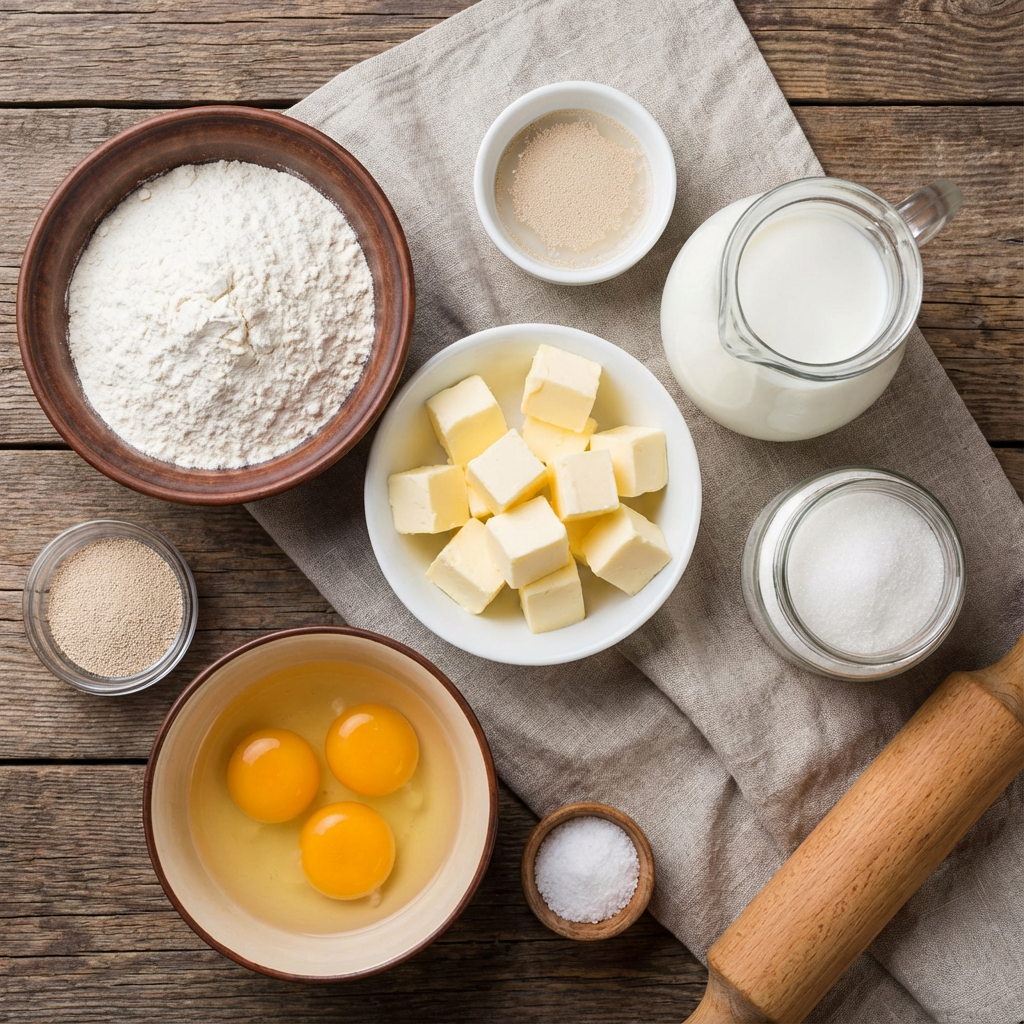
In the bowl of a stand mixer, combine flour, sugar, yeast, and salt. Add warm milk, egg, and softened butter. Mix with the dough hook until a shaggy dough forms, then knead for 5-7 minutes until smooth and elastic. The dough should be soft but not sticky.
The First-Risen Dough
Place the dough in a greased bowl, turn to coat, and cover with plastic wrap. Let rise in a warm place for 1-1.5 hours, or until doubled in size.
The Prepared Butter Block
While the dough rises, place the 2 sticks of cold butter side-by-side between two sheets of parchment paper. Pound and roll them into a neat 7-inch square. Chill until firm.
The Dough Enclosing the Butter Block (Lock-In)
On a floured surface, roll the risen dough into a 10-inch square. Place the chilled butter block diagonally in the center. Fold the corners of the dough over the butter to enclose it completely, sealing the edges.
The Rolled & Folded Dough (After First Turn)
With the seam side down, gently roll the dough package into a long rectangle. Perform a letter fold (fold the bottom third up, then the top third down over it). This is one “turn.” Wrap and chill for 30 minutes.
The Rolled & Cut Triangles
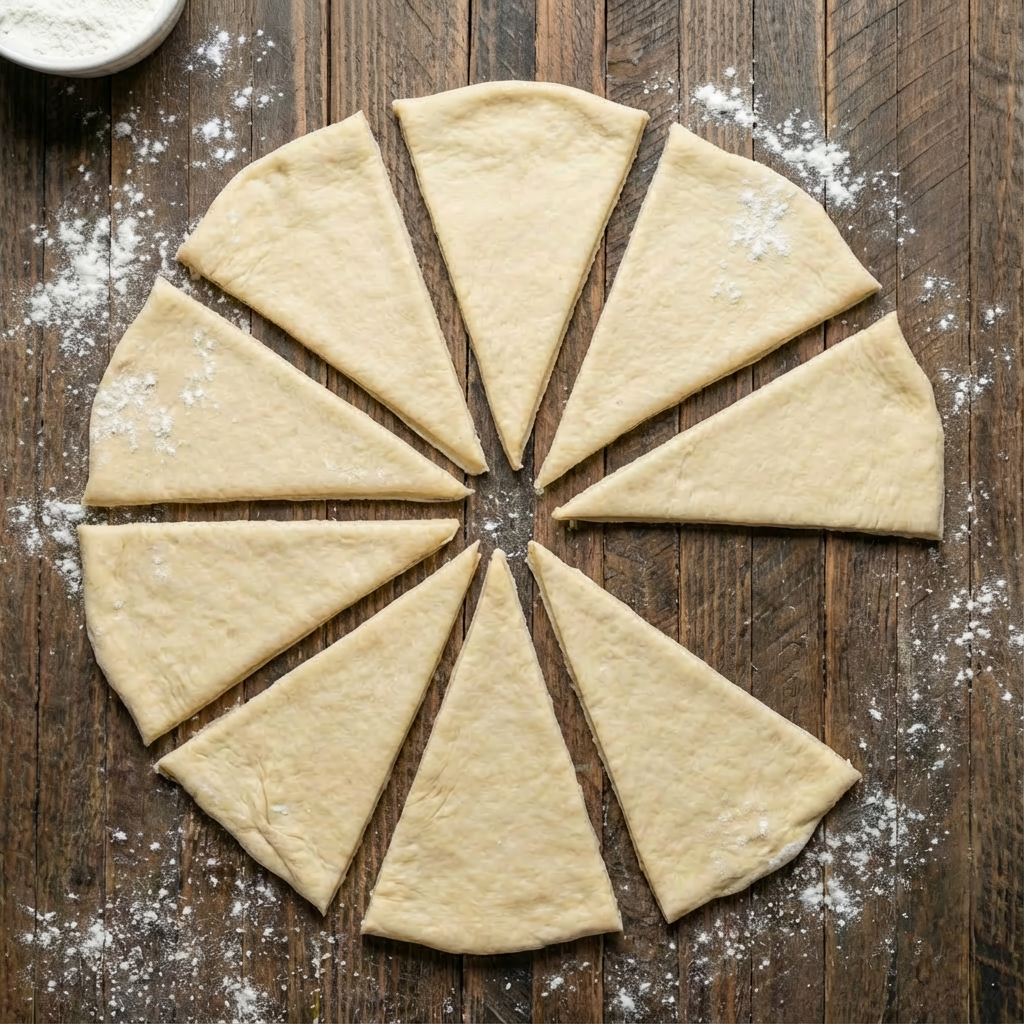
After completing 3 total turns with chilling in between, roll the final chilled dough into a large ⅛-inch thick circle. Use a pizza cutter to cut the circle into 12-16 equal triangles.
The Rolled Crescents on the Pan
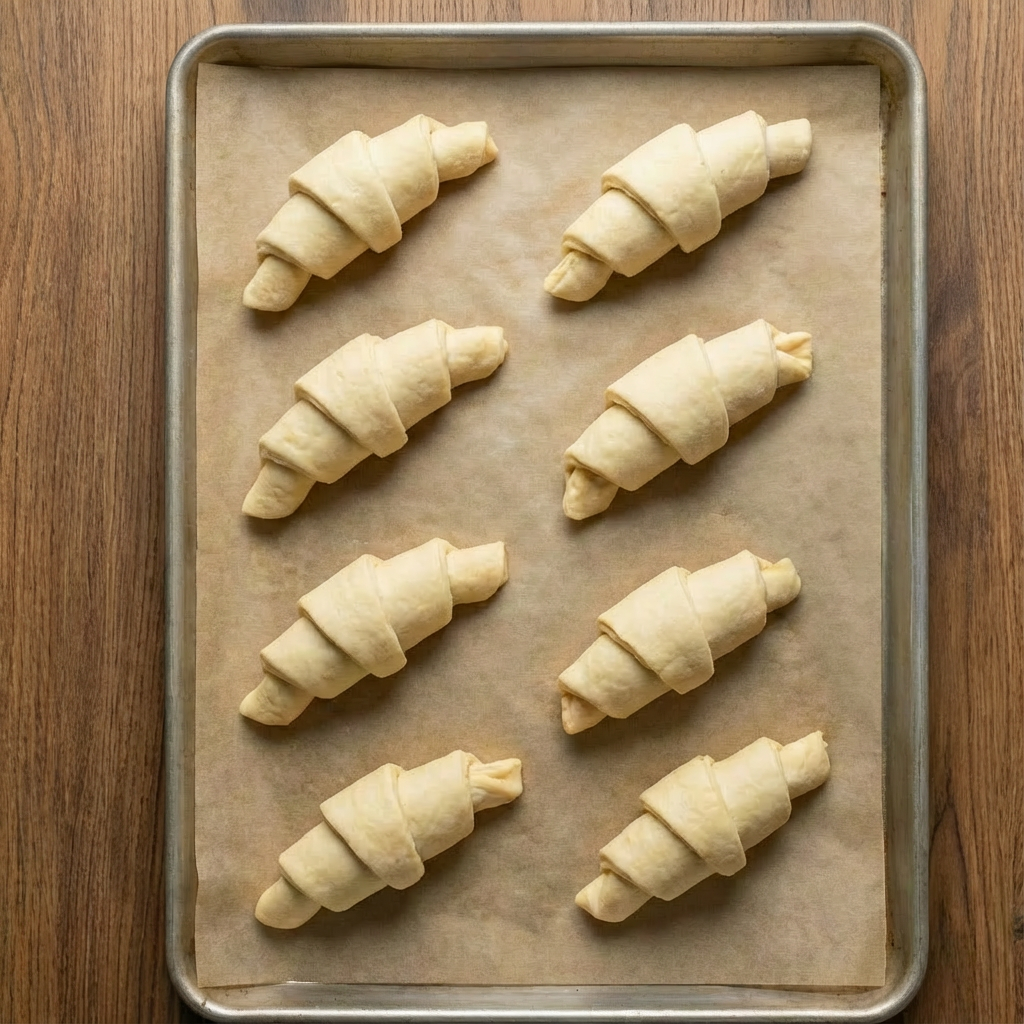
Starting at the wide end, roll each triangle up into a crescent shape. Place the rolls point-side down on a parchment-lined baking sheet, curving them slightly into a crescent shape.
The Proofed & Egg-Washed Rolls
Cover the pan loosely and let the rolls proof at room temperature for 45-60 minutes, until puffy. Brush gently with egg wash and sprinkle with optional flaky salt.
The Baked, Golden Rolls
Bake at 375°F (190°C) for 15-18 minutes, until deeply golden brown and flaky. Transfer to a wire rack to cool slightly.
Pro-Tips for Flaky Roll Success

- Temperature is Everything: Keep the dough and butter cold. If the butter starts to soften or ooze during rolling, stop immediately and chill everything.
- Use Instant Yeast: It can be mixed directly with the dry ingredients, simplifying the process.
- Even Rolling: Try to roll the dough to a consistent thickness for even layers and baking.
- Sharp Tools: Use a sharp knife or pizza cutter to cut the triangles cleanly without compressing the layers.
- Roll Tightly but Gently: Roll from the wide end to the point without stretching the dough, to maintain layer structure.
- Don’t Over-Proof: The rolls should look puffy but not jiggly. Over-proofing can cause the butter to melt out and the rolls to deflate.
- High Heat Bake: A hot oven is crucial for maximum steam and rise, setting the layers quickly.
- Make Ahead: After shaping, you can cover and refrigerate the rolls overnight for a slow proof, then bake in the morning. You can also freeze unbaked rolls; proof from frozen, adding 5-10 minutes to bake time.
- Serve Warm: These rolls are at their absolute best slightly warm from the oven.
- Storage: Best eaten the day they’re made. Reheat in a 350°F oven for 5 minutes to recrisp.
Mastering these Homemade Crescent Rolls is a rewarding baking achievement that will elevate any meal.