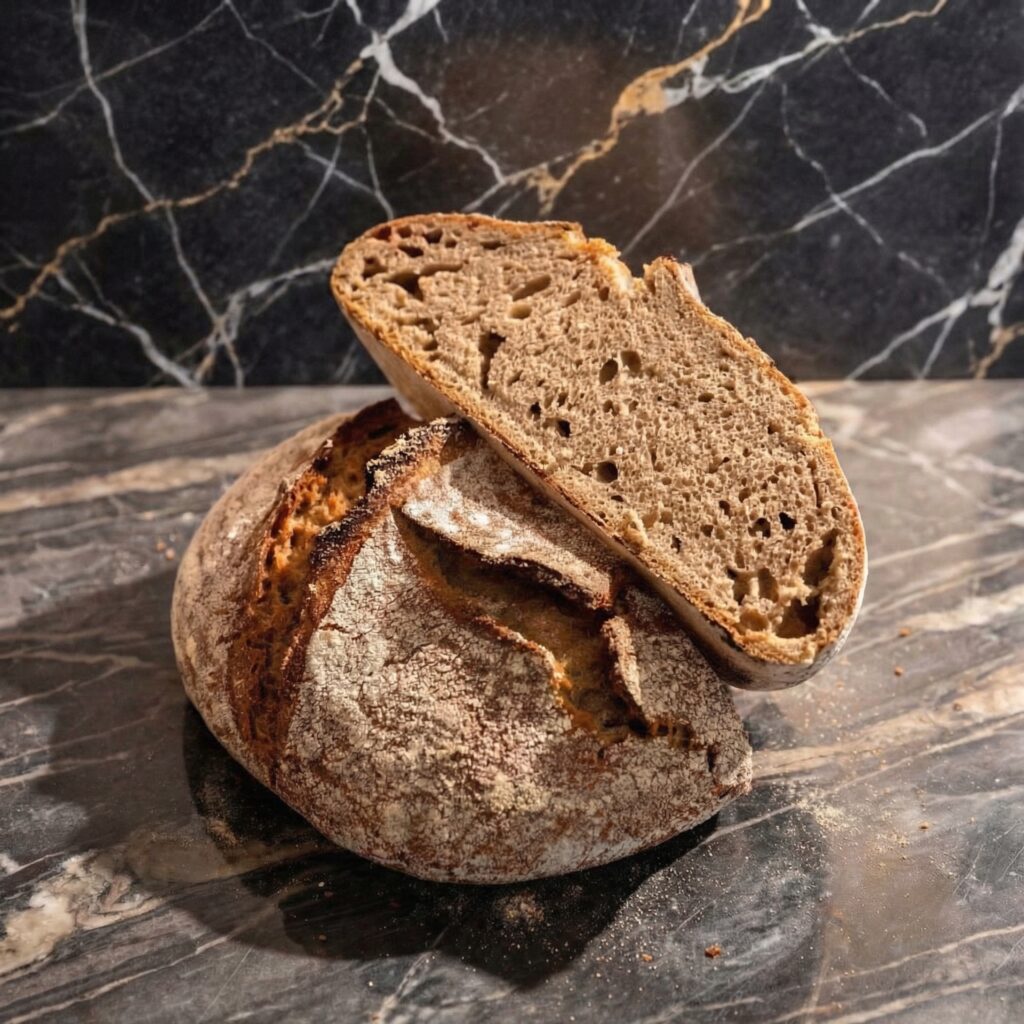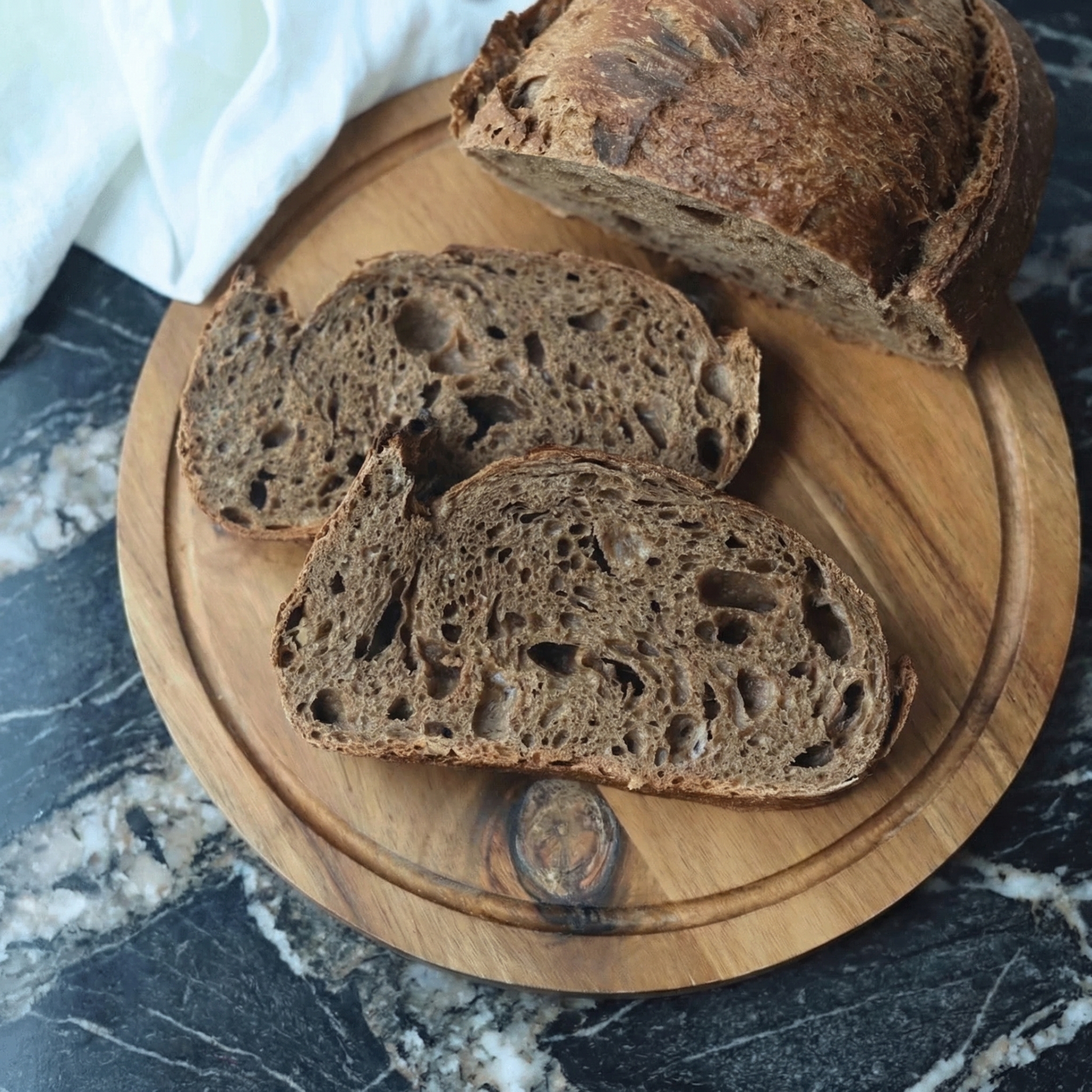
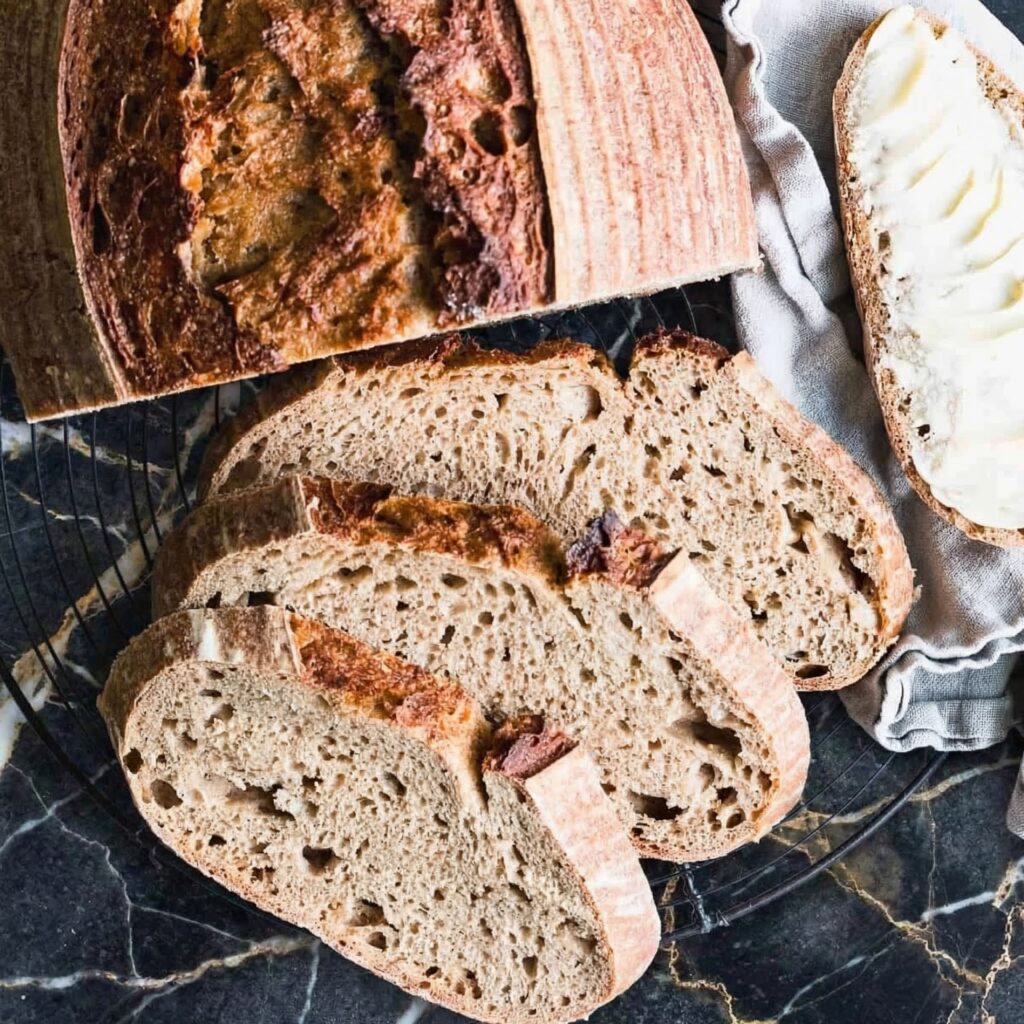
Rye bread is a staple of Eastern European and Jewish delis—dense, earthy, and deeply satisfying. When made with sourdough, it takes on an even more complex, tangy flavor that perfectly complements the nuttiness of rye flour. This sourdough rye bread has a firm, close crumb, a crisp crust, and the unmistakable aroma of caraway seeds.
It’s the perfect bread for pastrami sandwiches, toast with butter, or alongside a bowl of soup. This recipe balances rye flour with bread flour for structure, uses a long, slow fermentation for flavor, and includes the classic addition of caraway seeds for authenticity.
Instructions
Build the Levain (Evening Before)
The night before baking, combine the active starter, dark rye flour, and water in a small jar or bowl. Mix well, cover loosely, and let sit at room temperature overnight (8-12 hours). It should be bubbly, active, and smell pleasantly sour in the morning.
Autolyse (Morning of Bake)
In a large bowl, combine both flours and the warm water. Mix with your hands or a spatula until no dry bits remain. Cover and let rest for 30-60 minutes. This softens the bran and starts gluten development.
Add Levain and Salt
Add the entire levain and the salt to the dough. Mix by pinching and folding until fully incorporated. The dough will be very sticky—that’s normal for rye.
Add Caraway Seeds
Sprinkle the caraway seeds over the dough and fold in until evenly distributed.
Bulk Fermentation (Stretch and Folds)
Cover the bowl and let the dough rest for 30 minutes. Perform your first set of stretch and folds: wet your hand, grab one side of the dough, stretch it up, and fold it over itself.
Rotate the bowl and repeat 4 times. Cover and rest. Repeat this process every 30 minutes for 2-3 hours (4-6 sets total). The dough will become smoother and more cohesive with each set, though it will remain stickier than wheat dough.
Continue Bulk Fermentation
After the last set of folds, let the dough rest, covered, for another 1-2 hours. It should increase in volume by about 50%, look puffy, and have visible bubbles on the surface.
Shape the Dough
Lightly flour your work surface. Gently turn the dough out. With floured hands, gently shape it into a round or oval by folding the edges into the center, then flipping it over and dragging it toward you to create surface tension. Rye dough is more delicate—handle gently.
Final Proof
Place the shaped dough seam-side up in a floured proofing basket (or a bowl lined with a floured kitchen towel). Cover and refrigerate overnight (8-12 hours) for best flavor, or let proof at room temperature for 1-2 hours until puffy.
Preheat the Dutch Oven
Place a Dutch oven with its lid in your oven and preheat to 475°F (245°C) for at least 45 minutes.
Score the Dough
Carefully remove the hot Dutch oven. Place a piece of parchment paper over the dough and invert the basket to release the dough onto the parchment. Using a sharp blade or lame, score the top with a simple slash or pattern—about ¼ inch deep.
Bake Covered
Using the parchment as handles, lower the dough into the hot Dutch oven. Put the lid on and bake for 25 minutes.
Bake Uncovered
Remove the lid and bake for another 20-25 minutes, until the crust is deep golden brown and the internal temperature reaches 205-210°F (96-99°C).
Cool Completely
Carefully remove the loaf from the pot and transfer to a wire rack. Cool completely—at least 2 hours. This is crucial for texture.
Slice and Enjoy
Once completely cool, slice with a serrated knife. Serve with butter, use for sandwiches, or toast.
Pro-Tips for Sourdough Rye Perfection
- Use Dark Rye Flour: It has more flavor and nutrients than light rye. For a milder rye, use a mix of light and dark.
- Expect a Sticky Dough: Rye dough is naturally stickier than wheat dough. Wet hands and a bench scraper are your friends.
- Caraway Seeds Are Classic: They add an authentic deli-rye flavor. If you’re not a fan, omit them or substitute with fennel seeds.
- Handle Gently: Rye dough has less gluten structure—be gentle during shaping to avoid tearing.
- Don’t Overproof: Rye dough can overproof faster than wheat dough. Look for a 50% increase in volume, not a full doubling.
- Cool Completely: Rye bread is very moist and needs time to set. Slicing too early will result in a gummy texture.
- Perfect for Sandwiches: This bread is ideal for pastrami, corned beef, or any deli sandwich.
- Toast It: Toasted rye bread with butter is one of life’s simple pleasures.
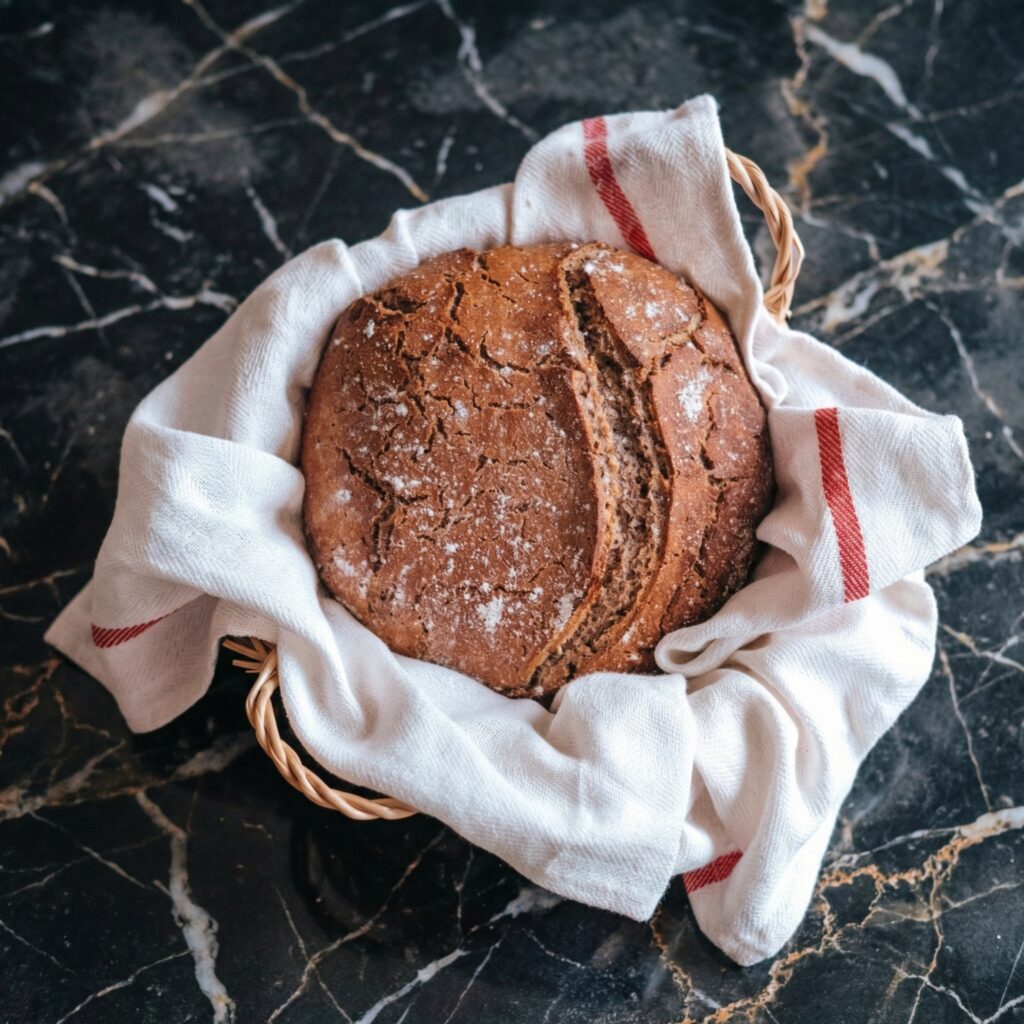
This Hearty Sourdough Rye Bread is tangy, earthy, and absolutely rustic.