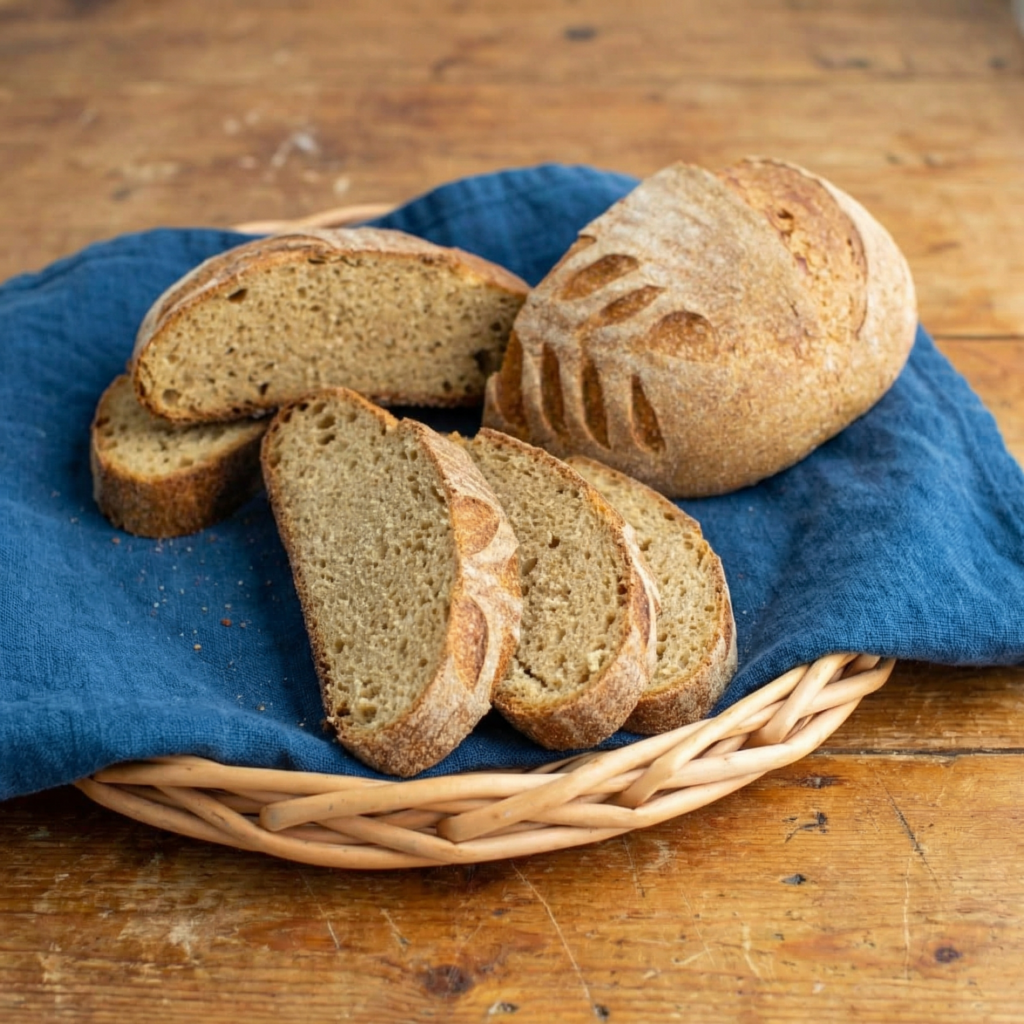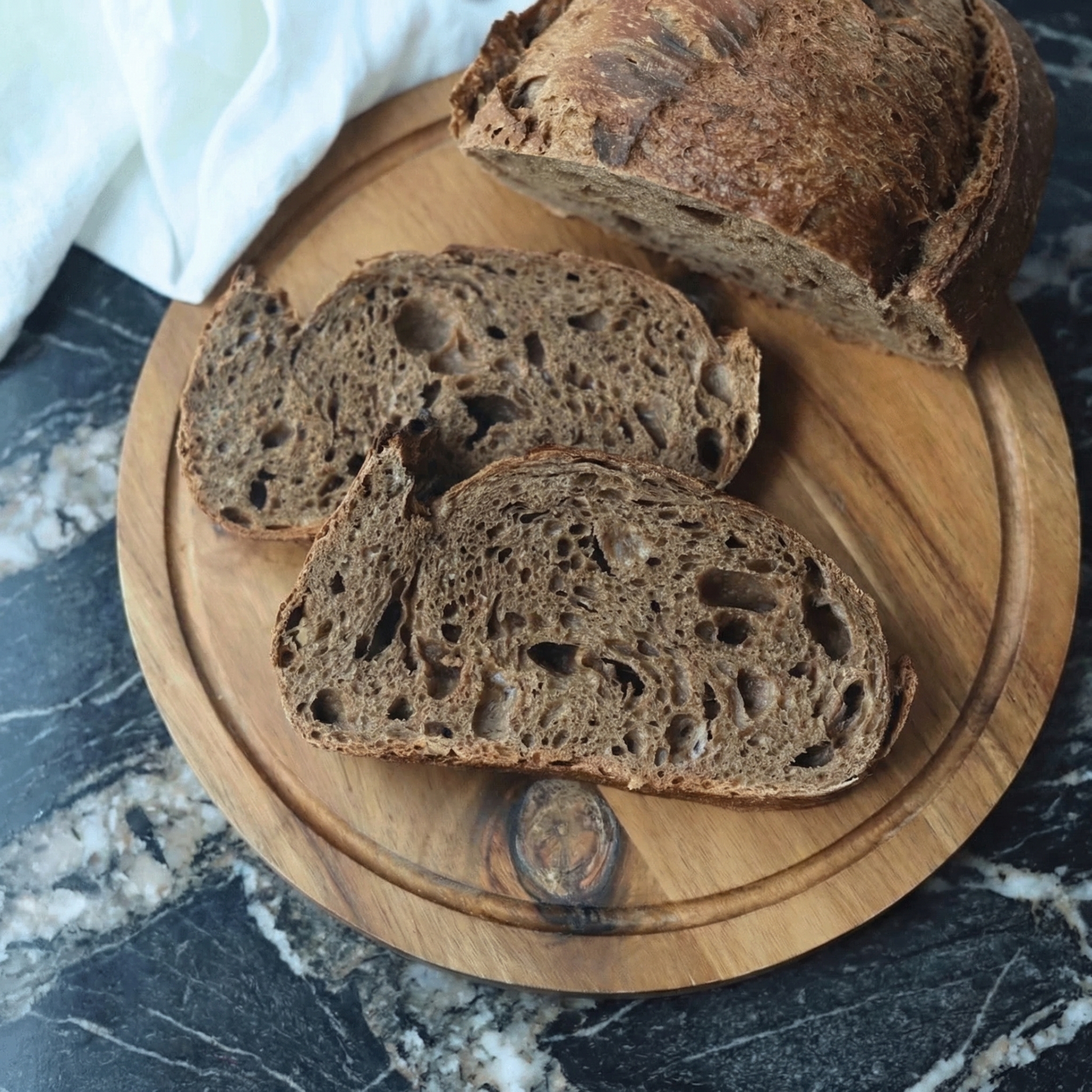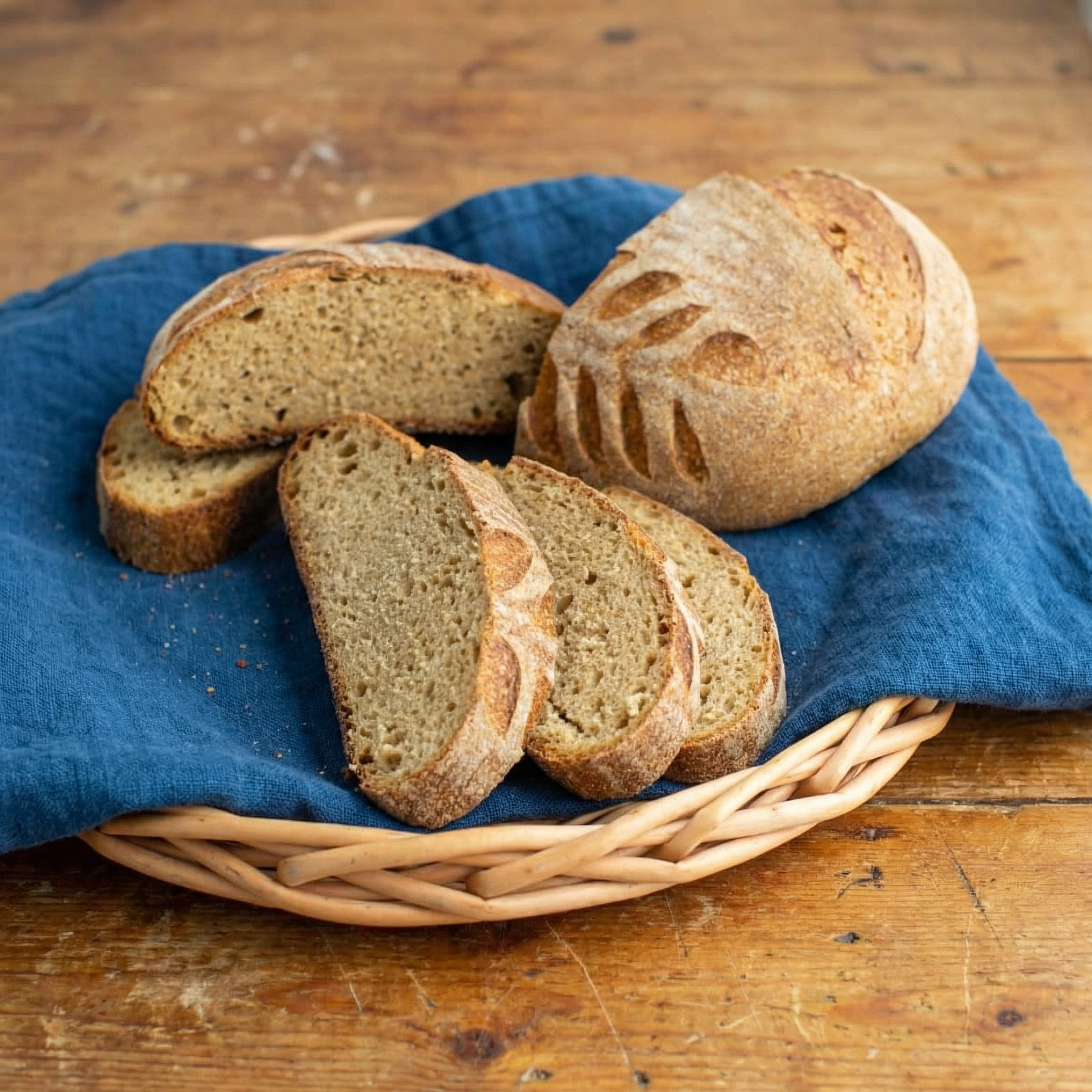
There’s something deeply grounding about baking Whole Wheat Sourdough Bread from scratch.
The aroma of toasted grain, the crackle of a rustic crust, and the tender, slightly chewy crumb make it one of the most satisfying loaves you can pull from your oven.
Whole wheat flour adds depth, nutrition, and a mild nutty flavor that pairs beautifully with the tang of natural fermentation.
This step-by-step guide will walk you through making a wholesome artisan loaf with structure, flavor, and beautiful oven spring.

Feed Your Starter
About 4–6 hours before mixing your dough, feed your sourdough starter.
You want it at peak activity—doubled in size, airy, and full of bubbles.
Whole wheat flour is heavier than white flour, so a strong starter is especially important to help lift the loaf.
If a small spoonful floats in water, it’s ready to use.
Mix the Dough (Autolyse)
In a large bowl, combine the warm water and active starter. Stir until mostly dissolved.
Add the whole wheat flour and bread flour. Mix until no dry flour remains. The dough will feel sticky and slightly rough.
Cover and let it rest for 30–45 minutes.
This autolyse period is crucial for whole wheat dough.
It allows the bran to fully hydrate, improving gluten development and making the dough easier to handle later.
Add the Salt
After resting, sprinkle the salt over the dough. If using honey or olive oil, add it now.
Use your hands to pinch and fold the dough until the salt is fully incorporated.
The dough should begin to feel smoother and slightly elastic.
Bulk Fermentation with Stretch and Folds
Cover the bowl and allow the dough to ferment at room temperature for 3–4 hours.
During the first 2 hours, perform stretch and folds every 30 minutes:
- Wet your hands to prevent sticking.
- Grab one side of the dough.
- Stretch it upward gently.
- Fold it over the center.
- Rotate the bowl and repeat on all four sides.
Complete about four sets total. These folds build strength without kneading and help trap air for a lighter crumb.
After the final fold, let the dough rest undisturbed until it has increased in size by about 50% and feels slightly puffy.
Pre-Shape
Lightly flour your work surface and gently turn out the dough. Shape it into a loose round by folding the edges toward the center.
Let it rest uncovered for 20–30 minutes. This bench rest relaxes the gluten, making final shaping easier and improving structure.
Final Shaping
Flip the dough so the smooth side faces down.
Shape into a tight round or oval by gently pulling it toward you against the countertop to build surface tension.
Whole wheat dough may not feel as stretchy as white dough—that’s normal.
Focus on creating a smooth outer surface without tearing it.
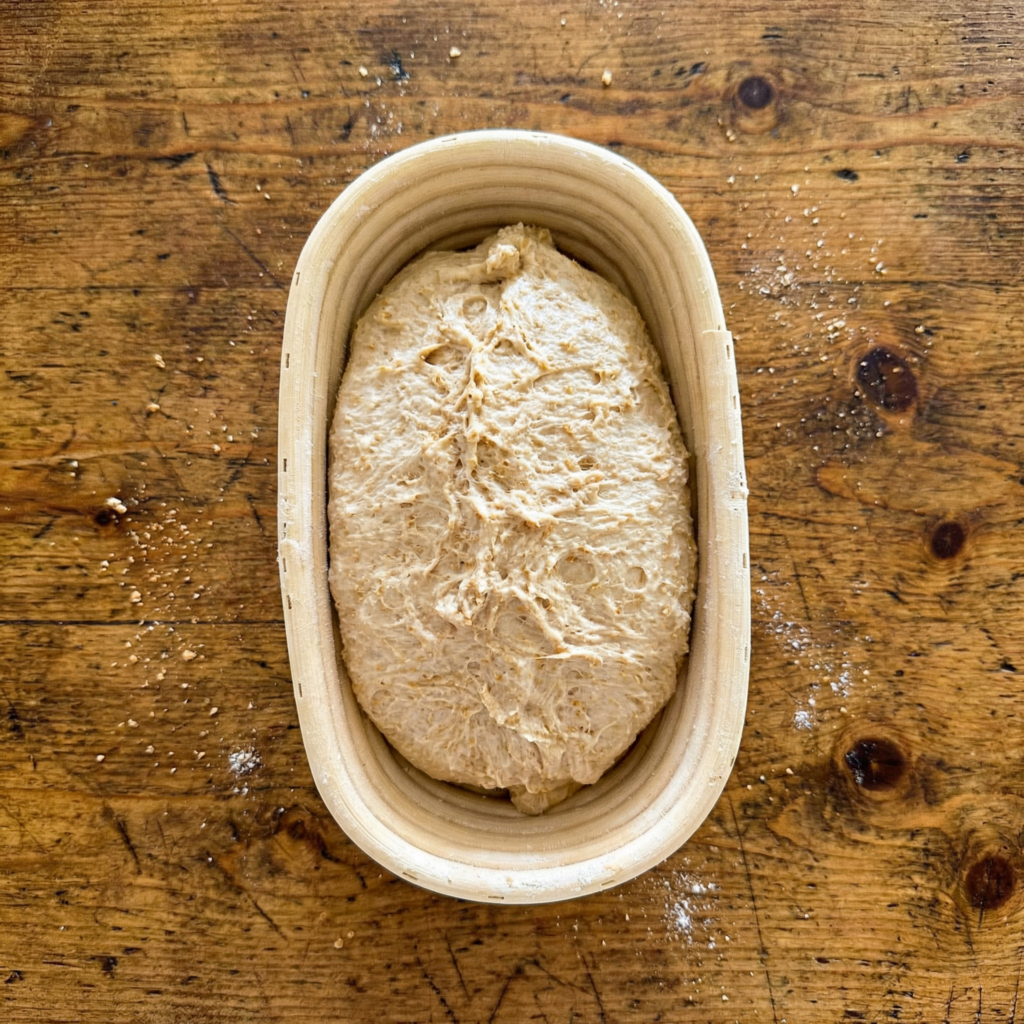
Place the shaped dough seam-side up into a well-floured proofing basket or a bowl lined with a floured kitchen towel.
Cold Proof
Cover the dough and refrigerate for 8–12 hours.
This slow fermentation deepens flavor and improves texture.
Cold proofing also makes scoring easier and enhances oven spring.
Preheat the Oven
The next day, place a Dutch oven in your oven and preheat to 475°F (245°C) for at least 30–45 minutes.
A thoroughly heated Dutch oven creates steam, which helps form a crisp, crackling crust.
Score and Bake
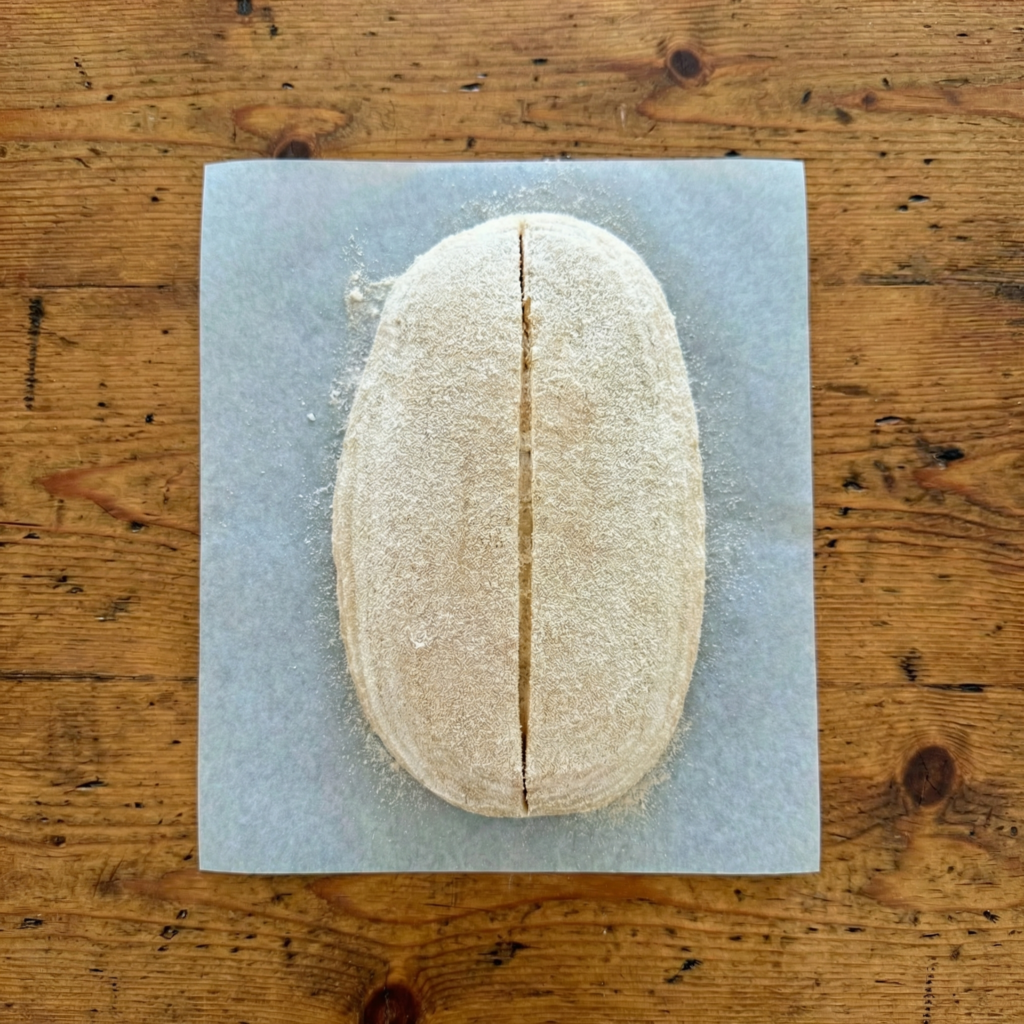
Turn the dough out onto parchment paper. Using a sharp blade or lame, score the top with one deep slash about ½ inch deep.
Carefully transfer the dough (on parchment) into the hot Dutch oven. Cover with the lid and bake for 20 minutes.
Remove the lid, reduce the oven temperature to 450°F (230°C), and bake for another 20–25 minutes until the crust is deep golden brown.
The internal temperature should reach 205–210°F when fully baked.
Cool Completely
Transfer the bread to a wire rack and allow it to cool for at least 1 hour before slicing.
Whole wheat bread continues setting as it cools. Cutting too soon can result in a gummy interior.
Tips for Success
- Whole wheat flour absorbs more water, so the dough may feel slightly sticky.
- Don’t skip the autolyse—it’s especially important for whole grain.
- If the dough feels too dense, increase water by 10–15g next time.
- For a lighter loaf, increase bread flour slightly and reduce whole wheat.
- For added texture, sprinkle rolled oats on top before baking.
Serving Ideas
Slice and toast with butter and honey for breakfast.
Use it for hearty sandwiches or serve alongside soups and stews.
It also pairs beautifully with avocado, eggs, or nut butter.
Whole Wheat Sourdough Bread offers rich flavor, wholesome texture, and the satisfaction of traditional artisan baking.
With proper fermentation and gentle handling, you’ll create a loaf that’s hearty yet tender, rustic yet refined.
Once you experience the depth of flavor that comes from naturally leavened whole grains, this bread may become a staple in your weekly baking routine.