Transform your sourdough discard into the most delicious, tender scones with beautiful, shattering layers. These scones masterfully balance the subtle tang of sourdough with rich, buttery flavor, resulting in a breakfast treat that’s crisp on the outside and impossibly soft within. Simple to make and endlessly adaptable, they’re the perfect way to use discard while achieving bakery-quality results at home.
The Science of Sourdough Flakiness
These scones achieve their perfect texture through two key principles: cold fat distribution and acidic tenderization. The sourdough discard contributes both flavor and function—its acidity helps relax the gluten in the flour, preventing toughness and promoting tenderness.
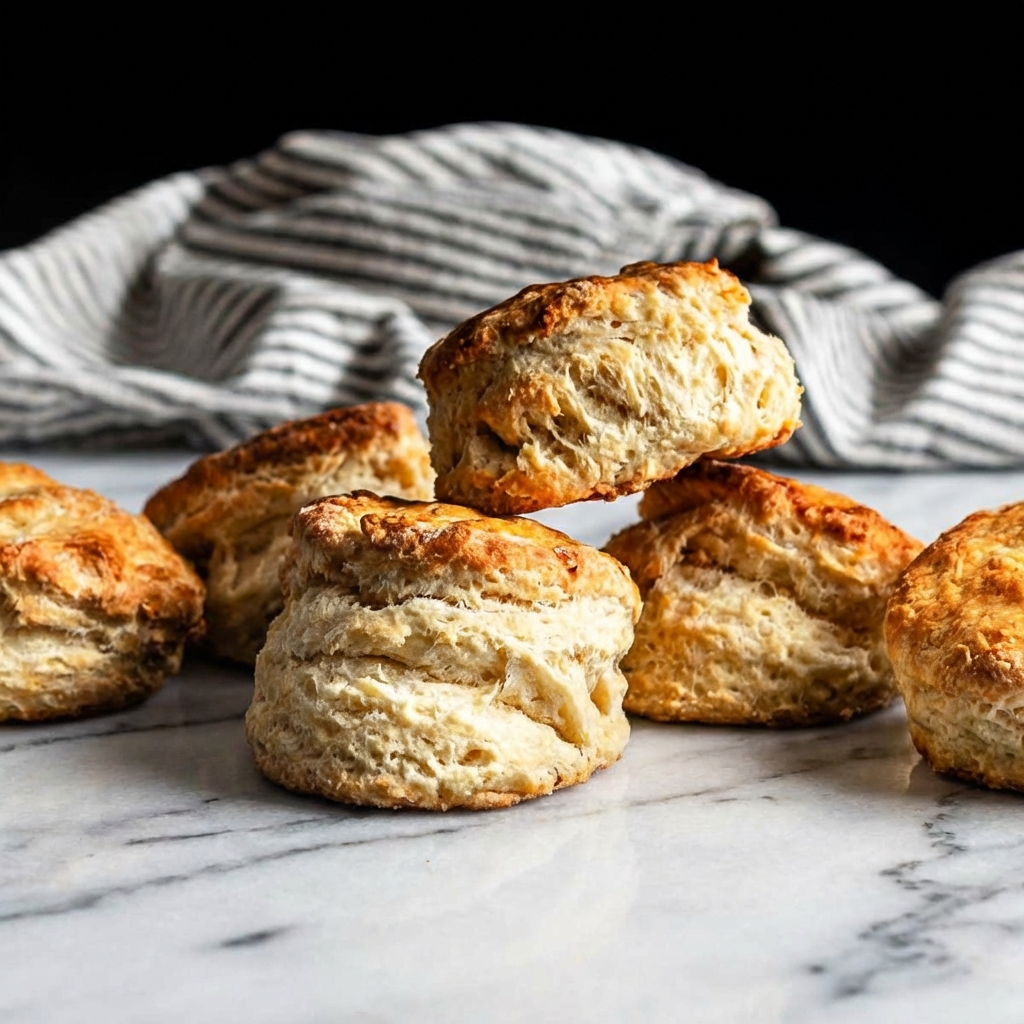
Meanwhile, keeping the butter ice-cold ensures it stays in solid pieces throughout mixing. When the scones bake, these butter pockets melt, releasing steam that pushes apart the layers of dough, creating the signature flaky texture. The discard also adds minimal extra moisture, which evaporates during baking to further enhance lift.
This combination of chemical (acid) and mechanical (steam) leavening creates a scone with exceptional height and a delicate, shattering crumb.
Instructions
Prepare Dry Ingredients & Grate Butter
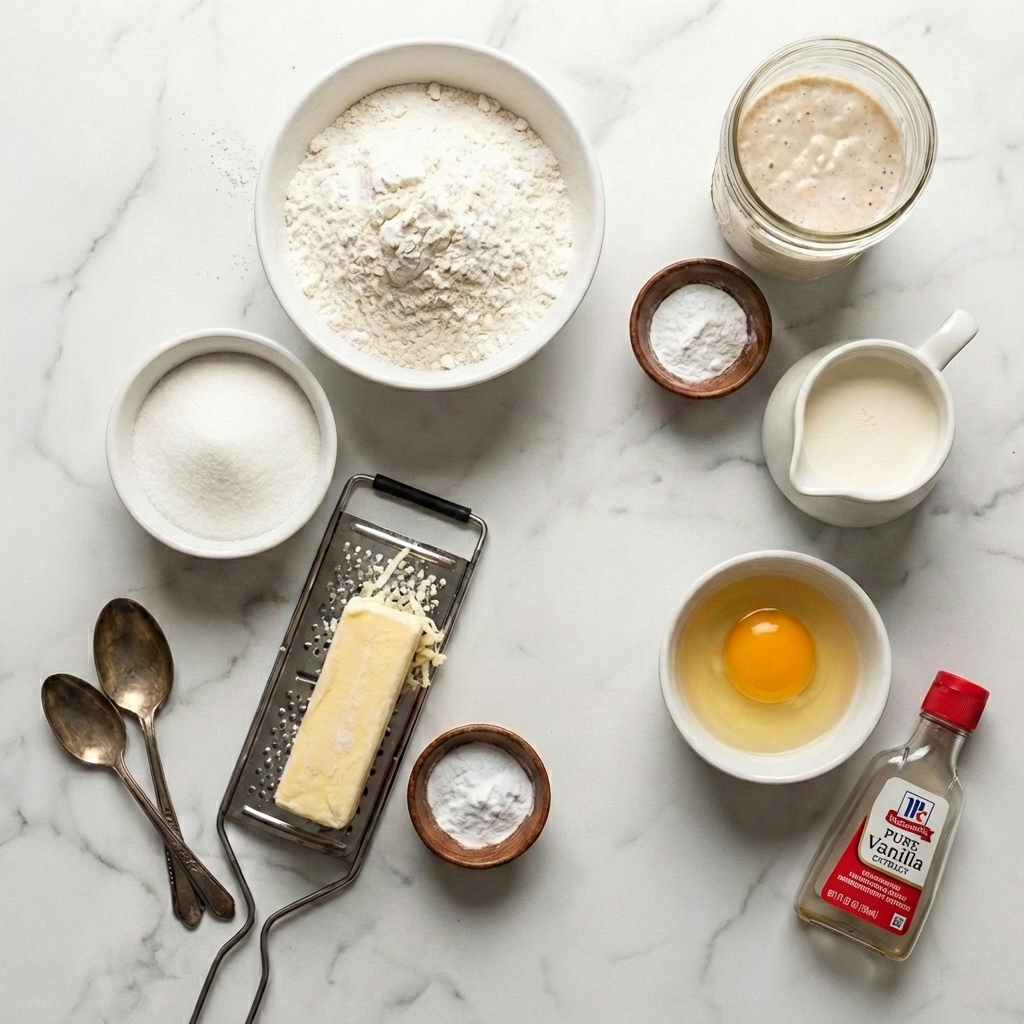
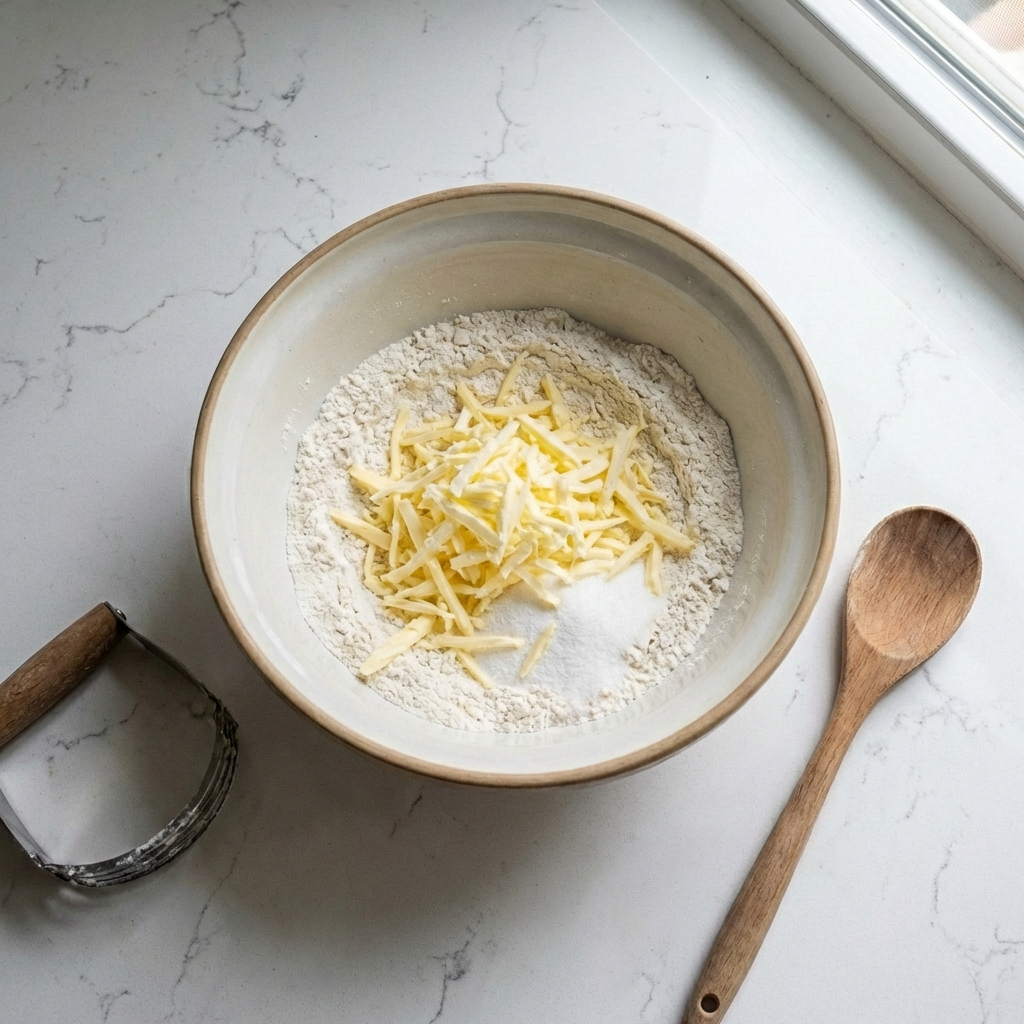
Preheat oven to 400°F (200°C). Line a baking sheet with parchment paper. In a large bowl, whisk together flour, sugar, baking powder, baking soda, and salt. Using the large holes of a box grater, grate the frozen butter directly into the flour mixture. Toss gently with a fork to coat the butter shreds in flour.
Combine Wet Ingredients
In a separate medium bowl or large measuring cup, whisk together the cold sourdough discard, heavy cream, egg, and vanilla extract until smooth.
Mix Dough
Pour the wet ingredients over the flour-butter mixture. If using add-ins, add them now. Using a fork or spatula, gently mix just until a shaggy dough forms and no dry flour remains. Do not overmix—the dough will be sticky and lumpy.
Shape & Cut
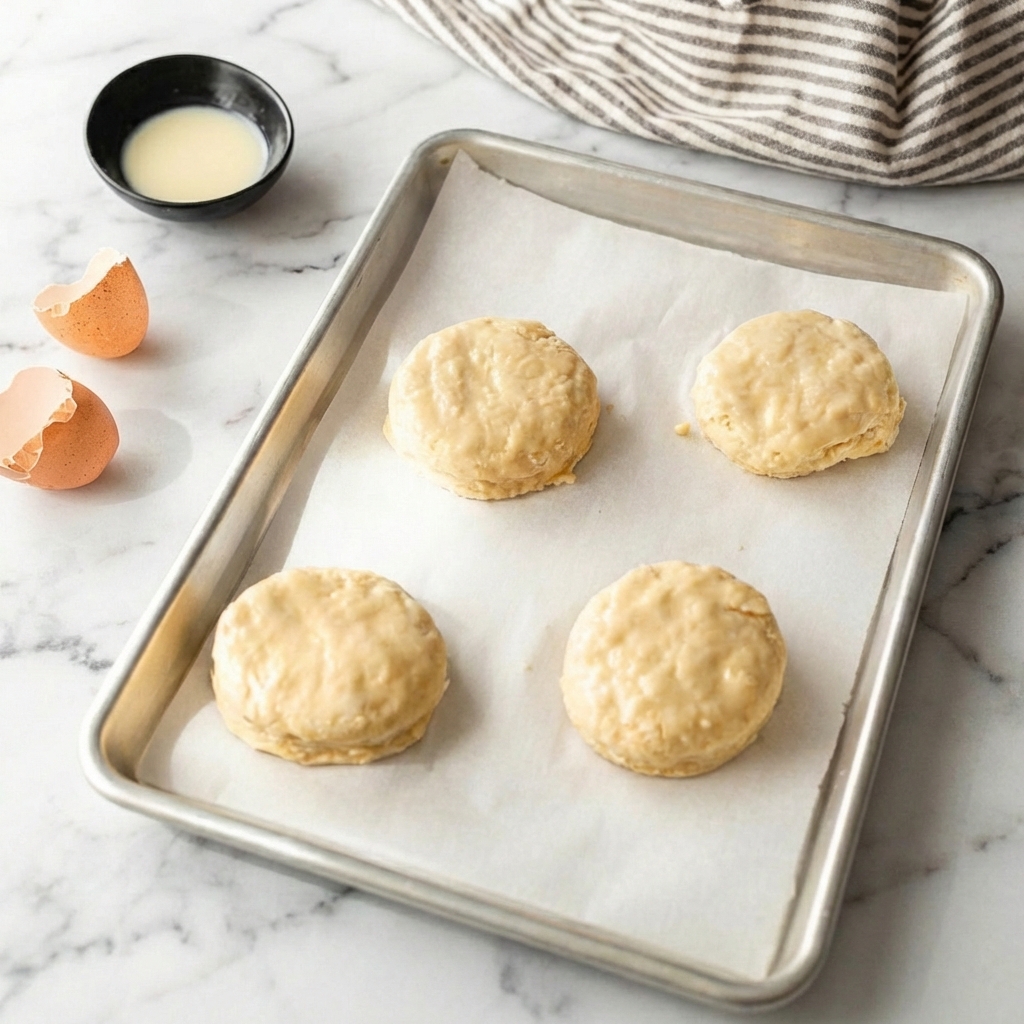
Turn the dough out onto a lightly floured surface. Gently pat and fold it over itself 2-3 times to create layers, then shape into a 1-inch thick circle or rectangle. For wedges, cut the circle into 8 triangles. For rounds, use a 2.5-inch biscuit cutter dipped in flour, pressing straight down without twisting. Place scones 2 inches apart on the prepared baking sheet.
Chill & Bake
Brush the tops of the scones with a little extra heavy cream. For extra flaky scones, place the entire baking sheet in the freezer for 15 minutes. Then bake for 18-22 minutes, or until the scones are golden brown on top and bottom, and feel firm to the touch.
Cool & Glaze
Transfer scones to a wire rack to cool for at least 10 minutes. If glazing, whisk together powdered sugar, lemon juice or cream, and vanilla until smooth. Drizzle over slightly warm scones. Serve warm or at room temperature.
Pro-Tips for Perfect Scones
- Keep Everything Cold: Cold ingredients are non-negotiable for flakiness. Use frozen butter and cold discard straight from the fridge.
- Handle Minimally: Overmixing develops gluten, leading to tough scones. Mix just until the dough comes together.
- Embrace the Shaggy Dough: A rough, lumpy dough bakes into the most tender scones.
- Folding Creates Layers: The gentle folds during shaping create distinct, flaky layers.
- Chill Before Baking: The brief freeze ensures the butter is solid when it hits the oven, maximizing steam production.
- Don’t Twist the Cutter: When using a round cutter, press straight down—twisting seals the edges and prevents a good rise.
- Use Any Discard: Your discard can be at peak activity or days old—both work perfectly in this recipe.
These Flaky Sourdough Scones are the ultimate delicious use for your sourdough discard.