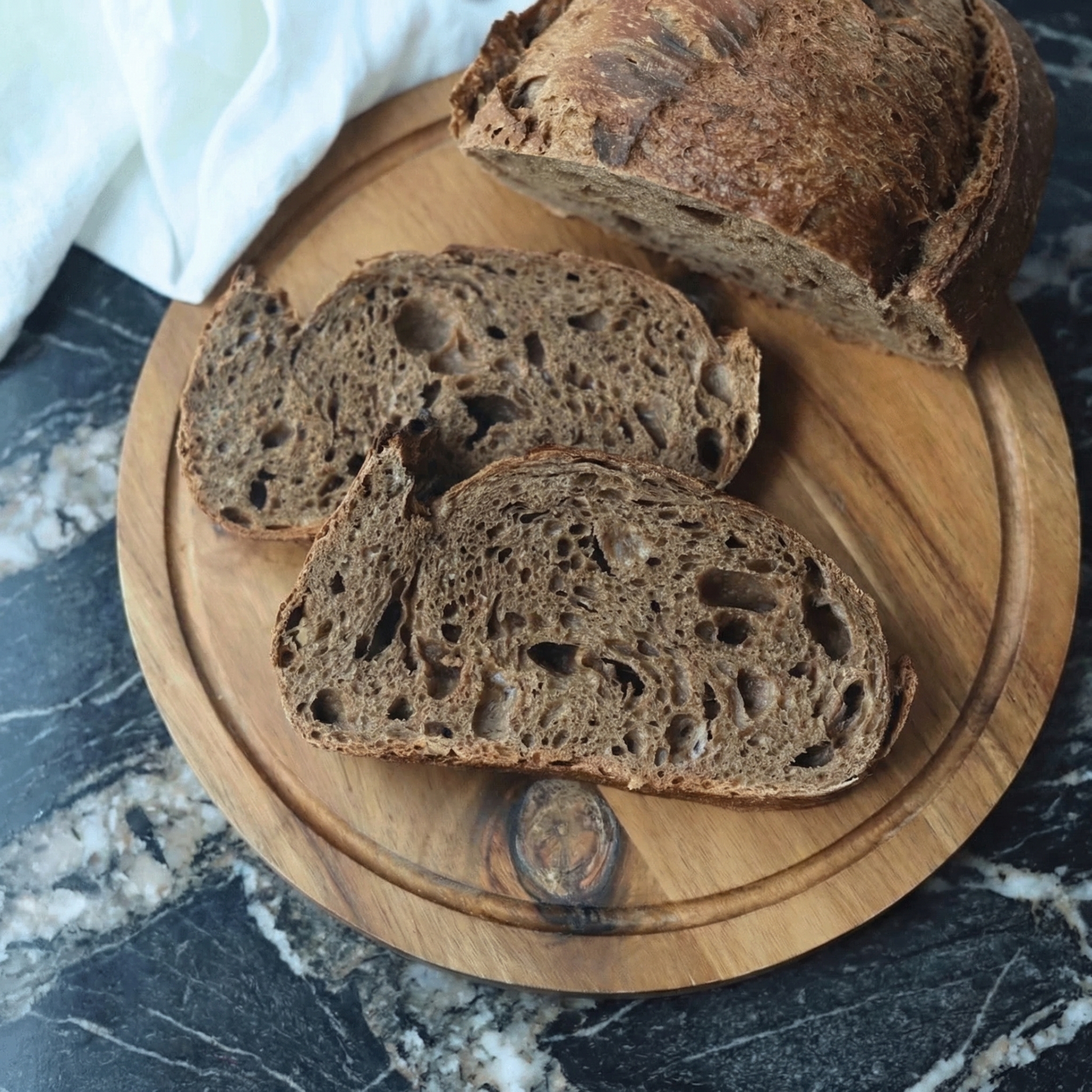
Irish soda bread is the ultimate lesson in simplicity and speed. With no yeast to proof and no kneading required, this humble loaf relies on the instant reaction between tangy buttermilk and baking soda to create its lift. The result is a rustic, craggy-crusted bread with a dense, tender, and slightly crumbly interior that’s perfect for slathering with good butter, dunking in soup, or toasting for breakfast.
This authentic version keeps it simple—just flour, buttermilk, salt, and baking soda—so the pure, wholesome flavor of the bread itself can shine. In about an hour, you can have a warm, fragrant loaf on your table.
The Science of the Quick Chemical Rise
Unlike yeast breads that rely on biological fermentation, soda bread gets its rise from an acid-base chemical reaction. The baking soda (sodium bicarbonate) is the base. When it comes into contact with the acid in the buttermilk (lactic acid), they react immediately, producing carbon dioxide gas bubbles. These bubbles get trapped in the dough, causing it to rise. This reaction begins the moment the wet and dry ingredients meet, which is why you must work quickly and avoid overmixing.
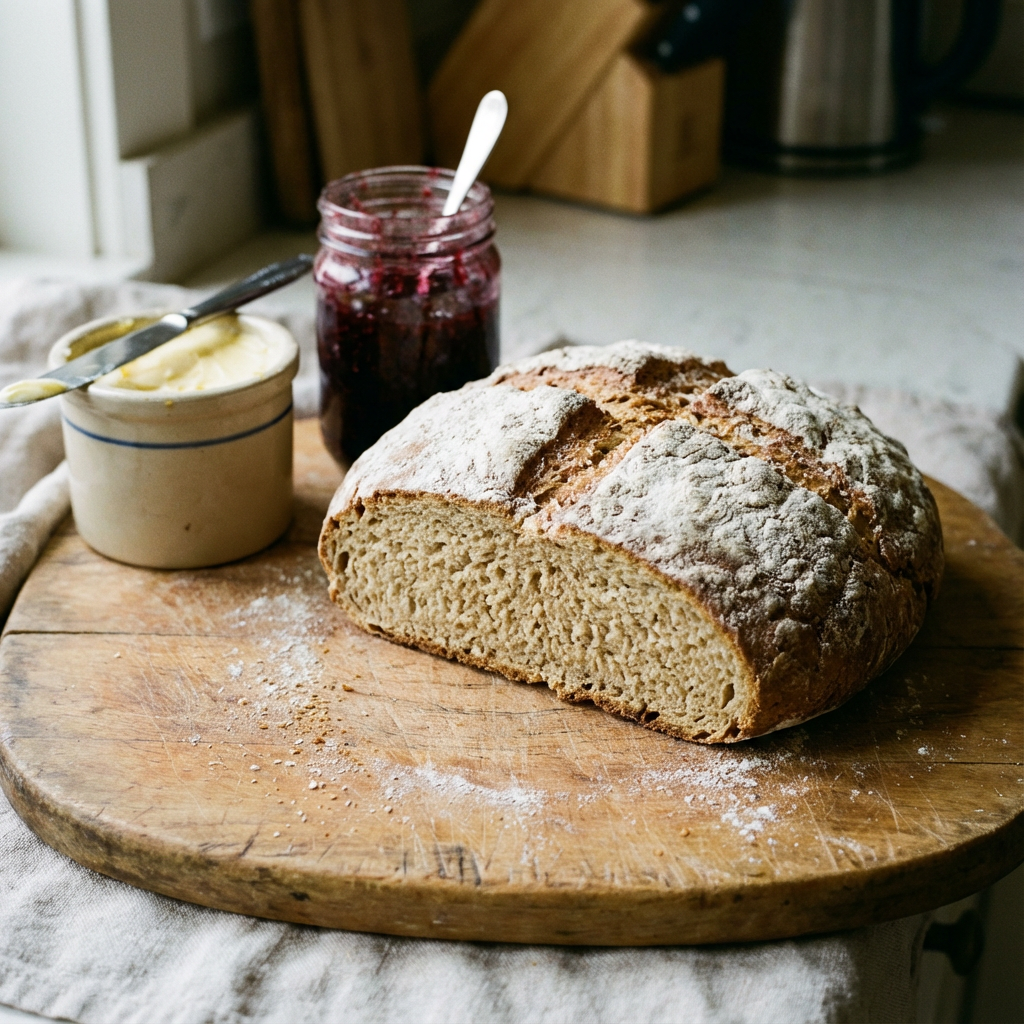
The cross slash on top isn’t just decorative; it serves a critical functional purpose. It weakens the gluten structure at the top of the loaf, providing a controlled place for the bread to expand as it bakes. Without it, the crust could crack haphazardly. The high baking temperature (425°F) sets the crust quickly, capturing the steam from the reaction and creating that signature crisp, craggy exterior.
Instructions
Prep
Preheat oven to 425°F (220°C). Line a baking sheet with parchment paper or lightly grease a cast iron skillet.
Mix Dry Ingredients
In a large bowl, whisk together the flour, baking soda, and salt. If using any add-ins (raisins, seeds), stir them into the dry ingredients now.
Make a Well & Add Buttermilk
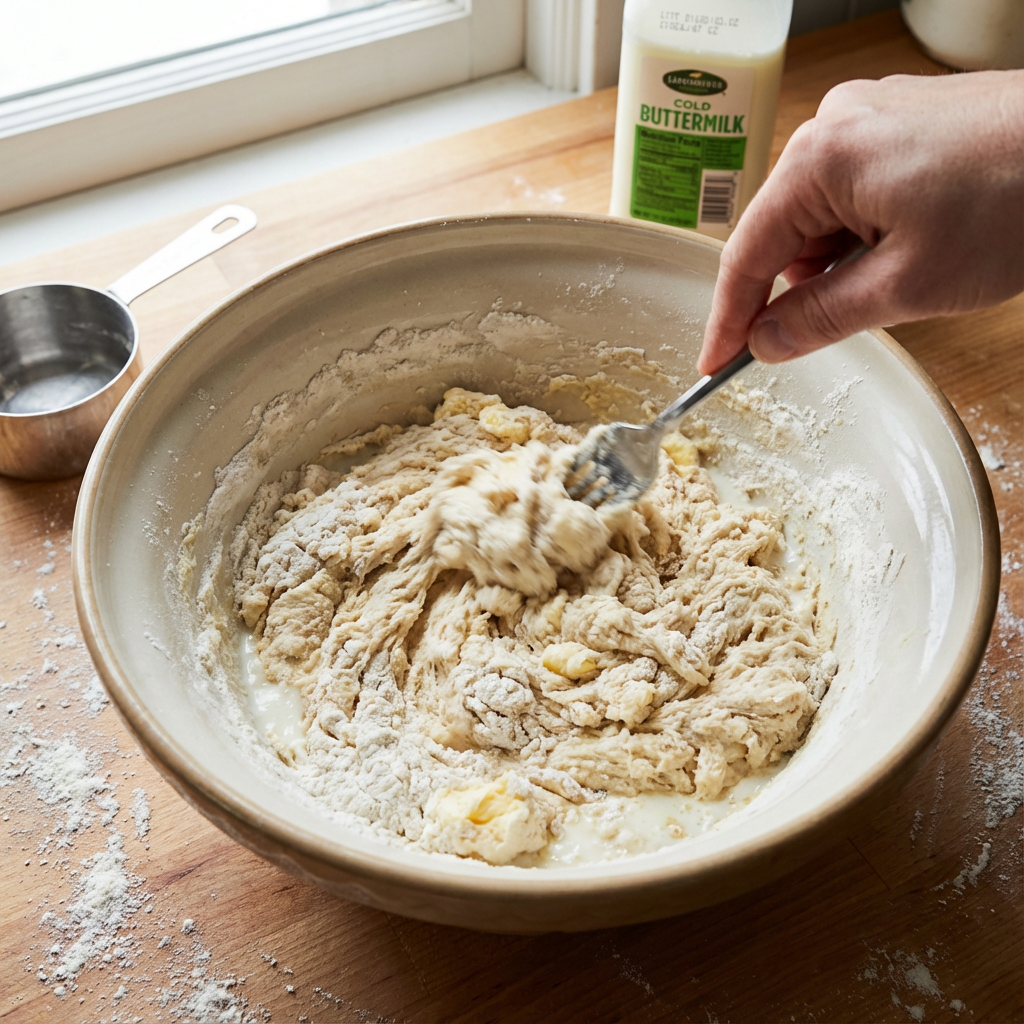
Make a well in the center of the flour mixture. Pour in all of the cold buttermilk at once.
Mix & Shape (Work Quickly)
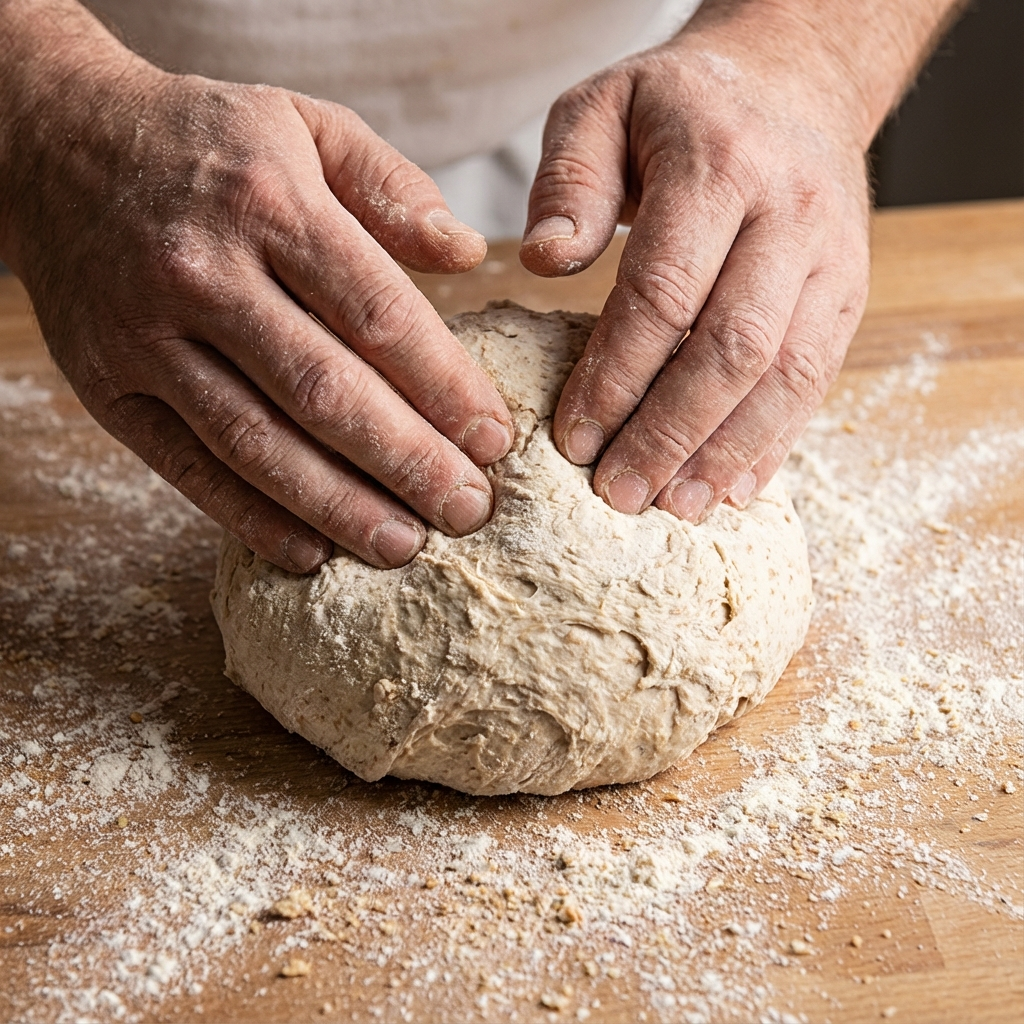
Using a fork or your hand, quickly mix from the center outward until a shaggy, sticky dough forms and no dry flour remains. Do not overmix—this should take less than a minute.
Form the Loaf
Turn the dough out onto a lightly floured surface. With floured hands, gently pat and tuck the edges under to form a round loaf, about 6-7 inches in diameter. The dough will be rough and lumpy—this is correct.
Score & Bake
Place the loaf on the prepared baking sheet. Using a sharp, floured knife or razor blade, cut a deep “X” into the top, about ½-inch deep. This allows steam to escape. Bake for 40-45 minutes, until the loaf is deep golden brown and sounds hollow when tapped on the bottom.
Cool
Transfer the loaf to a wire rack and let it cool for at least 30 minutes before slicing. The inside is still setting as it cools.
Serve
Slice and serve warm or at room temperature with plenty of good butter.
Pro-Tips for Soda Bread Success
- Use Cold Buttermilk: This slows the acid-base reaction, giving you time to shape the loaf before too much gas escapes.
- Handle with Care: The goal is to barely combine the ingredients. Overworking the dough develops gluten, making the bread tough and preventing a good rise.
- Embrace the “Shaggy” Dough: It should look rough and uneven. A smooth, kneaded dough will yield a dense, tight crumb.
- Cut a Deep “X”: Don’t be shy. A shallow slash won’t guide the expansion properly. A deep cut ensures an even rise and that classic soda bread shape.
- Test for Doneness: The hollow sound when tapped is the best indicator. An instant-read thermometer inserted into the center should read 190°F (88°C).
- Buttermilk Substitute: No buttermilk? Mix 1 ¾ cups milk with 1 ½ tablespoons white vinegar or lemon juice. Let sit for 5 minutes until curdled.
- Storage: Soda bread is best eaten the day it’s made. Store leftovers wrapped in a tea towel at room temperature for 1-2 days. It toasts beautifully.
- The Purest Form: Try the basic recipe first to appreciate its simple, rustic character before adding mix-ins.
This Easy Irish Soda Bread is a testament to the beauty of straightforward, honest baking.