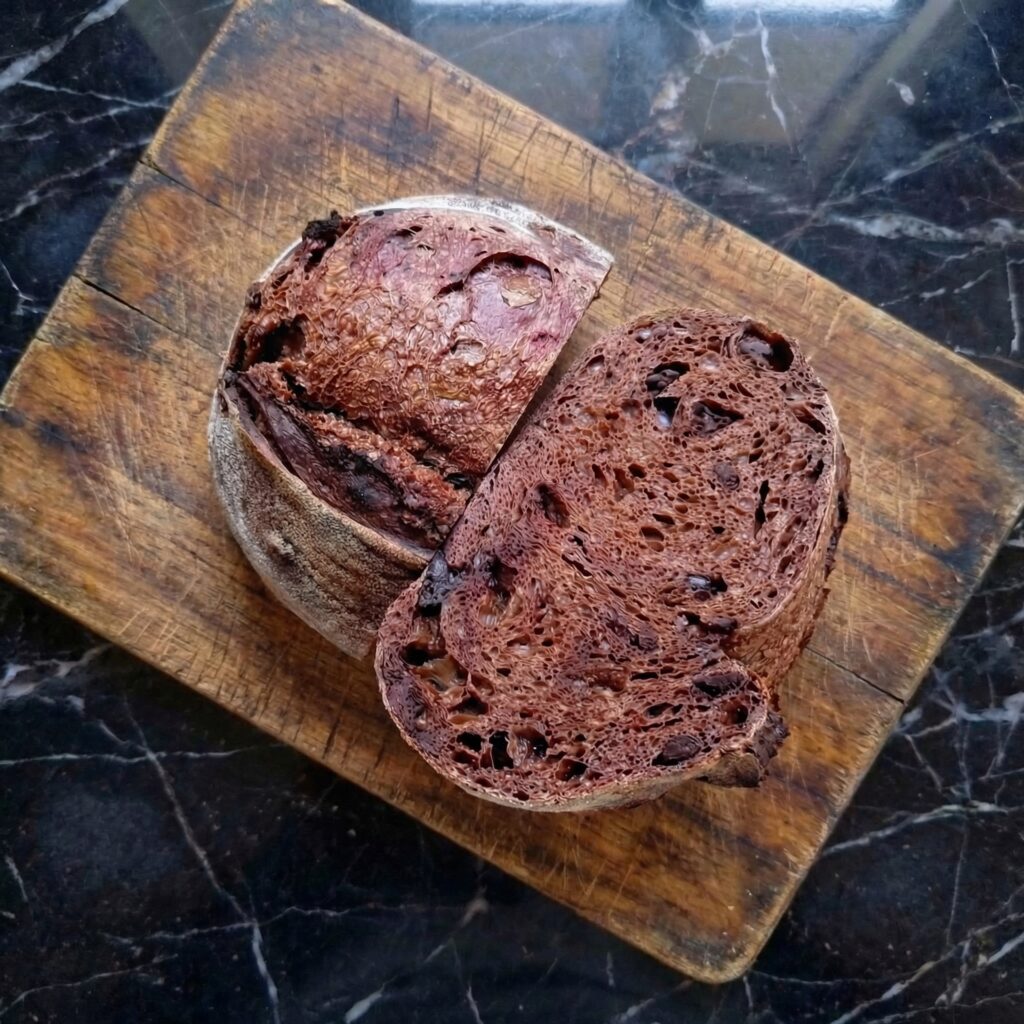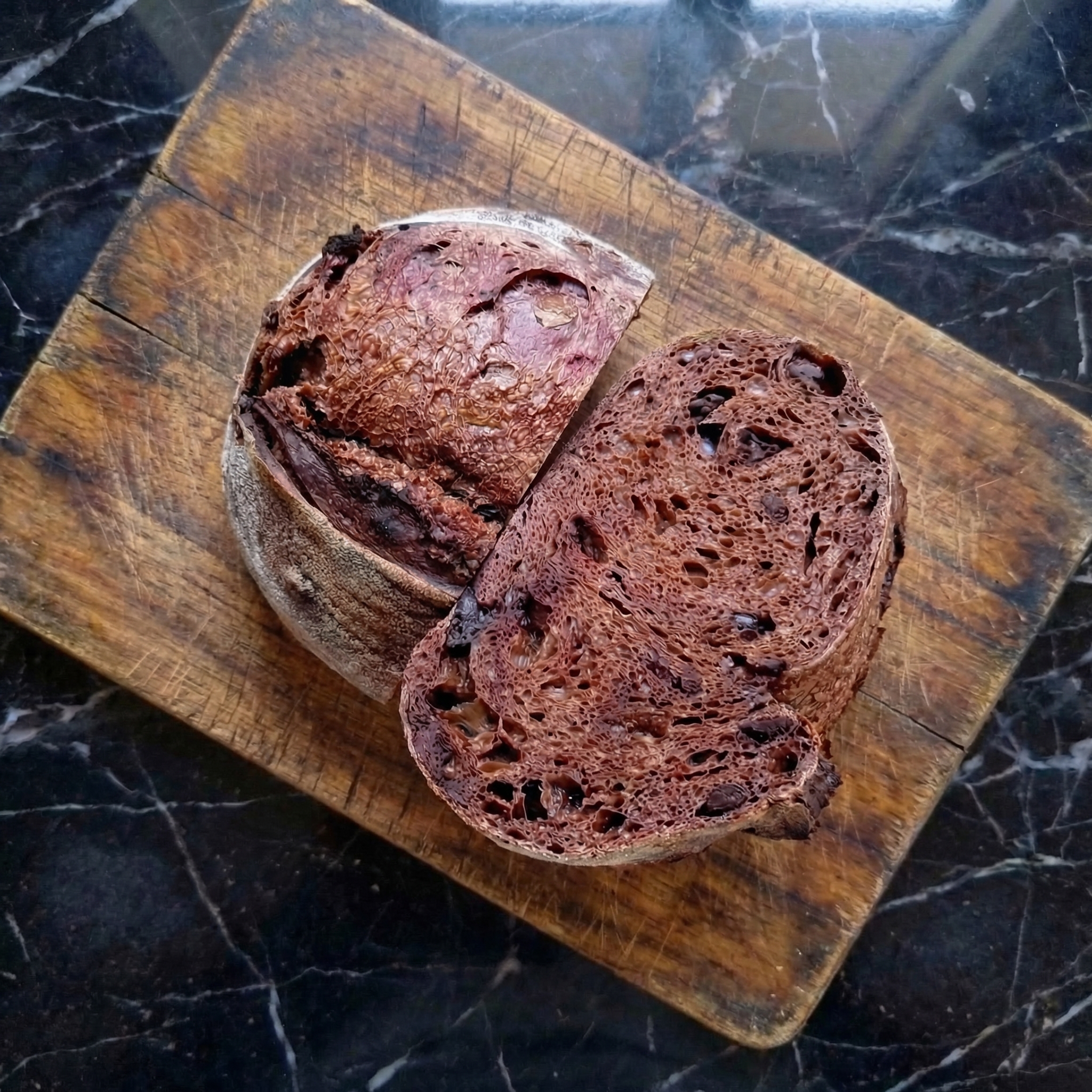
If you’re a chocolate lover and a sourdough enthusiast, Sourdough Chocolate Bread is the perfect indulgence.
This loaf combines the deep, complex flavor of naturally fermented sourdough with rich, velvety chocolate, resulting in a soft, slightly tangy bread with pockets of decadent chocolate in every bite.
It’s ideal for breakfast, dessert, or even an afternoon snack paired with coffee.
Unlike typical sweet breads, this sourdough version relies on natural fermentation, giving it a subtle tang that balances the richness of the chocolate.
The result is a loaf that looks artisan and tastes like it came straight from a gourmet bakery.
Below is a detailed, step-by-step guide to making sourdough chocolate bread from scratch.
Why Sourdough Works in Chocolate Bread
Using sourdough in chocolate bread adds depth of flavor, structure, and a subtle tang that complements the sweetness of chocolate.
Natural fermentation improves texture, making the bread soft yet chewy, and helps it stay fresh longer.
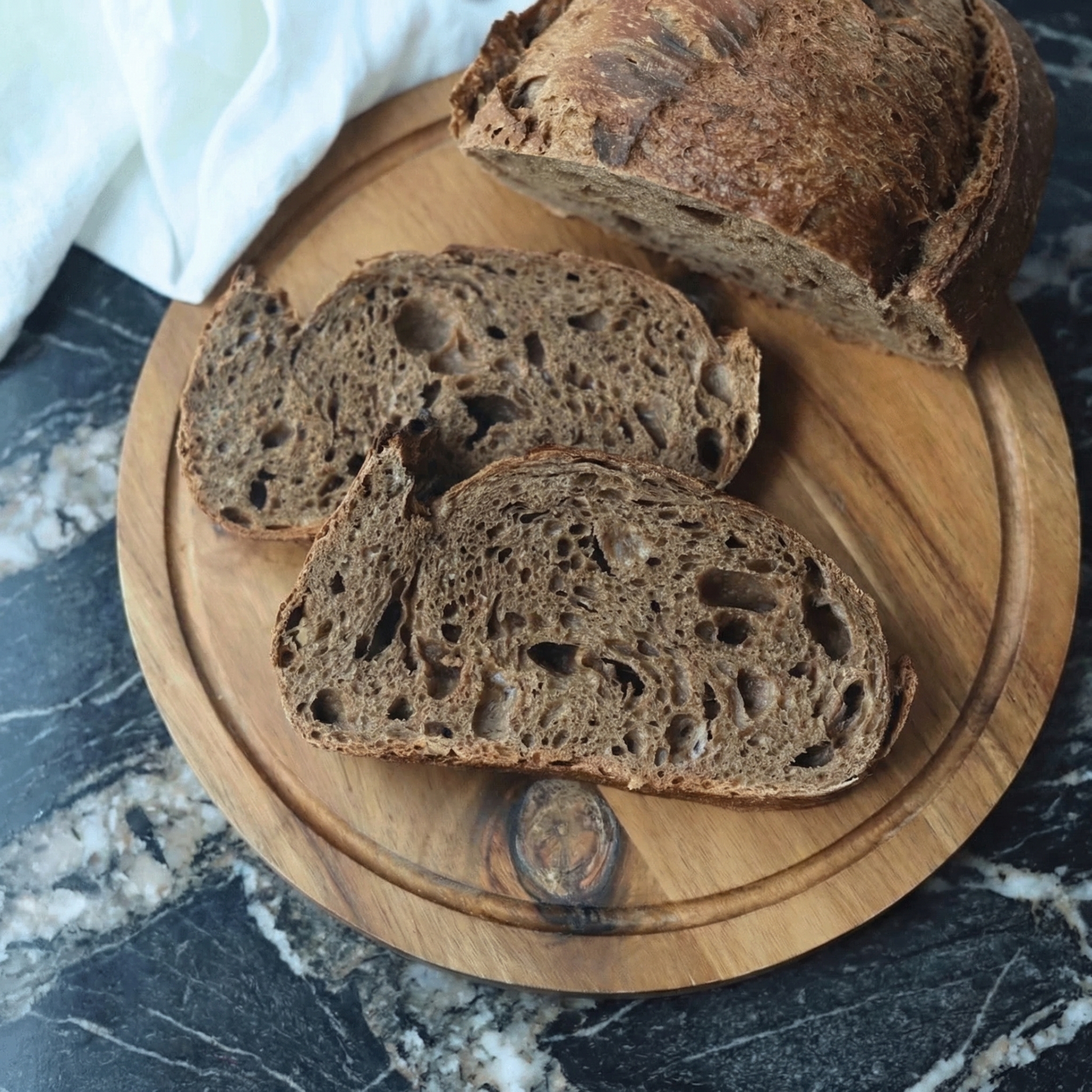
Even though chocolate can add density, a properly fermented sourdough ensures a light, airy crumb that supports chocolate chunks or chips beautifully.
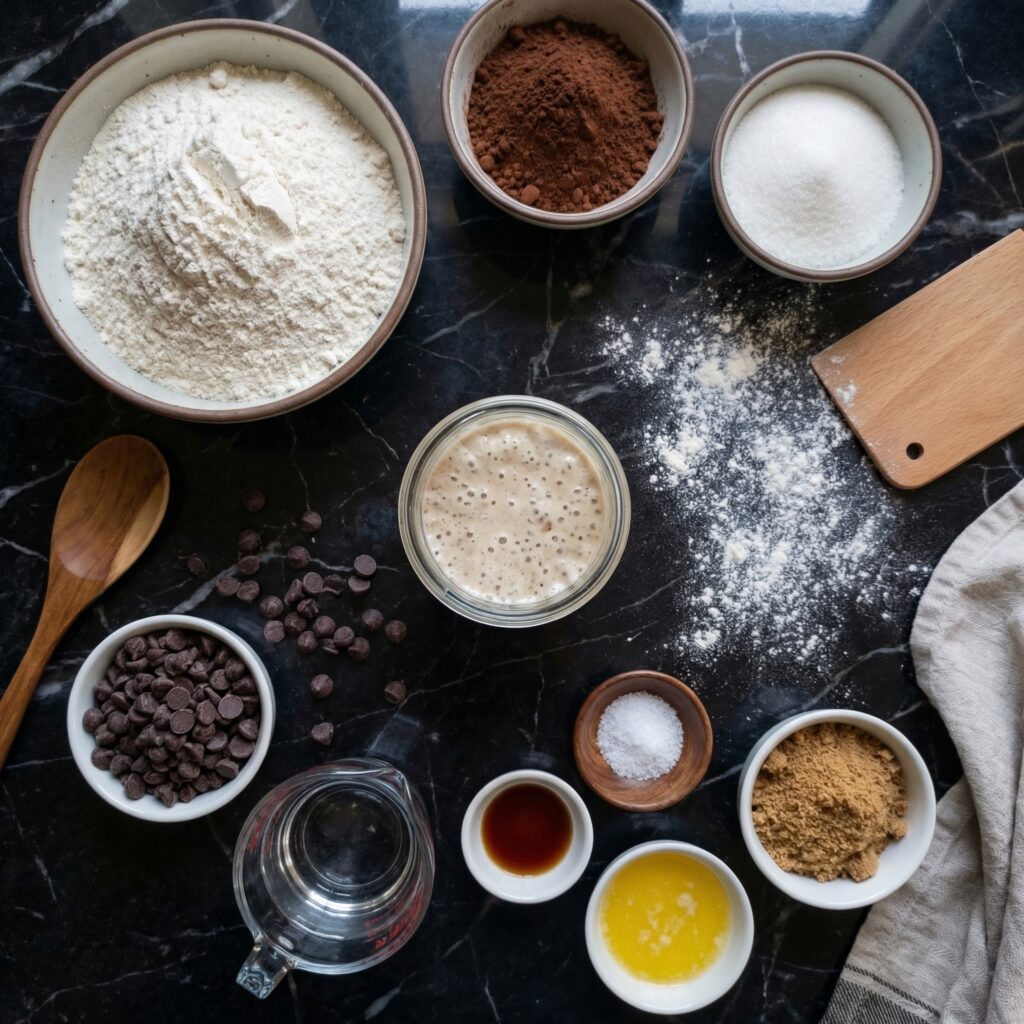
Activate Your Starter
Make sure your sourdough starter is active, bubbly, and recently fed. An active starter is crucial for good fermentation and oven spring.
Perform the “float test” if needed: a spoonful of starter should float in water, indicating it’s ready to use.
Mix Wet Ingredients
In a large mixing bowl, combine the sourdough starter, warm milk, vanilla extract, and sugar. Whisk until smooth.
Add the softened butter and mix until incorporated. The wet mixture forms the base of your dough, giving it a tender, rich texture.
Combine Dry Ingredients
In a separate bowl, sift together bread flour, cocoa powder, and salt. Sifting ensures there are no lumps and helps distribute the cocoa evenly throughout the dough.
Gradually add the dry ingredients to the wet mixture, stirring with a wooden spoon until a shaggy dough forms. At this stage, the dough will feel slightly sticky, which is normal for chocolate bread.
Knead the Dough
Transfer the dough to a lightly floured surface. Knead for 8–10 minutes until it becomes smooth, elastic, and slightly tacky.
The kneading process develops gluten, which allows the bread to hold its shape and trap air for a light crumb. Avoid adding too much extra flour, as this can make the bread dense.
Bulk Fermentation
Place the kneaded dough into a lightly greased bowl and cover with a damp towel or plastic wrap. Let it ferment at room temperature for 4–6 hours, or until it roughly doubles in size.
During the first 2 hours, perform stretch and folds every 30 minutes:
- Wet your hands to prevent sticking.
- Grab one side of the dough and stretch it upward.
- Fold it over the center.
- Rotate and repeat on all sides.
This technique strengthens the dough without heavy kneading.
Incorporate Chocolate
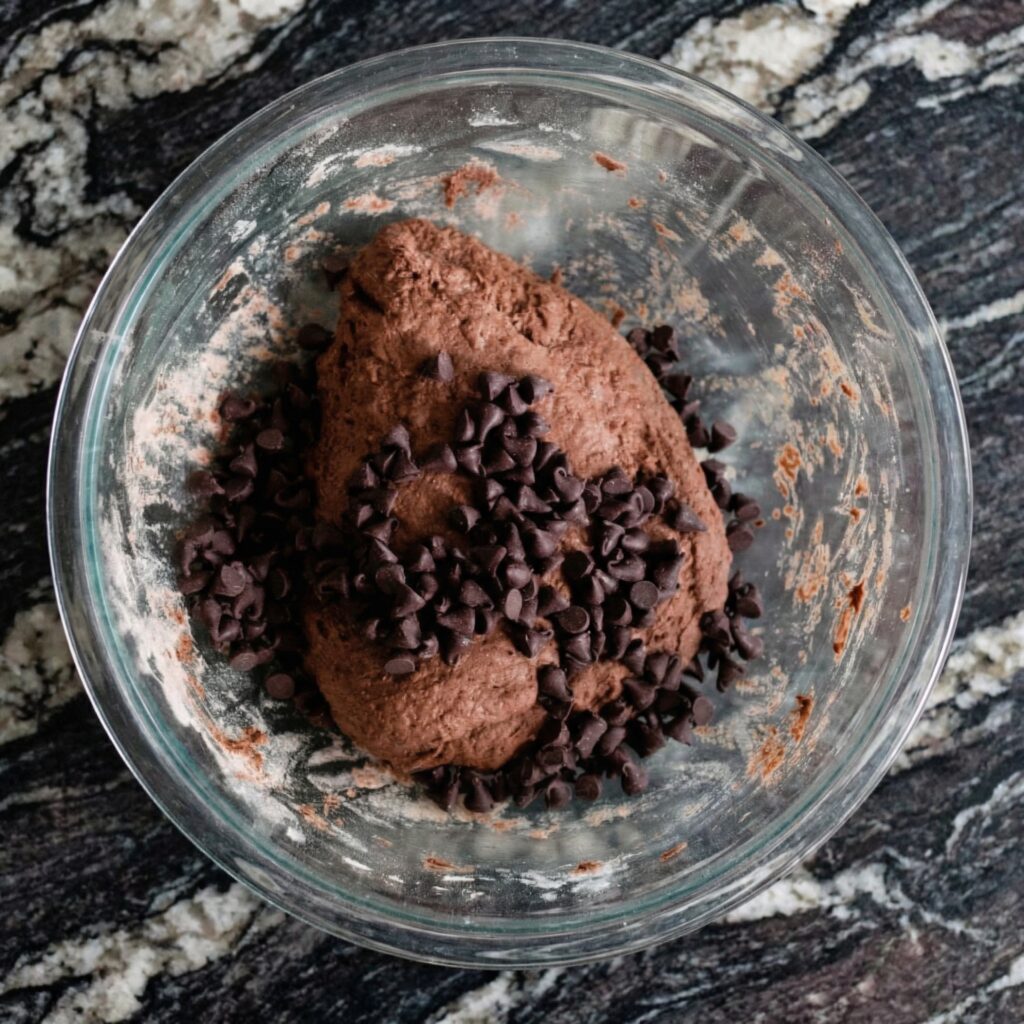
Once the dough has bulk fermented, gently fold in the chopped chocolate.
To avoid breaking the dough’s structure, spread the dough slightly and sprinkle chocolate chunks evenly. Fold the dough over itself a few times to integrate the chocolate without tearing it.
Shape the Loaf
Turn the dough onto a lightly floured surface.
For a classic artisan loaf:
- Flatten the dough slightly.
- Fold the edges toward the center.
- Rotate and tighten the surface to create tension.
Place the shaped loaf seam-side up into a floured proofing basket or bowl lined with a floured towel.
Final Proof
Cover the dough and allow it to proof for 1½ to 2 hours at room temperature, or refrigerate for an overnight cold proof.
Cold proofing improves flavor and makes scoring easier before baking.
Preheat the Oven
Preheat your oven to 475°F (245°C) and place a Dutch oven inside for at least 30 minutes.
A hot Dutch oven traps steam, creating a glossy, crusty exterior while keeping the interior soft.
Score and Bake
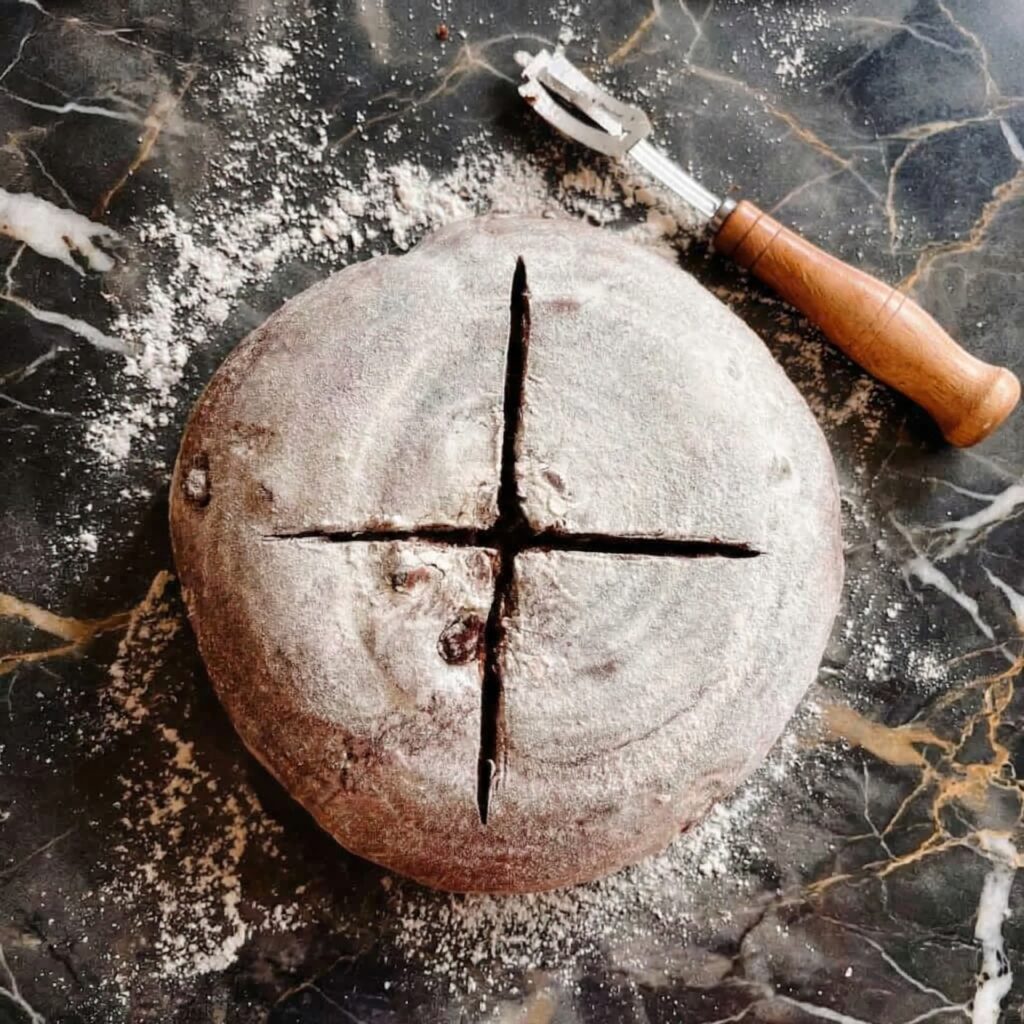
Carefully transfer the loaf onto parchment paper. Using a sharp knife or bread lame, make 2–3 shallow slashes across the top.
This allows controlled expansion during baking.
Bake covered for 20 minutes, then remove the lid and bake an additional 20–25 minutes until the crust is deep brown and the bread sounds hollow when tapped.
Cool Before Slicing
Transfer the loaf to a wire rack and allow it to cool for at least 1 hour.
This step is crucial; cutting too early can make the chocolate bread gummy and disrupt the soft crumb structure.
Serving Ideas
Sourdough chocolate bread is versatile and can be enjoyed in many ways:
- Toasted with butter or Nutella for breakfast
- Sliced and used for decadent sandwiches
- Served with fresh berries or whipped cream as a dessert
- Perfect alongside coffee or hot chocolate
Tips for Perfect Sourdough Chocolate Bread
- Use high-quality chocolate for the best flavor.
- Avoid over-mixing the dough after adding chocolate to maintain structure.
- For extra richness, add a teaspoon of espresso powder to enhance the chocolate flavor.
- Adjust sugar according to your taste, but don’t overdo it—sourdough adds natural tang.
Final Thoughts
Sourdough Chocolate Bread is a perfect blend of rustic artisan baking and indulgent dessert.
The tang from the sourdough balances the sweetness of chocolate, while the soft crumb and glossy crust make it a show-stopping loaf for any occasion.
Once you master this recipe, you’ll have a bakery-quality bread ready to impress family and friends—or just treat yourself. Every slice delivers a perfect combination of rich chocolate and light, airy sourdough flavor.