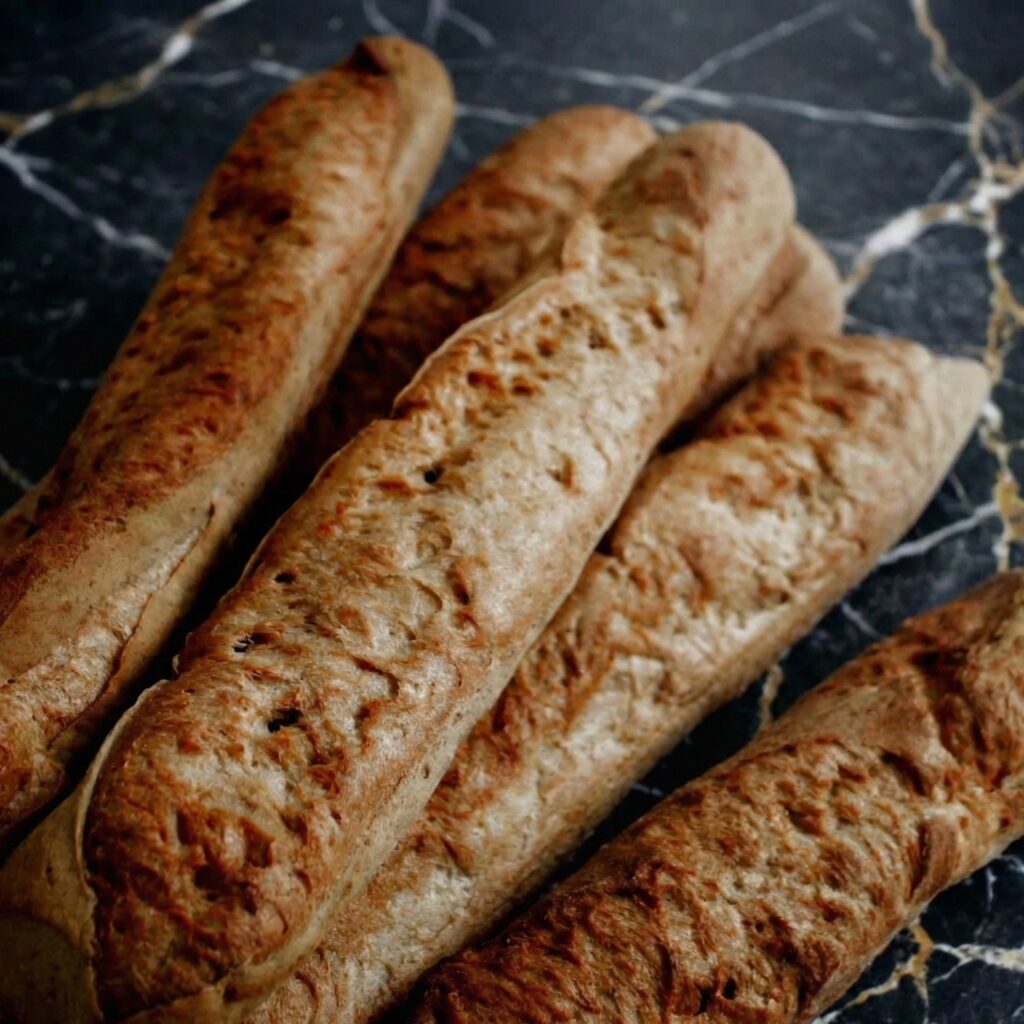
Few breads are as iconic and visually striking as the baguette. Long, slender, and golden, a baguette is as impressive to look at as it is satisfying to eat.
Adding a sourdough twist elevates this classic French bread, giving it a deeper, complex flavor, a slightly tangy aroma, and a chewy, open crumb that contrasts beautifully with a crisp crust.
Baking Sourdough Baguettes at home may seem intimidating, but with patience and proper technique, anyone can achieve bakery-quality results.
This step-by-step guide will walk you through creating perfectly shaped, airy, and flavorful baguettes using natural fermentation.
Why Sourdough Makes a Difference
Using a sourdough starter instead of commercial yeast brings several advantages:
- Flavor: The natural fermentation develops tangy, nuanced flavors.
- Texture: Sourdough enhances the crusty exterior while keeping the crumb airy.
- Shelf Life: Naturally leavened bread stays fresh longer due to organic acids formed during fermentation.
The slow fermentation process allows gluten to develop naturally, which is essential for the long, delicate shape of a baguette.
Autolyse the Dough
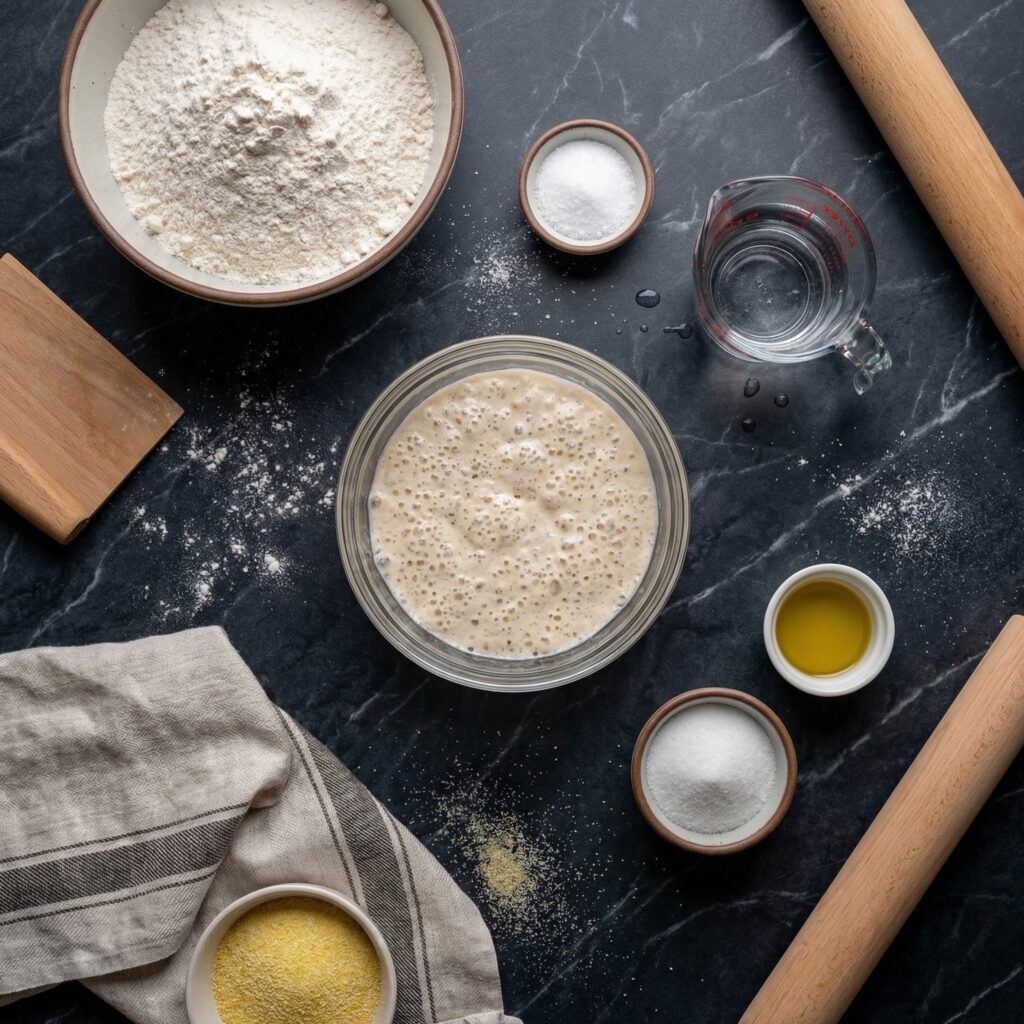
In a large mixing bowl, combine the flour and water. Mix until all the flour is hydrated, forming a rough, shaggy dough.
Cover the bowl and let it rest for 30 to 60 minutes. This rest period, called autolyse, allows the flour to absorb water fully, improving gluten development and dough extensibility.
Incorporate Starter and Salt
After the autolyse, add the active sourdough starter and salt to the dough.
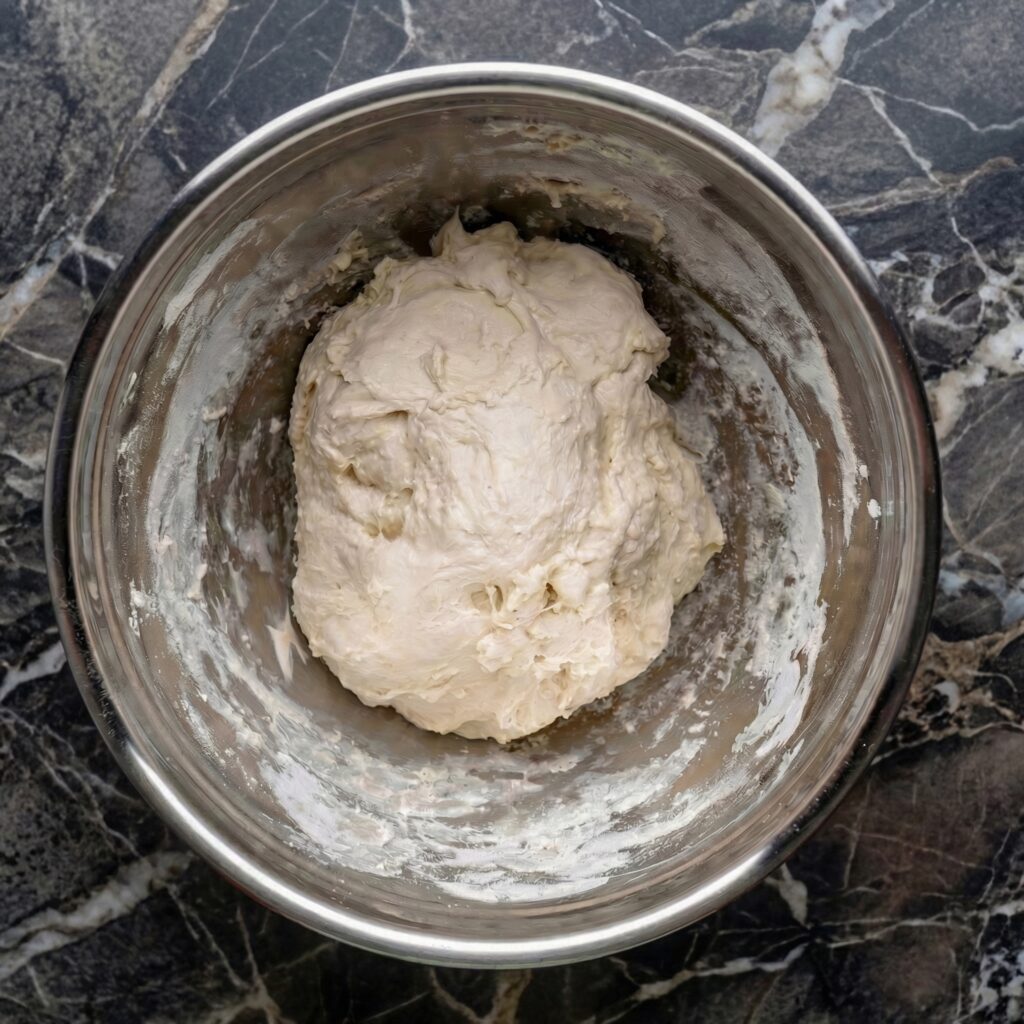
Mix gently by hand or using a dough scraper until the starter and salt are fully incorporated. The dough will be sticky and slightly loose at this stage—this is normal for high-hydration doughs like baguettes.
Bulk Fermentation with Stretch and Folds
Cover the bowl with a damp towel or plastic wrap. Allow the dough to bulk ferment for 3–4 hours at room temperature.
During the first two hours, perform stretch-and-folds every 30 minutes:
- Wet your hands to prevent sticking.
- Lift one side of the dough, stretch it upward, and fold it over the center.
- Rotate the bowl and repeat on all sides.
This process strengthens gluten without heavy kneading, which is essential for achieving the open, airy crumb of a baguette.
Pre-Shape the Baguettes
After bulk fermentation, gently turn the dough onto a lightly floured surface.
Divide it into four equal portions. Handle each portion carefully to preserve the air bubbles developed during fermentation.
Pre-shape each piece into a loose cylinder. Cover and let rest for 15–20 minutes. This short bench rest relaxes the gluten and makes final shaping easier.
Shape the Baguettes
To shape each loaf:
- Flatten the pre-shaped cylinder slightly into a rectangle.
- Fold the top third down and the bottom third up, sealing the seams gently.
- Roll the dough gently into a long, thin cylinder about 12–14 inches in length.
- Taper the ends slightly to achieve the classic baguette look.
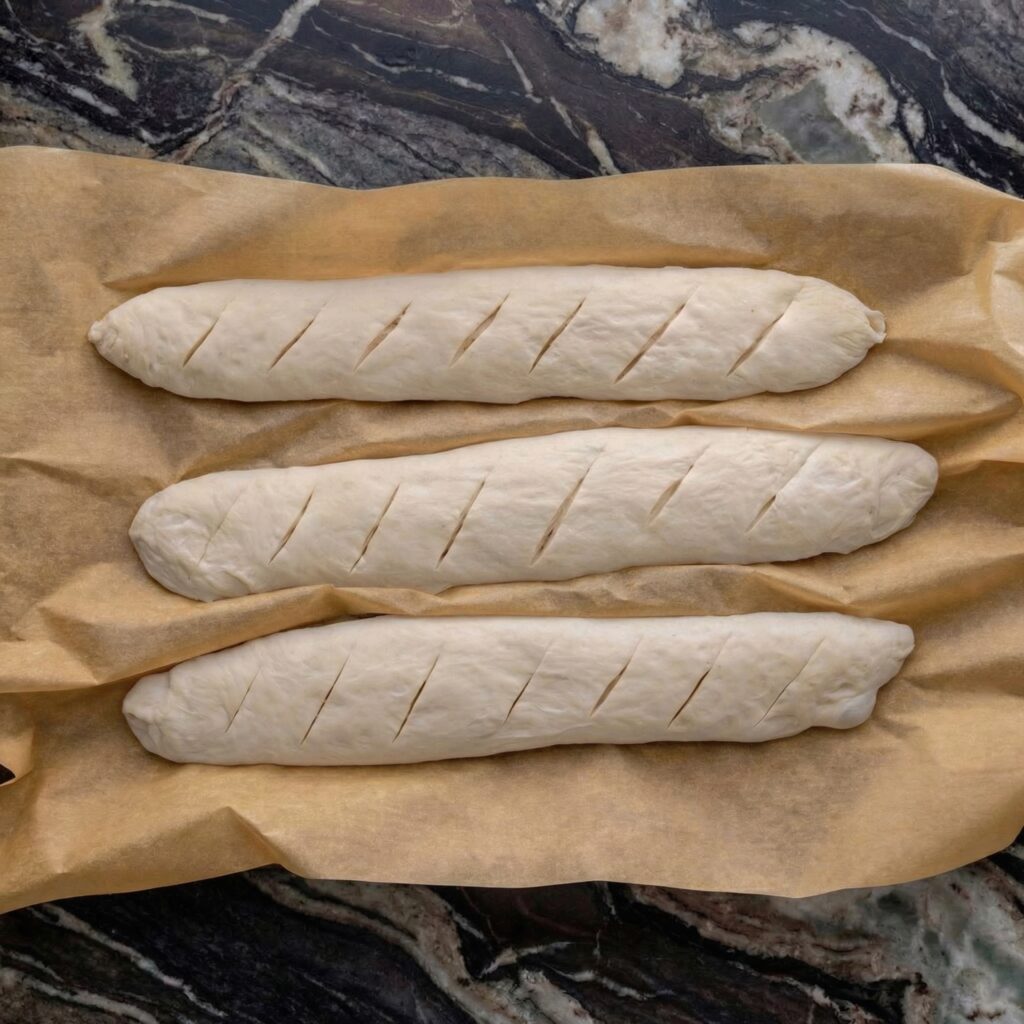
Place the shaped baguettes seam-side up on a floured couche (linen cloth) or parchment paper, spacing them apart to allow room for expansion.
Final Proof
Cover the shaped baguettes lightly with a damp towel.
Allow them to proof for 1–2 hours at room temperature. The dough should puff up noticeably but not over-proof—over-proofed baguettes collapse in the oven.
For more flavor and structure, you can refrigerate the shaped baguettes overnight for a slow cold fermentation. Bring them back to room temperature for 30–60 minutes before baking.
Preheat the Oven
Preheat your oven to 475°F (245°C) with a baking stone or Dutch oven inside for at least 30 minutes.
A hot baking surface and steam are crucial to developing the iconic baguette crust. If not using a Dutch oven, place a small pan of water at the bottom of the oven to create steam during baking.
Score the Baguettes
Carefully transfer each baguette onto the preheated baking surface.
Using a razor or bread lame, make 3–5 diagonal slashes along the top of each loaf. Scoring allows controlled expansion and gives the baguette its signature appearance.
Bake
Bake the baguettes for 20–25 minutes, rotating halfway through for even browning.
The crust should be deep golden-brown with a slight sheen, and the bread should sound hollow when tapped on the bottom. Steam during the first part of baking helps develop a crisp, blistered crust.
Cool Before Slicing
Transfer the baked baguettes to a wire rack to cool for at least 30–40 minutes before slicing.
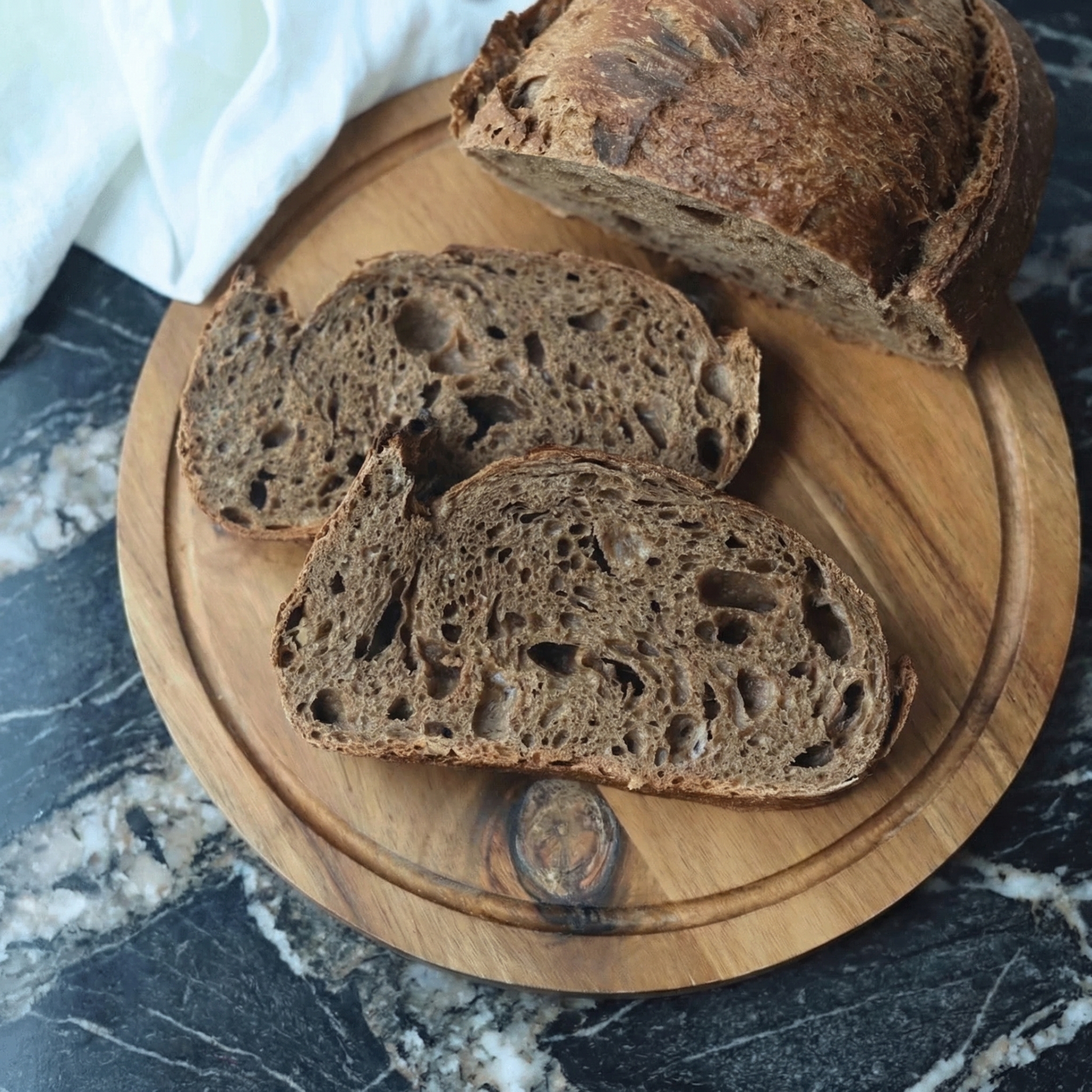
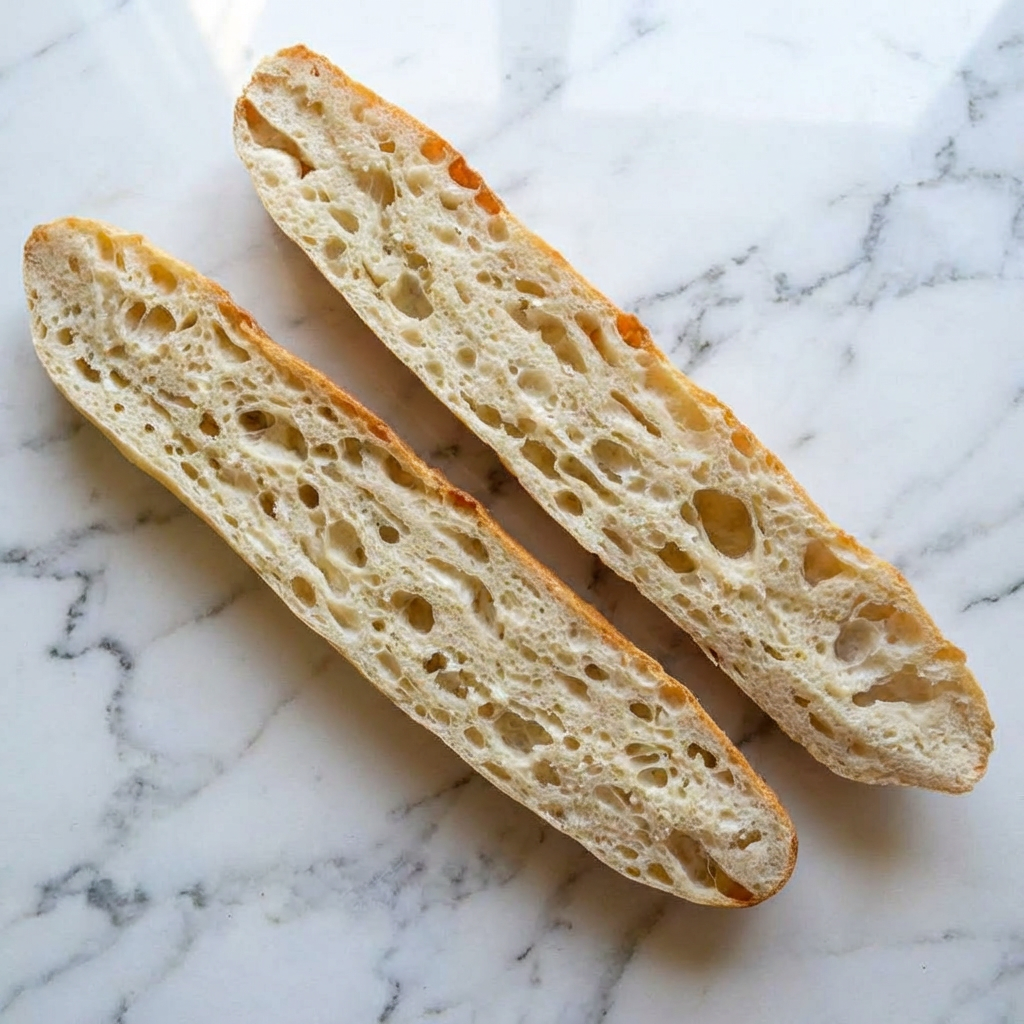
Cooling allows the crumb to set and prevents the bread from becoming gummy. The loaf will reveal a light, airy interior with characteristic holes from natural fermentation.
Serving Ideas
Sourdough baguettes are incredibly versatile:
- Slice and serve with butter, olive oil, or cheese
- Use for gourmet sandwiches
- Pair with soups, stews, or charcuterie boards
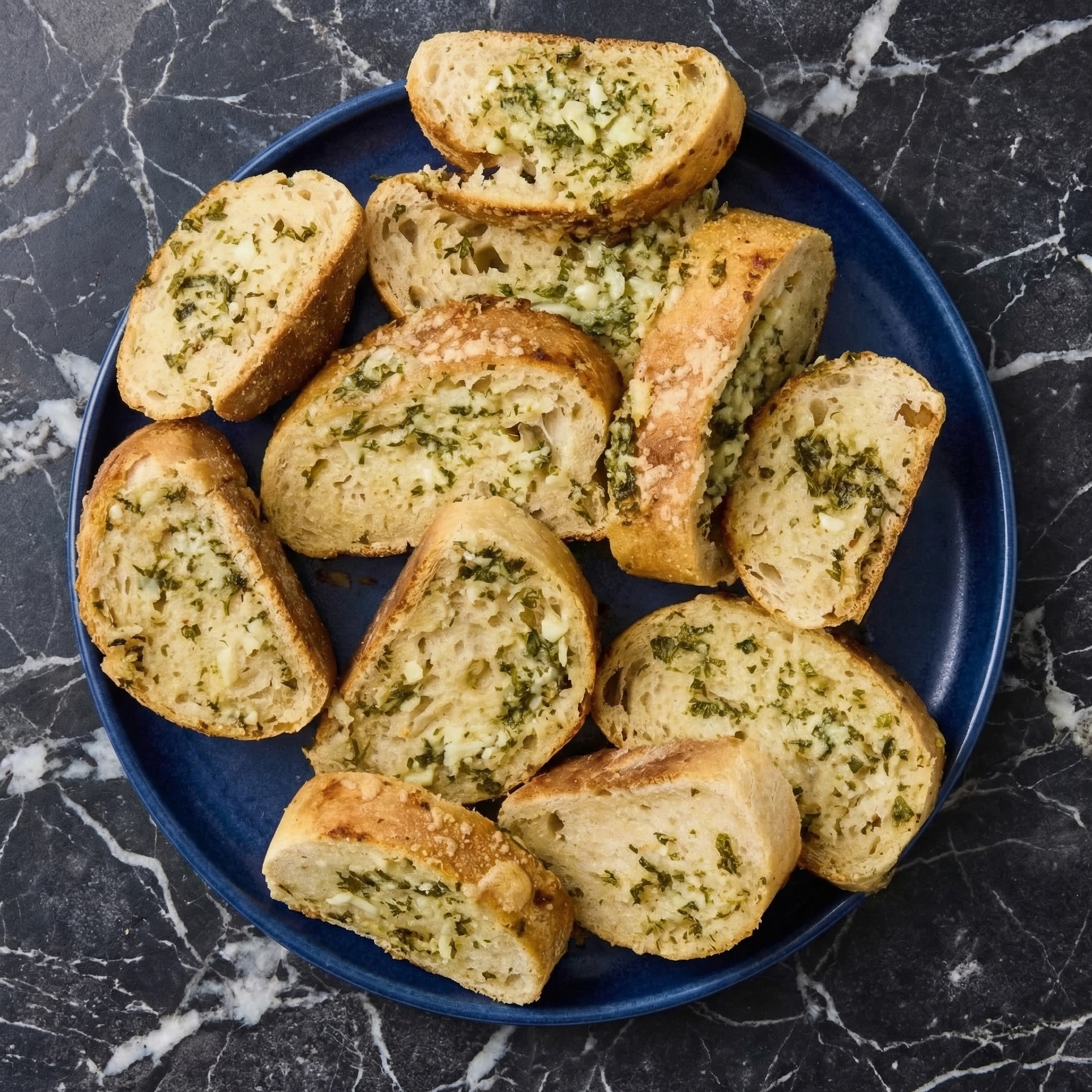
- Toast for bruschetta or garlic bread
Freshly baked baguettes elevate any meal and bring the bakery experience into your home.
Tips for Perfect Sourdough Baguettes
- Handle the dough gently to preserve air bubbles.
- Use high-protein bread flour for stronger gluten development.
- Create steam in the oven to achieve a crispy crust.
- Avoid over-proofing to maintain the signature airy crumb.
Final Thoughts
Baking Sourdough Baguettes at home is both rewarding and achievable.
The combination of naturally fermented dough, long fermentation, and proper shaping techniques produces a loaf with a crispy crust, chewy interior, and a rich, tangy flavor.
Once you master this recipe, you can experiment with variations like herb-infused dough, sesame-topped baguettes, or even chocolate-studded baguettes for a creative twist.
Whether enjoyed plain or paired with your favorite accompaniments, homemade sourdough baguettes are sure to impress both your taste buds and your guests.