More than just a cookie, the madeleine is a bite-sized symbol of French patisserie. Achieving the perfect madeleine—with its delicate, spongy interior, crisp, buttery edges, and the iconic “hump” on its shell-shaped back—is a rite of passage for bakers.
This recipe, brightened with fresh lemon zest, guides you through the simple yet precise techniques needed to create these elegant little cakes that are perfect for dipping into tea or coffee.
The Science of the “Hump” & A Delicate Crumb
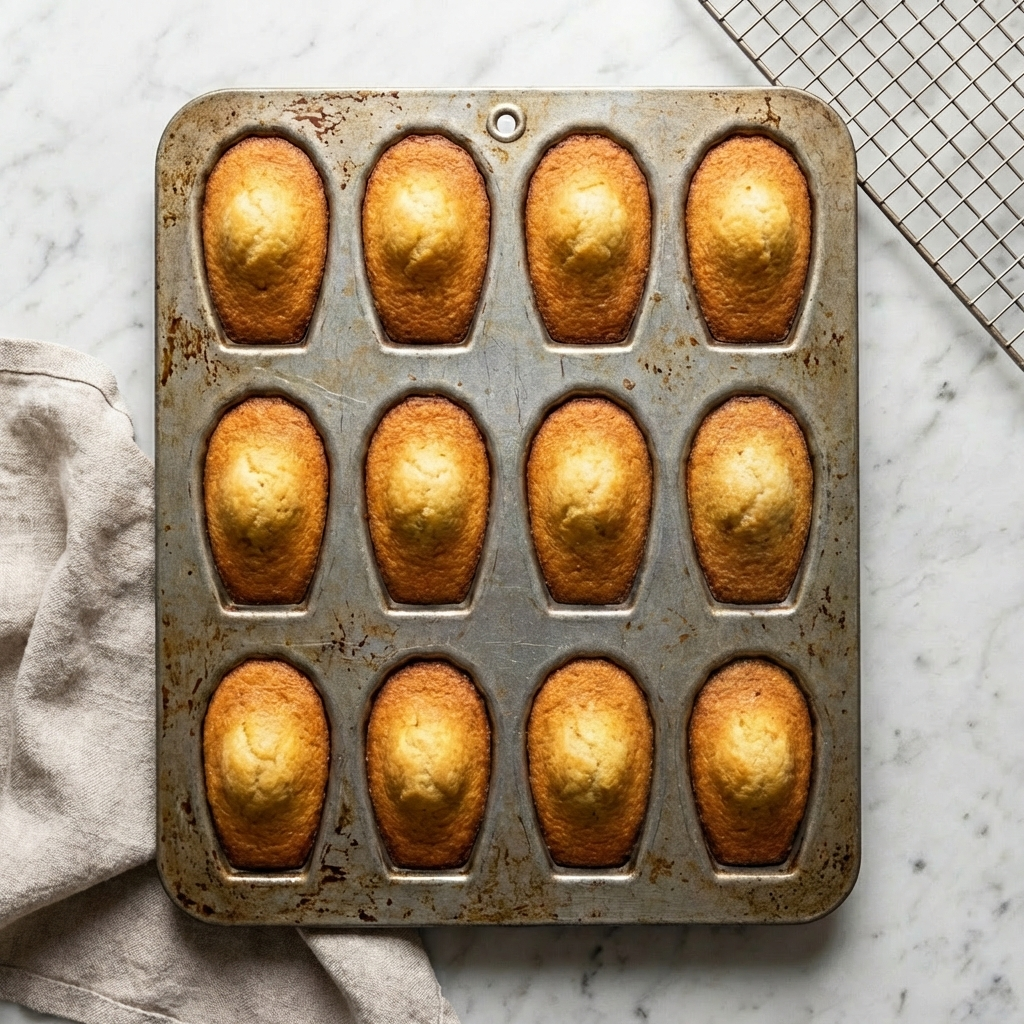
The legendary hump of a madeleine is not just aesthetic; it’s a sign of proper technique. It forms due to a combination of oven spring and the unique thermal shock of the cold batter hitting the hot, well-buttered madeleine pan.
Chilling the batter relaxes the gluten and solidifies the butter. When placed in a hot oven, the cold outer layer of the batter sets quickly while the still-cold center takes longer to heat. The expanding air and steam in this center are forced upward, creating the characteristic bump.
The tender, fine crumb comes from whipping the eggs and sugar to a thick, pale ribbon, which incorporates air as the primary leavening agent, and from using cake flour or a flour-cornstarch blend for minimal gluten development.
Instructions
Brown the Butter & Prepare the Pan
Melt the ½ cup butter in a light-colored saucepan over medium heat. Continue cooking, swirling the pan, until the butter turns a deep golden brown and smells nutty (beurre noisette).
Immediately pour into a heatproof bowl to stop cooking, scraping in the browned bits. Let cool until warm but not hot. While it cools, use the extra 2 tbsp of unmelted butter to generously grease the molds of a madeleine pan. Chill the buttered pan in the refrigerator.
Whip Eggs & Sugar to Ribbon Stage
In a large bowl, combine the eggs, granulated sugar, and honey. Using a hand mixer or stand mixer, beat on high speed for 5-8 minutes until the mixture is very thick, pale in color, and falls from the beaters in a thick ribbon that holds its shape on the surface for a few seconds.
Fold in Dry Ingredients & Browned Butter
In a separate bowl, sift together the flour, cornstarch, baking powder, and salt. Add the lemon zest and vanilla to the egg mixture.
Gently fold in the sifted dry ingredients in three additions using a large spatula, being careful not to deflate the batter. Finally, fold in the warm browned butter in 2-3 additions until the batter is smooth and homogeneous.
Chill the Batter
Cover the bowl with plastic wrap and refrigerate the batter for at least 1 hour, or up to 24 hours. This chilling step is crucial for developing flavor and creating the signature hump.
Bake in a Hot Oven
Preheat oven to 425°F (220°C). Remove the chilled batter and the madeleine pan from the fridge. Spoon a heaping tablespoon of batter into the center of each chilled, buttered mold—do not spread it.
Bake for 8-10 minutes, until the edges are golden brown and the centers spring back when touched. The famous hump should be clearly visible.
Unmold, Cool & Dust
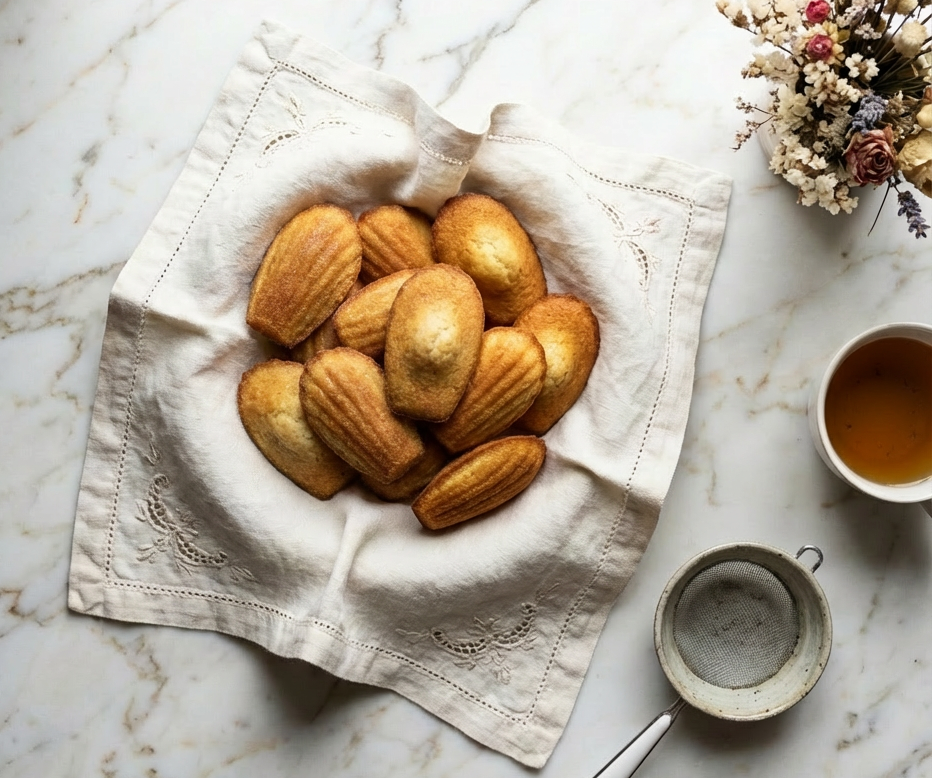
Immediately tap the pan on the counter to release the madeleines. Transfer them to a wire rack. They are best served slightly warm. Just before serving, dust generously with confectioners’ sugar using a fine-mesh sieve.
Pro-Tips for Perfect Madeleines Every Time
- Brown the Butter: This step adds a deep, nutty flavor that defines a great madeleine. Watch it closely to avoid burning.
- Room Temperature Eggs: Cold eggs will not whip to the necessary volume for the ribbon stage.
- Chill Both Batter AND Pan: This is the secret to the hump. The cold batter in a cold pan experiences maximum thermal shock in the hot oven.
- Don’t Overfill the Molds: Filling them only ¾ full allows room for the batter to spread and puff up dramatically.
- High Oven Temperature: The initial blast of high heat is essential for creating oven spring and setting the edges quickly.
- Serve Fresh: Madeleines are at their absolute peak within a few hours of baking, when the edges are still slightly crisp. Store leftovers in an airtight container, but know they will soften.
These Classic French Madeleines are a simple yet sophisticated baking achievement.