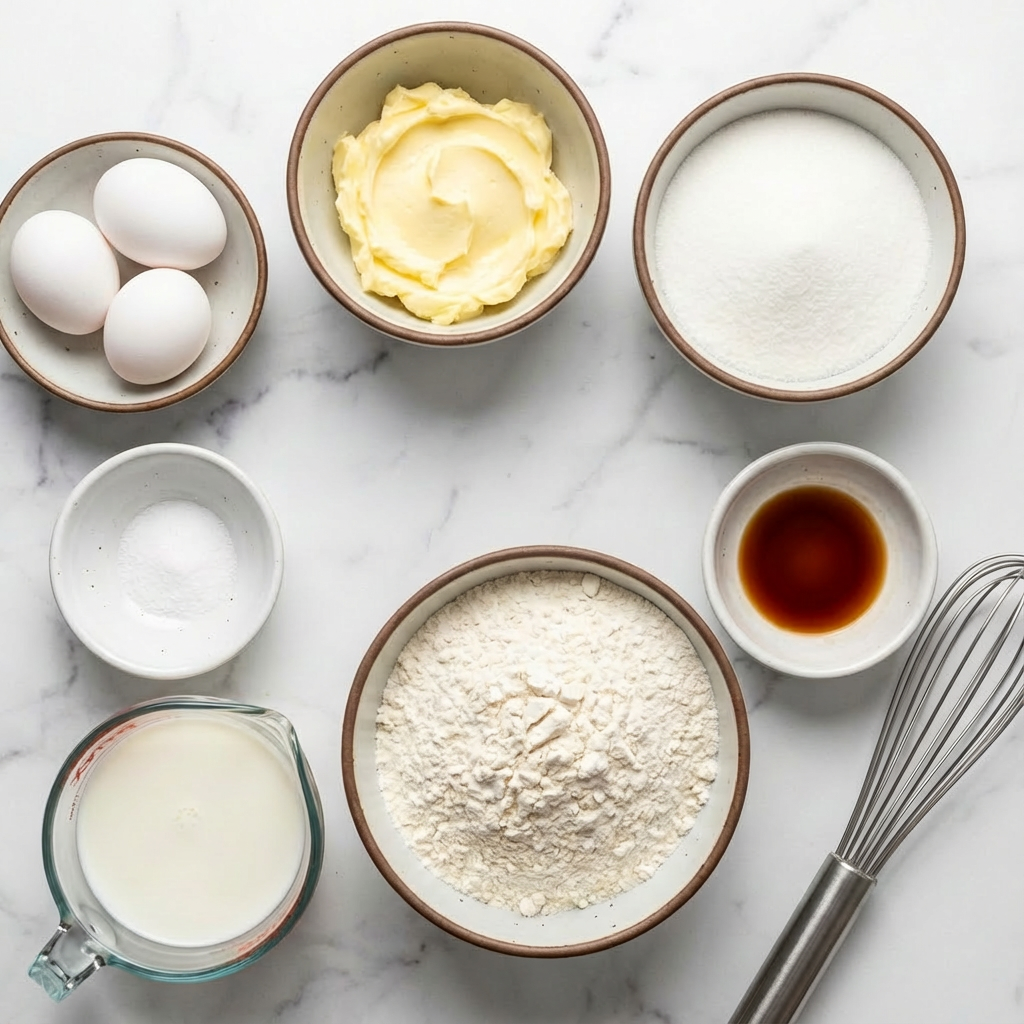
This is the pound cake in its purest, most perfect form. True to its name, it follows the traditional ratio of a pound each of butter, sugar, eggs, and flour, resulting in a cake with an incomparably rich, buttery flavor and a dense, velvety-soft crumb that stays moist for days.
With a crisp, golden crust and a tender interior, it’s a masterpiece of simplicity that needs no frosting—just a simple dusting of sugar or a side of fresh fruit. It’s the foundation upon which all other pound cakes are built.
The Science of the Dense, Moist Crumb & The Perfect Crust
The hallmark of a great pound cake is its texture, achieved through the creaming method and precise ingredient ratios. Beating room-temperature butter and sugar for an extended time incorporates tiny air bubbles, which provide the primary leavening.
The eggs are added slowly to create a stable emulsion, trapping air and adding structure. The high fat content from the butter and eggs coats the flour proteins, inhibiting gluten formation and ensuring a tender, fine-grained crumb rather than a bready one.
The signature crisp, golden crust forms from the Maillard reaction—the sugar and proteins in the batter caramelize on the hot surface of the pan. Baking at a slightly lower temperature (325°F) ensures the center cooks through without over-browning the crust.
Instructions
Prepare Pan & Oven
Preheat oven to 325°F (165°C). Thoroughly grease and flour a 10-inch tube pan or two 9×5-inch loaf pans. For best release, you can line the bottom of loaf pans with parchment paper after greasing.
Cream Butter & Sugar
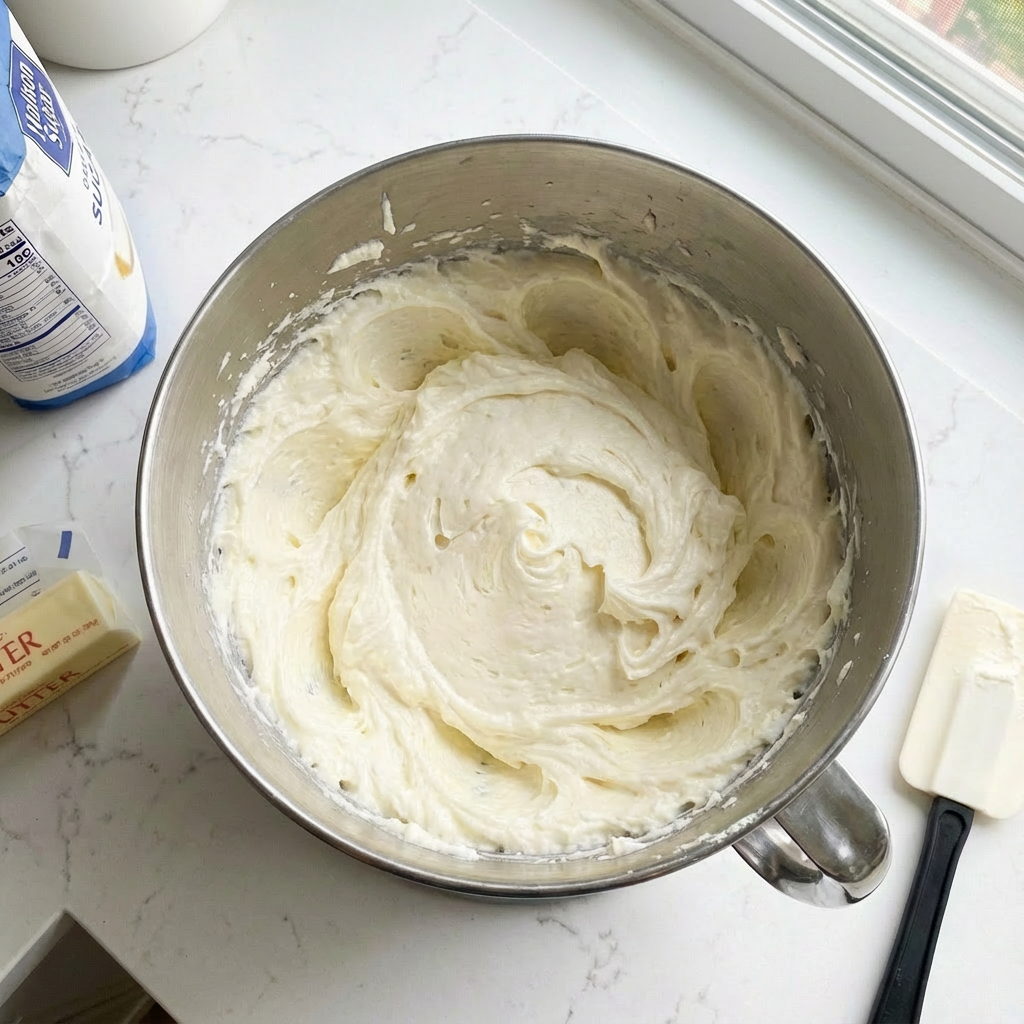
In a very large bowl or stand mixer, beat the softened butter on medium speed until smooth and creamy, about 1 minute. Gradually add the sugar with the mixer running.
Once all sugar is added, increase speed to medium-high and beat for a full 5-7 minutes, until the mixture is extremely pale, fluffy, and almost white in color. This step is crucial for texture.
Add Eggs Slowly
Reduce mixer speed to medium. Add the eggs one at a time, beating well (about 45 seconds) after each addition until fully incorporated. Scrape down the bowl as needed. The mixture should look smooth and glossy.
Alternate Dry & Wet Ingredients
In a separate bowl, whisk together the flour and salt. In another, combine the milk and vanilla. With the mixer on low, add the flour mixture in four parts, alternating with the milk mixture in three parts, beginning and ending with flour. Mix each addition until just combined—do not overmix.
Bake Until Golden
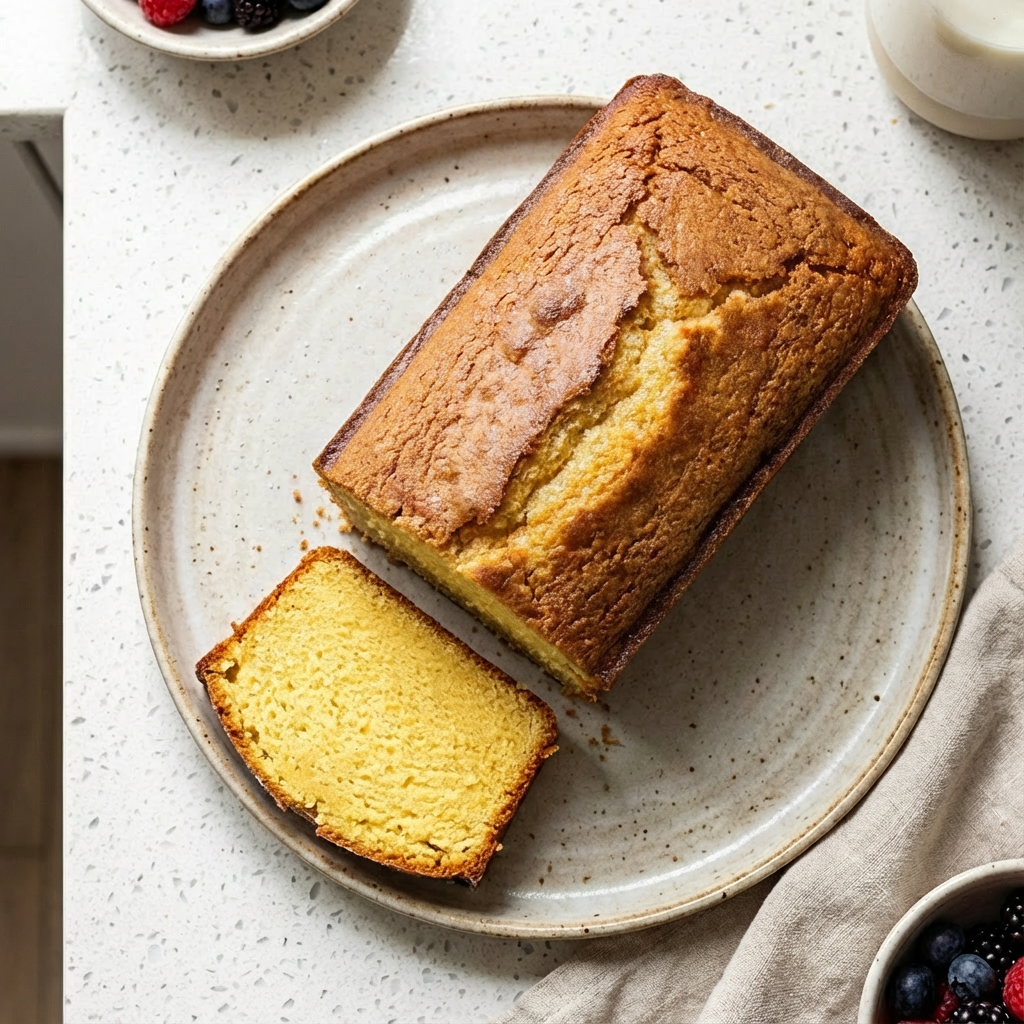
Pour the thick batter into the prepared pan(s) and smooth the top. Bake for 1 hour 15 minutes to 1 hour 30 minutes for a tube pan (or 55-70 minutes for loaf pans), until a long skewer inserted into the center comes out clean. The top will be a deep golden brown and will have a characteristic crack.
Cool Completely
Let the cake cool in the pan on a wire rack for 25 minutes. Then, run a thin knife around the edges and carefully invert it onto the rack to cool completely, at least 3 hours. The cake must be fully cool to slice cleanly.
Pro-Tips for Pound Cake Perfection
- Ingredient Temperature is Non-Negotiable: All ingredients must be at room temperature to emulsify properly and create a smooth, homogeneous batter. Cold ingredients will cause the batter to break.
- Cream for the Full Time: Do not shortcut the creaming process. The 5-7 minutes of beating butter and sugar incorporates essential air for the cake’s structure.
- Weigh Your Flour: For the most accurate results and perfect texture, weigh your flour. If measuring by volume, spoon it into the cup and level it off—do not scoop.
- Don’t Overmix After Adding Flour: Once the flour is added, mix only until the streaks disappear. Overmixing develops gluten and leads to a tough cake.
- Test for Doneness: The cake is done when a skewer comes out clean, the edges pull away from the pan slightly, and the top springs back when lightly pressed.
- Cool Upside Down (for tube pan): Cooling a tube cake upside down on a bottle helps prevent it from sinking in the middle as it sets.
This Classic Butter Pound Cake is a testament to the power of perfect technique and quality ingredients.