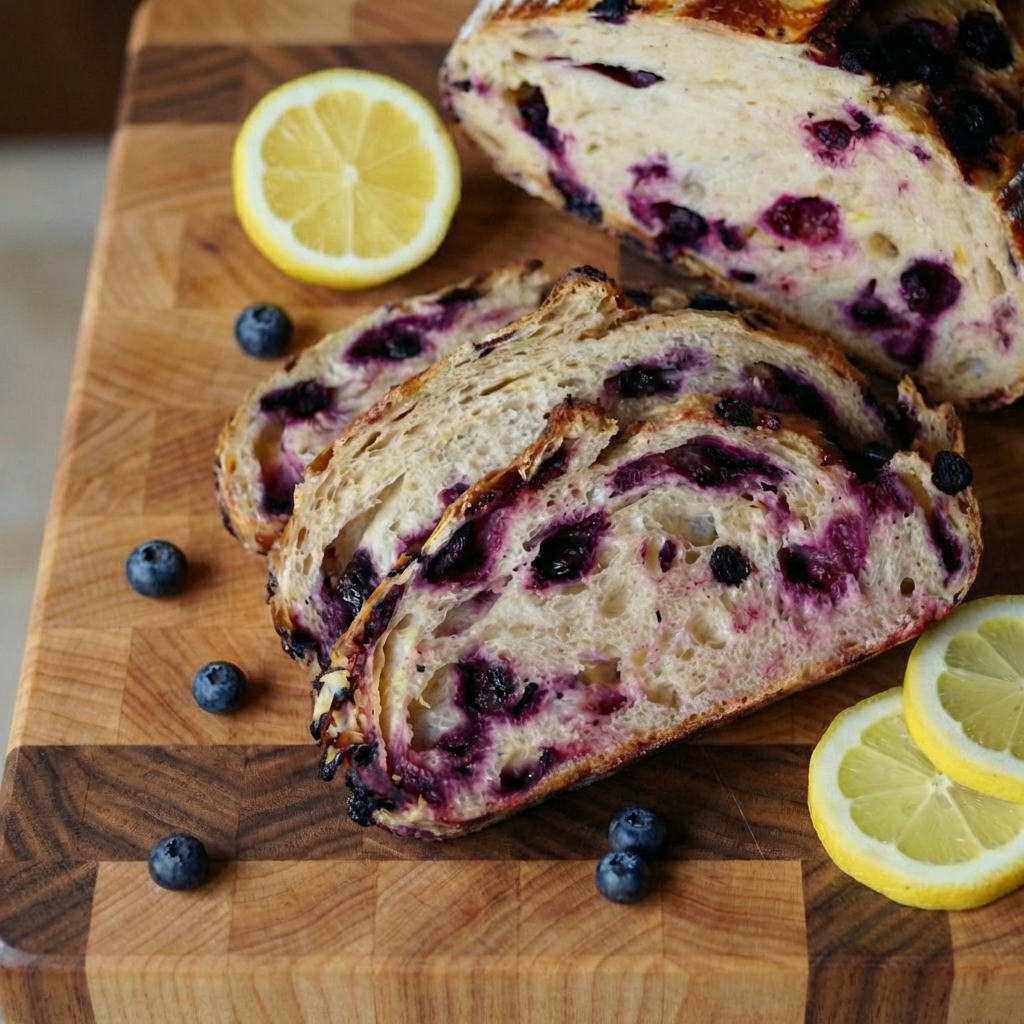
If you love the tang of sourdough and the fresh pop of citrus, Blueberry Lemon Sourdough Bread is about to become your new favorite bake.
This loaf combines a chewy artisan crumb with juicy blueberries and fragrant lemon zest woven throughout.
The slight sourness from the starter balances the sweetness of the berries, while the lemon lifts every bite with a refreshing finish.
This step-by-step guide will walk you through the entire process—from mixing and folding to baking a golden, bakery-style loaf at home.
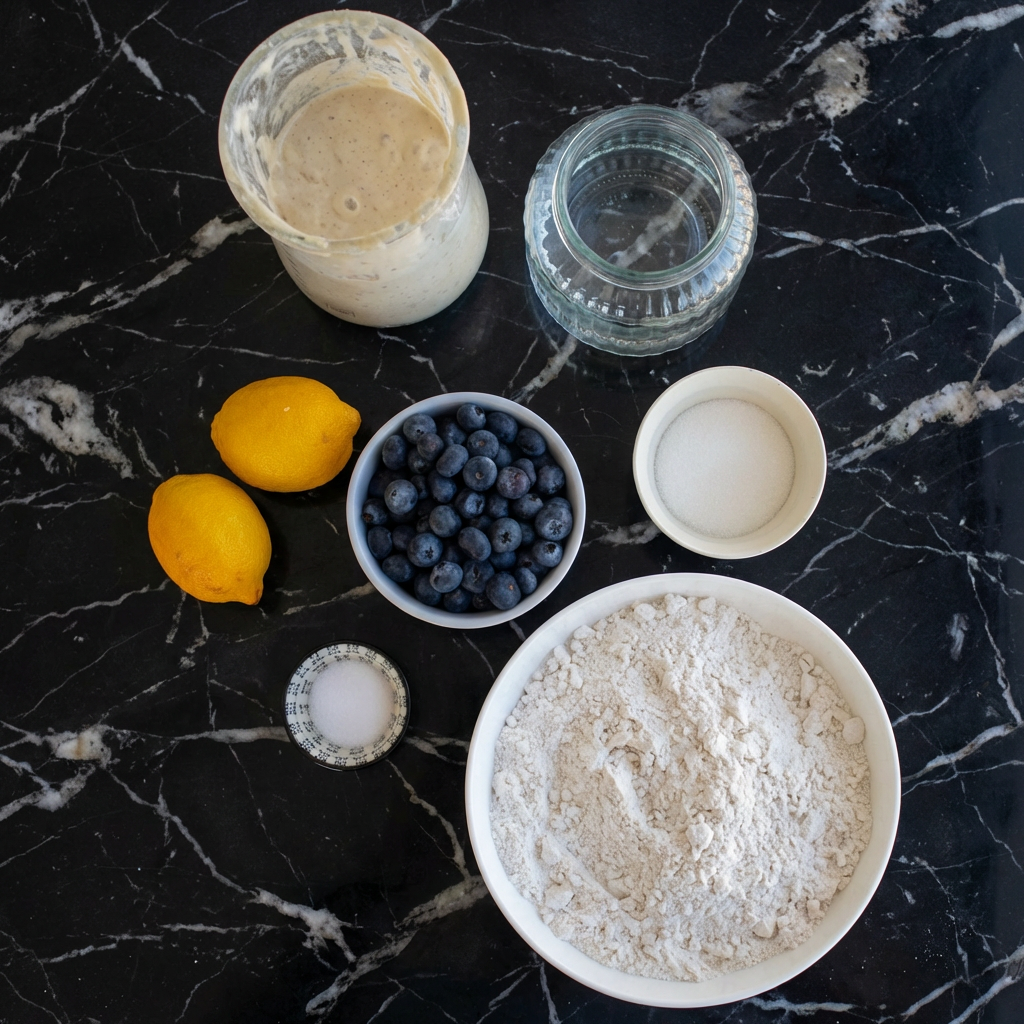
Feed Your Starter
Start by feeding your sourdough starter 4–6 hours before baking. You want it at peak activity—doubled in size, bubbly, and airy.
A strong starter ensures proper fermentation and oven spring.
To test readiness, drop a spoonful into water. If it floats, it’s ready to use.
Mix the Dough
In a large mixing bowl, combine the active starter and warm water. Stir until mostly dissolved.
Add the bread flour and mix until no dry spots remain.
The dough will look rough and shaggy. Cover and let it rest for 30 minutes.
This rest period, called autolyse, allows the flour to fully hydrate and helps build gluten structure naturally.
After the rest, sprinkle the salt over the dough and mix it in thoroughly by pinching and folding the dough.
Add Lemon Zest and Blueberries
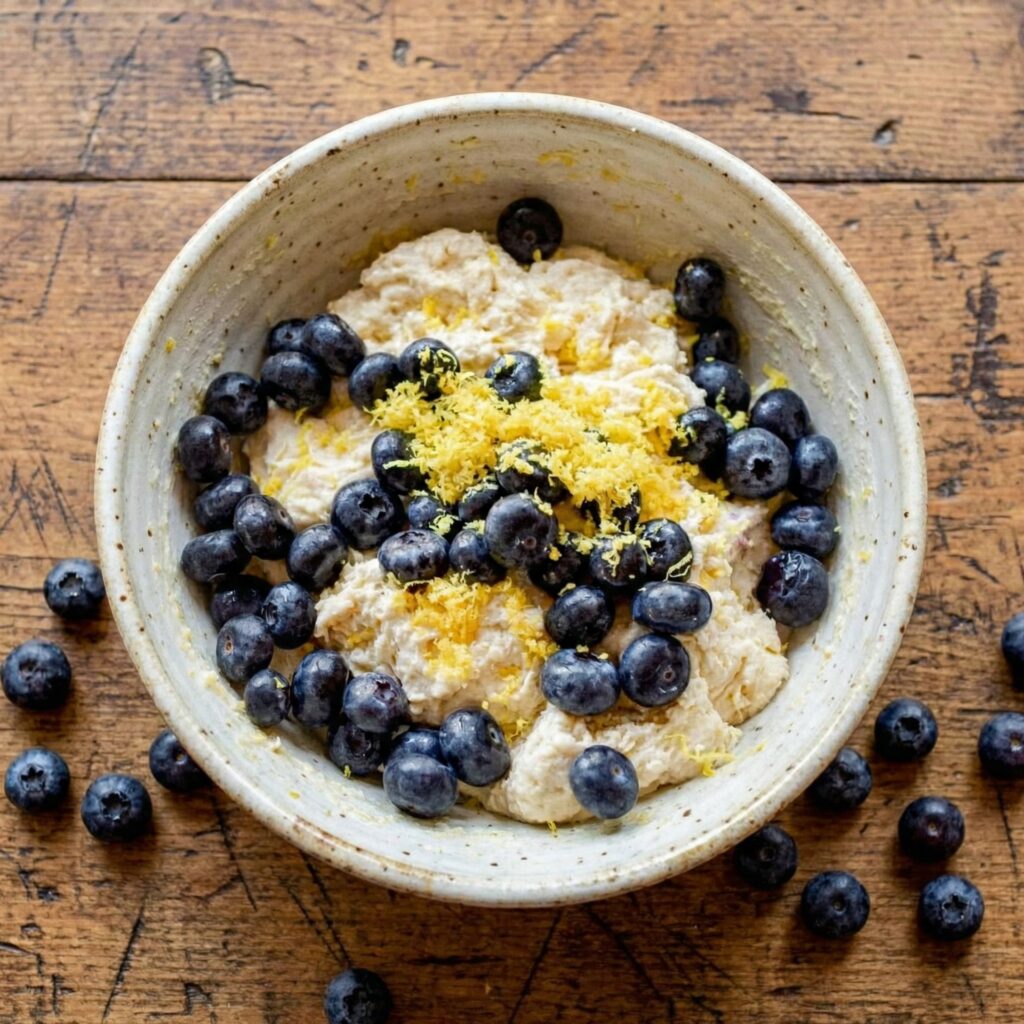
Gently fold in the lemon zest. Its oils will release fragrance immediately, infusing the dough with bright citrus aroma.
If using fresh blueberries, rinse and pat them completely dry. If using frozen, keep them frozen to reduce bleeding.
Flatten the dough slightly and scatter the blueberries over the surface.
Fold the dough over itself repeatedly to distribute them evenly.
Be gentle to avoid crushing too many berries, though some streaking is normal and creates beautiful color throughout the crumb.
Bulk Fermentation
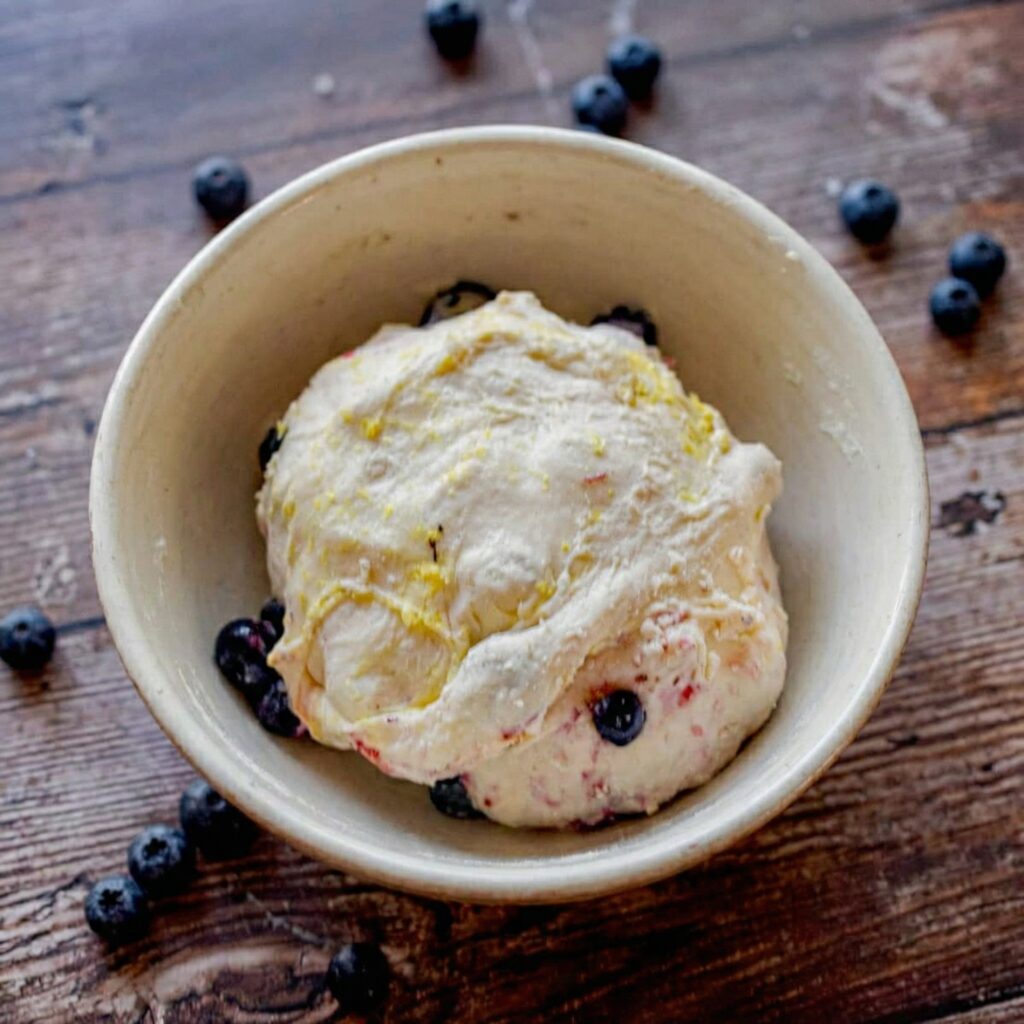
Cover the bowl and allow the dough to rise at room temperature for 3–4 hours.
During the first 2 hours, perform stretch and folds every 30 minutes:
- Wet your hands.
- Lift one side of the dough.
- Stretch it upward.
- Fold it over itself.
- Rotate the bowl and repeat.
Complete about four sets of folds.
These strengthen the dough without kneading and help support the weight of the fruit.
After the final fold, let the dough rest undisturbed until it has risen about 50% and feels airy and slightly jiggly.
Pre-Shape
Lightly flour your work surface and gently turn out the dough.
Shape it into a loose round by folding the edges toward the center.
Let it rest uncovered for 20–30 minutes.
This bench rest relaxes the gluten, making final shaping easier.
Final Shaping
Flip the dough over so the smooth side faces down.
Shape into a tight round or oval by pulling the dough toward you against the counter to create surface tension.
Be mindful of blueberries near the surface—they can burst, so shape gently but firmly.
Place the dough seam-side up into a floured proofing basket or a bowl lined with a well-floured towel.
Cold Proof
Cover the basket and refrigerate for 8–12 hours.
This slow fermentation deepens flavor and makes scoring easier the next day.
The cold proof also helps the dough firm up, which is especially helpful when baking fruit-filled sourdough.
Preheat and Score
The next day, preheat your oven to 475°F (245°C) with a Dutch oven inside.
Allow it to heat for at least 30–45 minutes.
Turn the dough out onto parchment paper.
Using a sharp blade or lame, score the top with a confident slash about ½ inch deep.
This directs expansion and creates a rustic artisan look.
Bake
Carefully transfer the dough (on parchment) into the hot Dutch oven. Cover with the lid and bake for 20 minutes.
Remove the lid, lower the oven temperature to 450°F (230°C), and bake an additional 20–25 minutes until the crust is deep golden brown.
The loaf is done when the internal temperature reaches about 205–210°F.
Cool Completely
Transfer the bread to a wire rack and allow it to cool for at least one hour before slicing.
Cutting too soon can result in a gummy texture, especially with fruit inside.
Patience ensures a perfectly set crumb.
Tips for Success
- Keep blueberries dry to prevent excess moisture.
- Use frozen berries if you want cleaner color pockets.
- Add a tablespoon of sugar for a sweeter breakfast-style loaf.
- If berries burst during shaping, lightly dust exposed spots with flour.
- For extra lemon flavor, mix a little zest into softened butter and serve alongside warm slices.
Serving Ideas
Toast thick slices and spread with salted butter or honey. Add a dollop of mascarpone for a brunch-worthy treat.
This bread also makes exceptional French toast, with pockets of juicy blueberries and hints of citrus in every bite.
Blueberry Lemon Sourdough Bread is a beautiful balance of tart, sweet, and tangy flavors wrapped in a chewy artisan crust.
With careful folding, gentle shaping, and a well-fed starter, you can create a loaf that looks as stunning as it tastes.
Once you slice into those vibrant purple swirls and breathe in that fresh lemon aroma, you’ll understand why this recipe deserves a place in your regular baking rotation.