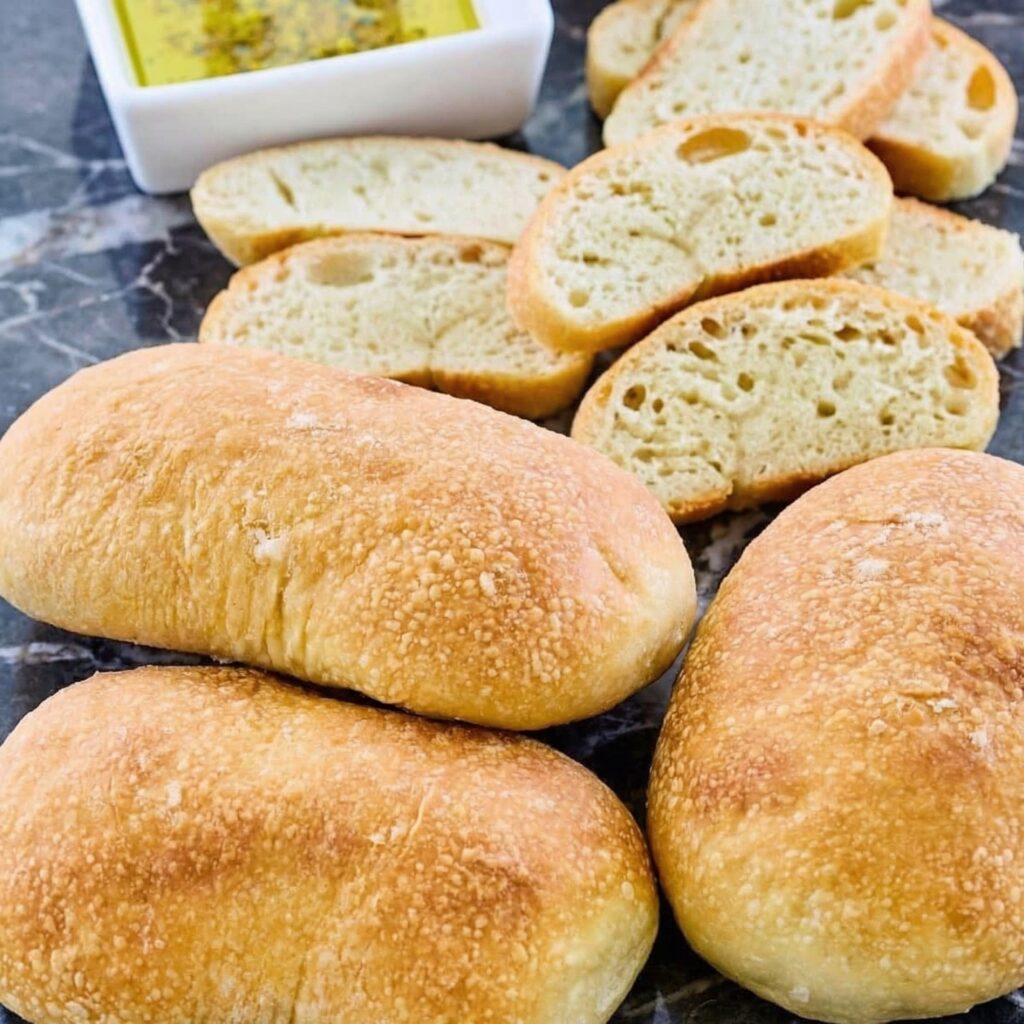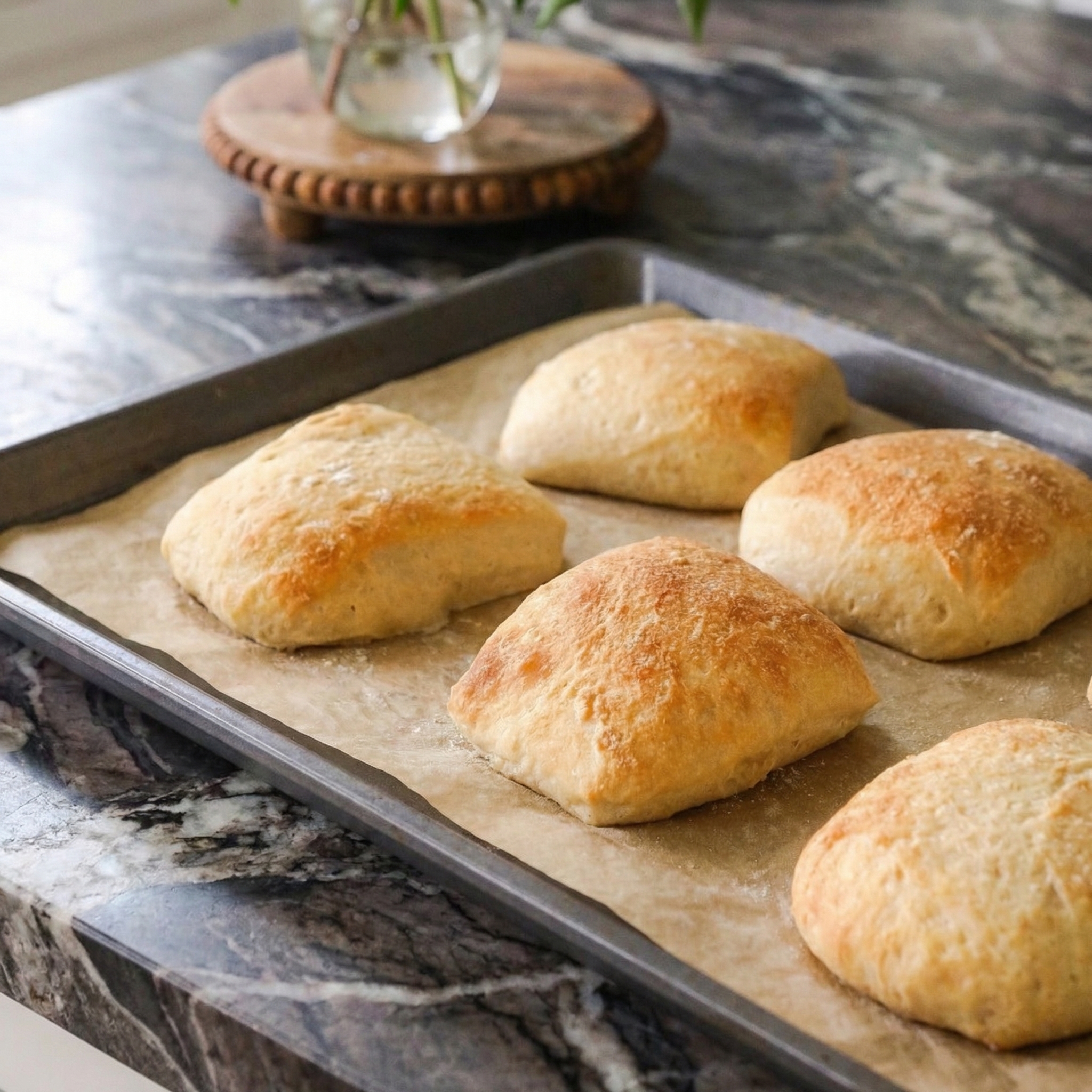
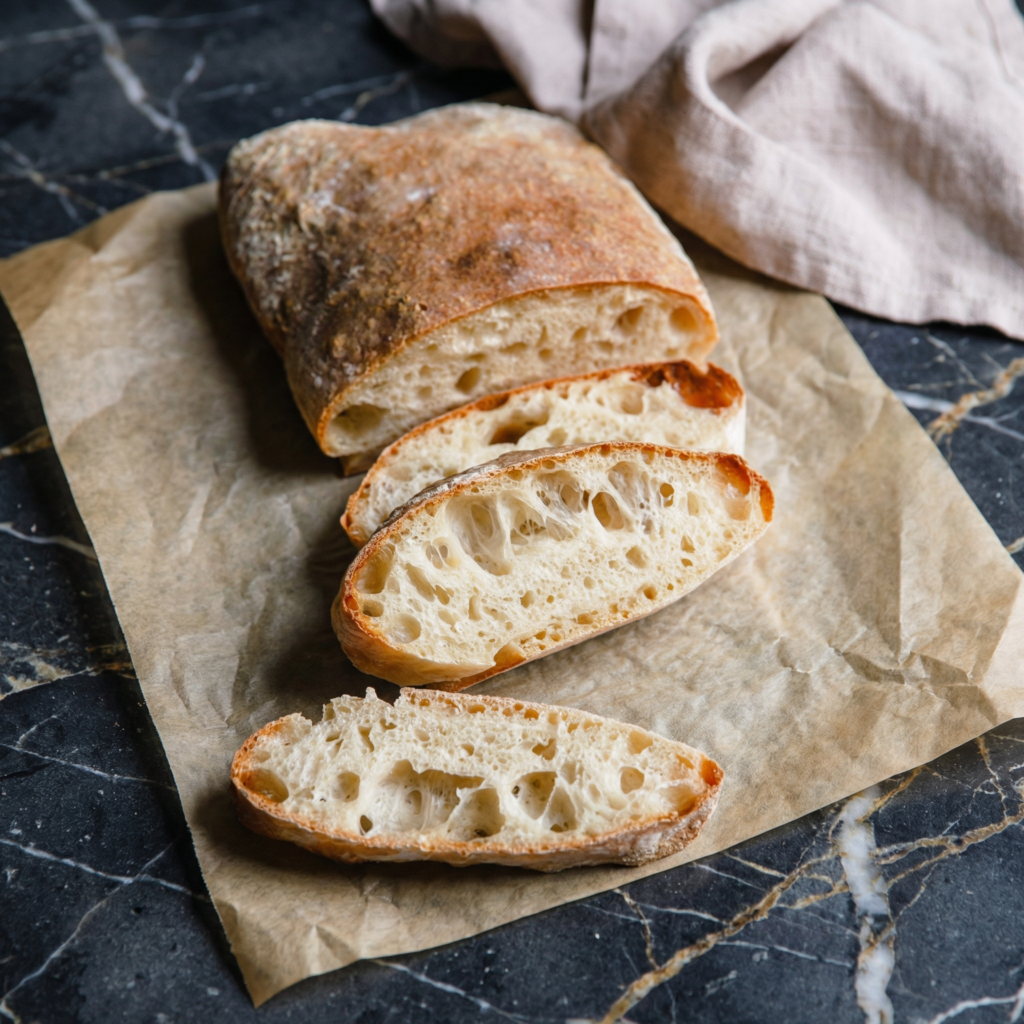
Ciabatta, meaning “slipper” in Italian, is a rustic bread known for its crisp, flour-dusted crust and its open, airy crumb with large, irregular holes. It’s the perfect bread for sandwiches, for dipping in olive oil and balsamic vinegar, or simply tearing apart while still warm from the oven. What makes ciabatta unique is its high-hydration dough—it’s one of the wettest, stickiest doughs you’ll ever work with.
But with the right technique and a little patience, you’ll be rewarded with one of the most delicious breads you can make at home. This authentic recipe will guide you through creating that perfect ciabatta.
Instructions
Make the Biga (12-16 hours before)
In a medium bowl, combine the bread flour, cool water, and yeast. Stir until no dry flour remains. Cover and let sit at room temperature for 12-16 hours. The biga will become bubbly, very soft, and have a sour, yeasty aroma.
Mix the Final Dough
In a large bowl or stand mixer fitted with the dough hook, combine the biga, bread flour, salt, yeast, and warm water. Mix on low speed until a shaggy, very wet dough forms. Knead for 5-7 minutes until the dough becomes smoother and elastic but remains very soft and sticky.
Bulk Fermentation (Stretch and Folds)
Cover the bowl and let rest for 30 minutes. Perform a set of stretch and folds: wet your hands, grab one side of the dough, stretch it up, and fold it over itself. Rotate the bowl and repeat 4 times. Cover and rest.
Repeat this process every 30 minutes for 2-3 hours (4-6 sets total). The dough will become smoother, more elastic, and very bubbly.
Continue Bulk Fermentation
After the last set of folds, let the dough rest, covered, for another 1-2 hours. It should be very puffy, bubbly, and have increased in volume by about 50%.
Shape the Loaves
Liberally dust a work surface with flour. Gently turn the dough out (it will be very wet). Using a bench scraper, divide the dough into two pieces. Gently shape each piece into a rough rectangle, about 8×10 inches. Dust the tops with flour.
Final Proof
Line a baking sheet with parchment paper and dust generously with semolina or cornmeal. Carefully transfer the shaped loaves to the prepared baking sheet. Cover with a floured kitchen towel and let proof for 30-45 minutes until puffy.
Preheat and Prep
Place a pizza stone or baking steel on the middle rack of your oven and preheat to 475°F (245°C) for at least 45 minutes. If you don’t have a stone, use an inverted baking sheet.
Score and Bake
Using a sharp blade or lame, make several shallow slashes across the top of each loaf. Carefully transfer the loaves (with the parchment) onto the hot stone or baking sheet. Bake for 20-25 minutes, until deep golden brown and crisp. For extra steam, add a pan of water to the bottom of the oven during baking.
Cool Completely
Transfer to wire racks to cool completely before slicing. This is essential for the crumb to set.
Serve
Slice with a serrated knife. Serve with olive oil, as sandwich bread, or alongside your favorite soups and salads.
Pro-Tips for Ciabatta Perfection
- Make the Biga Ahead: The long fermentation develops flavor and that signature open crumb. Don’t rush it.
- Use Wet Hands: Keep a bowl of water nearby to wet your hands before handling the dough—it prevents sticking and makes stretch and folds much easier.
- Don’t Deflate the Dough: Handle gently to preserve those precious gas bubbles.
- Use a Pizza Stone: It gives the best crust. Preheat it thoroughly.
- Create Steam: Adding steam during baking helps develop that crispy crust.
- Cool Completely: Ciabatta is very delicate when warm. Cooling allows the crumb to set.
- Freezer Friendly: Ciabatta freezes beautifully. Slice before freezing for easy toasting.
- Perfect for Sandwiches: The open crumb is ideal for soaking up olive oil and vinaigrette.
This Authentic Ciabatta is Italian slipper bread at its finest—absolutely delicious.